“ BEAUMONT QUAYIn May, when the sea-birds are hatching their young, the spring-tides are slack and do not cover the saltings. In a pretty figure of speech the fishermen call these tides the Bird Tides.The lives of the fishermen are ruled by the tides. For them the working hours of the clock have no significance. On the first of the ebb, be it night or day, their work begins, and it is on the flood that they return to their homes. They have no leisure or liking for the time-devouring practice of sailing over a foul tide. The tide in the affairs of these men is absolute. ”
Spring tide
Definition and stakes
The theme of “spring tide” has been addressed by authors such as George Howard Darwin, Henry Charles Adams, William Hewitt, J. B. Atkins and Robert S. Ball. It is often associated with terms like Moon, Sun, Earth, wind and wave.
Quotes about “spring tide”
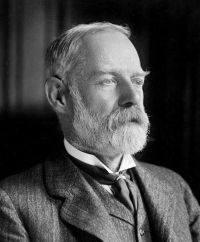 George Howard Darwin,
1911 Encyclopædia Britannica, Volume 26…
(1911)
“ The association of spring tide with full and change is obvious, and a fiction has been adopted by which it is held that spring tide is generated in those configurations of the moon and sun, but takes some time to reach the port of observation. ”
“ The spring tide is caused by the attractive force of the sun and moon acting in conjunction, or in a straight line; and the neap tide is caused by the moon being in quadrature, or when the sun and moon are at right angles to each other. ”
 Gaston Tissandier,
Popular Scientific Recreations
“ Isaac Newton rightly attributed the cause of the tides to the attraction of the moon and sun. Spring tides occur when both luminaries are above the meridian, and the neap, or low tides, happen when the sun and moon are farthest apart. The highest tides are perceived after a new or full moon; the lowest, after she has passed the first or third quarter. In January the spring tide is highest of all, because the earth is nearest to the sun then, and his force of attraction, added to that of the moon, causes a very high tide. ”
Charles Evans Hughes, Borax Consolidated v. City of Los Angeles…
“ The range of the tide at times of new moon and full moon 'is greater than the average,' as 'high water then rises higher and low water falls lower than usual.' The tides at such times are called 'spring tides.' When the moon is in its first and third quarters, 'the tide does not rise as high nor fall as low as on the average.' At such times the tides are known as 'neap tides.' 'Tidal Datum Plane,' U.S.C.oast and Geodetic Survey, Special Publication No. ”
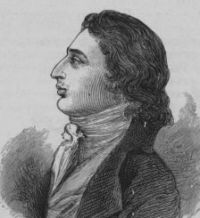 Robert Southey,
The doctor, &c., vol. 3 (of 7)
(1834)
“ But the effect of the tides upon the human constitution in certain states is not a mere vulgar opinion. Major Moor says that near the tropics, especially in situations where the tide of the sea has a great rise and fall, scarcely any person, and certainly no one affected with feverish or nervous symptoms, is exempted from extraordinary sensations at the periods of spring tides. ”
James De Mille, The "B. O. W. C.": A Book For Boys
“ I’ll go on deck and have another look at the situation. My private opinion is, however, that if they’re coming after us, they’d better come. The tide’s getting higher every minute; and if they get here after we’ve fastened her to the shore, and got her high and dry, they’ll have to wait for twelve good hours before they can get her to float off again,—not to speak of spring tides. Do you know, Bart, if this is spring tide? ”
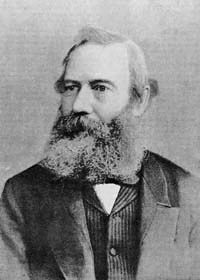 Shirley Hibberd,
The Book of the Aquarium and Water Cabinet
“ During spring tides is the best time for making collections, and it behoves excursionists who cannot go to the sea side very often, to make their arrangements for such trips, in accordance with the state of the moon as indicated in the almanac. New and full moon are the times in which the tide rises highest and sinks lowest, and much disappointment will be avoided if such proper times are chosen. ”
Henry Charles Adams, The Sewerage of Sea Coast Towns
“ When there is a considerable difference in the height of high water of two consecutive tides, the ebb which follows the higher tide is lower than that following the lower high water, and as a general rule the higher the tide rises the lower it will fall. The height of spring tides varies throughout the year, being at a maximum when the sun is over the equator at the equinoxes and at a minimum in June at the summer solstice when the sun is furthest away from the equator. ”
Various, Philosophical Transactions of the Royal Society - Vol 1 - 1666
“ As likewise of the Spring tides and Neap-tides. For, when it so happens, that the Menstrual and Diurnal Accelerations or Retardations, be coincident, (as at New moons and Full-moons they are,) the effect must needs be the greater. And although (which is not to be dissembled) this happen {275}but to one of the two Tides; that is, the Night-tide at the New-moon (when both motions do most of all Accelerate,) and the Day-tide at Full-moon (when both do most Retard the Annual motion;) ”
George Howard Darwin,
1911 Encyclopædia Britannica, Volume 26…
(1911)
“ In the reduction the immediate object is to connect the times and heights of high- and low-water with the moon's transits by means of the establishment, age and fortnightly inequality in the interval and height. The reference of the tide to the establishment is not, however, scientifically desirable, and it is better to determine the mean establishment, which is the mean interval from the moon's transit to high-water at spring tide, and the age of the tide, which is the mean period from full moon and change of moon to spring tide. ”
Theodore Wood, The Sea-Shore, Shown to the Children (1907)
“ The bird’s-foot starfish is not very often seen, for it lives some little way below low-water mark. But sometimes, when there has been a violent storm at a season of spring-tide—and you will remember that spring-tides come whenever there is a new moon or a full moon—it is flung upon the beach by the retreating waves, and you may find it lying on the sand when the tide is out. ”
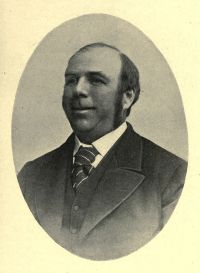 Robert S. Ball,
Time and Tide: A Romance of the Moon
“ In the formation of such beds the tides will play a part. Into the estuaries at the mouths of rivers the tides hurry in and hurry out, and especially during spring tides there are currents which flow with tremendous power ”
 James Clark Ross,
A Voyage of Discovery and Research in the Southern and Antarctic Regions
(1847)
“ The highest tide is the third high water after the full or change of the moon. The greatest rise and fall is 6 feet 2 inches at new moon; but at full moon it varied from 4 feet 10 inches to 6 feet, and averages a smaller spring tide than occurs at new moon. ”
 Ernest Ingersoll,
The Book of the Ocean
“ When, however, the moon gets into line with the earth and the sun, so that both the heavenly bodies pull together like a tandem team, as happens twice a month,—at new moon and full moon,—their combined action causes unusually high water, which is the sum of the lunar and solar tides, and is called the spring tide. ”
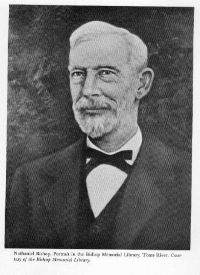 Nathaniel H. Bishop,
Voyage of the Paper Canoe
“ Earlier in the season, as a writer remarks, "until the upland waters have all run down, and the great rivers have discharged the freshets caused by thawing of the snows in the spring of the year, this current, in spite of tides, will always run down." To the uninitiated the spectacle is a curious one, of the flood tide rising and swelling the waters of a great river some eight to ten feet, while the current at the surface is rapidly descending the course of the stream. ”
 Mary Rogers Miller,
The Library of Work and Play: Outdoor Work
“ When the moon is full and when it is new they have what are called spring tides at which times the ebb is lower than ordinarily. After a storm is a fine time to look for things which have been dragged by the force of the water from their anchorage in the depths, and tossed ashore. ”
William S. Furneaux, The Sea Shore
“ And even when the rising tide drives the spring-tails into crevices where they remain submerged, perhaps for hours together, their bodies still remain dry, the water being kept off by numerous short bristles and prominences with which they are furnished. ”
 Herbert Spencer,
The Principles of Biology — Chapter III.7
(1898)
“ Twice a day the rise and the fall of the tide covers and uncovers plants and animals, fixed and moving; and through the alternation of spring and neap tides, it results that the exposure of the organisms living low down on the beach, varies both in frequency and duration: while some of them are left dry only once a fortnight for a very short time, others, a little higher up, are left dry during two or three hours at several ebb tides every fortnight. ”
William S. Furneaux, The Sea Shore
“ Thus, the spring tides—those which rise very high and fall very low—always occur when the moon is full or new; while the less vigorous neap tides occur when the moon is in her quarters and presents only one-half of her illuminated disc to the earth. ”
Mary Wollstonecraft Shelley, Falkner: A Novel
“ In winter, indeed, at the period of spring tides, or in stormy weather, with a west wind which drives the ocean towards the shore, the passage is often exceedingly dangerous, and, except under the direction of an experienced guide, fatal accidents occur. ”
Henry Charles Adams, The Sewerage of Sea Coast Towns
“ It is obvious that, if the attracting force of the sun and moon were equal, the height of spring tides would be double that due to each body separately, and that there would be no variation in the height of the sea at the time of neap tides. ”
 Robert E. Peary,
Secrets of Polar Travel
(1917)
“ Then the spring-tides cause much greater motion, and a violent storm will set the whole mass driving before it, with the big floes wheeling and smashing everything in their course until the storm ceases or the movement is stopped by contact with land. Wide lanes and large areas of open water form, and do not freeze over, and the whole ocean is similar to a river in which the ice breaking up in the spring is moving. ”
Various, Philosophical Transactions of the Royal Society - Vol 1 - 1666
“ And so, why have we not Spring tides at the New Moon (when the motion is swiftest) and Neap tides at Full Moon (when the motion is slowest) but Spring tides at both? The answer (if observed) is already given in my Hypothesis it self. Because the effect is indifferently to follow, either upon a suddain Acceleration, or a suddain Retardation. ”
 Anna Harriette Leonowens,
Life and Travel in India
“ At low tide for miles out one sees only a vast plain, moist, strewn with shells, and intersected here and there with deep hollows and shifting sandbanks; but when the tide changes, and long before the waters appear in sight, are heard tremendous sounds, crash after crash, thunder after thunder, of the advancing tide, which comes in leaping like a huge monster, thirty to forty feet high, and breaks with terrific violence against the shore, carrying everything before it. ”
 James Lane Allen,
A Kentucky Cardinal: A Story
“ Everything gone inward and downward from surface and summit, Nature at low tide. In its time will come the height of summer, when the tides of life rise to the tree-tops, or be dashed as silvery insect spray all but to the clouds. ”
Caroline Pridham, Twilight and Dawn; Or, Simple Talks on the Six Days of Creation
“ And so we notice that for about six hours from the time when the tide begins to rise, the sea gains upon the land, either stealing on, step by step, over the pebbly beach, and creeping tip the mouths of the rivers, or, when the winds are abroad, rushing over the sand, and dashing against the rocks, as if it would sweep all before it. No power upon earth can stop that steady onward march of wave upon wave, until the unseen boundary is reached. ”
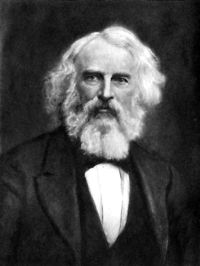 Henry Wadsworth Longfellow,
Ultima Thule — The Tide Rises, the Tide Falls
(1880)
“ The twilight darkens, the curlew calls; Along the sea-sands damp and brown The traveller hastens toward the town, And the tide rises, the tide falls. Darkness settles on roofs and walls, But the sea, the sea in the darkness calls ”
Hallam Hawksworth, The Strange Adventures of a Pebble
“ Along the dry shore of an ancient sea when the tide was out, rain-drops fell on the sand and dust. Tides often come in with a rush, in wild waves driven by the wind, but when there is no wind and no waves rolling in from far - 245 - distant storms the tide may overspread such delicate things as the imprint of rain-drops with a thin protecting film of mud. ”
Shigemi Shiukichi, A Japanese Boy
“ Things being placed aright, out they pull on the heaving sea—the incoming tide having been looked to beforehand, so that at high tide the lighted lanterns may be set afloat and go drifting at their will with the falling flood. ”
 R. M. Ballantyne,
The Ocean and Its Wonders
“ The tides of the sea—as the two great flowings and ebbings of the water every twenty-four hours are called—are caused principally by the attractive influence of the moon, which, to a small extent, lifts the waters of the ocean towards it, as it passes over them, and thus causes a high wave. This wave, or current, when it swells up on the land, forms high tide. When the moon’s influence has completely passed away, it is low tide. ”
Lischen M. Miller, The Pacific Monthly
“ It would be an easy matter to pull out and back before there should be any change in the weather. Six of the best oarsmen in the place, therefore, set off on the last of the tide in the gray dawn. They pulled a steady stroke, and the swiftly ebbing tide seemed to fairly shoot them along and out across the bar. When well outside they turned southward, and those watching from the shore could note the small boat rise and fall with the swell of the sea. ”
Winthrop Packard, Old Plymouth Trails
“ You can leave the shallow bays inland only when the tide serves, hence gropings for a tender on the beach of starlit mornings, the chuckle of halliard blocks in the rose of dawn and a long drift in the pink glow of morning fog while the boom swings idly and the turn of the flood drifts you eastward. Little wayward winds, too lazy to make a ripple on the glassy surface of the water or stir the sail, play strange tricks with this morning fog. ”
J. A. Gillet, The Heavens Above: A Popular Handbook of Astronomy
“ The greater the obliquity of the ecliptic, the greater would be the variation in the length of the days and nights, and the more extreme the changes of the seasons.Tides. 72. Tides.—The alternate rise and fall of the surface of the sea twice in the course of a lunar day, or of twenty-four hours and fifty-one minutes, is known as the tides. When the water is rising, it is said to be flood tide; and when it is falling, ebb tide. When the water is at its greatest height, it is said to be high water ”
Robert S. Ball,
Time and Tide: A Romance of the Moon
“ If the theory of the tides was to be the simple one so often described, then at every port noon should be the hour of high water on the day of the new moon or of the full moon, because then both tide-exciting bodies are on the meridian at the same time. Even if the friction retarded the great tidal wave uniformly, the high tide on the days of full or change should always occur at fixed hours ”
Related terms
Authors who wrote about “spring tide”
George Howard DarwinHenry Charles AdamsWilliam HewittJ. B. AtkinsRobert S. BallWilliam S. Furneaux| override_editorHenry M. Plummer Sir Oliver Lodge
 William SharpGeorge Frederic JacksonJames De Mille
 Robert Stawell BallNathaniel H. BishopCleveland RockwellRobert E. PearyTimothy HarleyVariousHenry Wadsworth Longfellow
 Henry David Thoreau
