“ All our foliage alike is, strictly speaking, annual, and all alike deciduous; but while oaks and beeches shed their dead leaves in our climate in autumn, pines, firs, and hollies retain theirs on the tree till the succeeding spring, and then let them drop quietly off, unperceived amid the pale glory of the fresh green foliage. The larch is a well-known example of a conifer which behaves in this respect like the oak or the birch; while its ally, the spruce-fir, keeps on the dead or dying leaves through the winter months, and then shuffles them off unobtrusively as the new foliage develops. ”
Spruce fir
Definition and stakes
The theme of “spruce fir” has been addressed by authors such as Henry H. Gibson, John Muir, Charles H. Snow, E. T. Allen and Winthrop Packard. It is often associated with terms like pine, branch, bark, birch and white.
Quotes about “spruce fir”
Various, The Continental Monthly, Vol. 4…
“ In none other does it appear to change, and even then it casts not off the old—it only puts on the new in tenderer and fresher beauty! The new growth of the spruce and fir, the pale yellowish-green tips set in the dark old background, are exquisitely lovely; nor are the light green shoots of the white, yellow, and pitch pine much, less beautiful. ”
Charles H. Snow, The Principal Species of Wood: Their Characteristic Properties
“ Fir wood resembles spruce in appearance and in structural qualities. It may be told from spruce as well as from pine and larch by the fact that fir has no resin-ducts. The balsam fir is distinguishable by clear liquid resin which appears in blisters in the bark. The coarse, weak wood is cleaner than the bark would indicate. Spruce and fir woods are often confused in the United States, while pine, spruce, and fir are similarly confounded in Europe. ”
C. E. Smith, Trees, Shown to the Children (1908)
“ The wood of the Spruce Fir is valuable for many purposes. The tall, smooth tree trunks are used for the masts of ships, for scaffolding poles, and telegraph posts; and many boat-loads of Fir planks are brought from Norway and from the shores of the Baltic Sea, to be manufactured into flooring boards for our houses. In some places the fibre of the Spruce Fir is reduced to pulp, and from this a common kind of paper is produced which is used for newspapers or cheap magazines.From the sap we get resin and turpentine, and the bark is used in the tanning of leather. ”
J. West, Remarks on the management, or rather… (1842)
“ Upon a suitable soil, the Spruce Fir has always appeared to me, to be decidedly and incomparably the best nurse of the Oak. I have, for instance, often seen, on a clay soil, a Spruce Fir, and an Oak of twenty-five years growth, flourishing admirably, in close proximity with each other—even within a foot and a half. ”
The Pearl Story Book: Stories and Legends of Winter…
“ Their mother pierced a hole in a brown bud last autumn and laid her eggs there; then when the buds burst in spring the lower leaves grew fast together and made this comfortable house, and those green tusks you see are the leaf points.But what is the other kind of fir that grows in our wood? It is rather like the spruce in shape, but it is not quite so stiff and prim and proper, and underneath each little leaf there are two silver lines, and so we call this the silver fir. You may always know it from the spruce by these silver lines. ”
Various, The Continental Monthly, Vol. 4…
“ Yet perhaps that which contains in itself the greatest number of the elements of beauty, is the medium-sized pyramidal tree, be it of spruce, Norway pine, or balsam fir. It unites at once, in its pyramidal shape, the strength and majesty of the old, and in its gracefully curved limbs and abundant leaves, the beauty and freshness of the young tree. When loaded down with a spotless burden of snow until its limbs are almost ready to break, no pyramid of art, no monument chiselled by human hands, can hope to approach its pure and model beauty. ”
E. T. Allen, Practical Forestry in the Pacific Northwest
“ After this stage spruce grows uniformly and rapidly, still somewhat slower than fir in height but exceeding it in diameter. The branches are slow to die, however, so that the tree remains bushy for most of its length until it reaches 60 or 80 feet in height, and even afterward a dense stand is required to clear it. In many pure spruce forests the larger trees have been able to withstand the pruning influences and remain limby, while the smaller ones, being pushed in height growth to reach sufficient light for survival, have cleared themselves with remarkable rapidity. ”
Sir Herbert Maxwell, Trees: A Woodland Notebook
“ When a British forester talks of a spruce fir he may be understood to refer to Picea excelsa, commonly known as the Norway spruce, although in fact much of the Norwegian spruce forest is composed of the Siberian spruce (P. obovata) , a species closely resembling the other, but incapable of thriving in the moist and relatively mild climate of Great Britain. ”
Robert Tyas, Woodland Gleanings: Being an Account of British Forest-Trees
“ Sometimes it [226] has as good an effect, and in many circumstances a better, when the contrast appears still stronger; when the tree is shattered by some accident, has lost many of its branches, and is scathed and ragged. A feathery branch, here and there, among broken stems, has often an admirable effect; but it must arise from some particular situation. In all circumstances, however, the Spruce Fir appears best either as a single tree, or unmixed with any of its fellows; for neither it, nor any of the spear-headed race, will ever form a beautiful clump without the assistance of other trees. ”
Anonymous, The Useful Arts Employed in the Construction of Dwelling Houses… (1851)
“ The spruce grows more rapidly than any other of the fir tribes; its wood is extremely tough and strong, and answers well for masts and spars, but it is not so valuable when cut into planks as that of other species. ”
Robert Tyas, Woodland Gleanings: Being an Account of British Forest-Trees
“ It often wants both form and beauty. We admire its floating foliage, in which it sometimes exceeds all other trees; but it is rather disagreeable to see a repetition of these feathery strata, beautiful as they are, reared tier above tier, in regular order, from the bottom of a tree to the top. Its perpendicular stem, also, which has seldom any lineal variety, makes the appearance of the tree still more formal. It is not always, however, that the Spruce Fir grows with so much regularity. ”
Henry H. Gibson, American Forest Trees
“ That is due to the greater age to which spruce lives. Trees of that species continue to stand after the firs have died of old age. On the other hand, [153] fir outnumbers spruce in many young stands. That is because fir reproduces better than spruce, and grows with more vigor at first. In stands of second growth the fir often predominates. It depends to some extent upon the conditions under which the second growth has its start. Fir does not germinate well if the ground has been bared by fire and the humus burned. Consequently, old burns do not readily grow up in fir. ”
John Franklin, The Journey to the Polar Sea
“ Of pines the white spruce is the most common here: the red and black spruce, the balsam of Gilead fir, and Banksian pine also occur frequently. The larch is found only in swampy spots and is stunted and unhealthy. The canoe birch attains a considerable size in this latitude but from the great demand for its wood to make sledges it has become rare. The alder abounds on the margin of the little grassy lakes so common in the neighbourhood. A decoction of its inner bark is used as an emetic by the Indians who also extract from it a yellow dye. ”
 John Aikin,
Evenings at Home; Or, The Juvenile Budget Opened
“ They are the common or spruce fir, a native of Norway, and other northern countries, and one of the loftiest of the tribe. But observe those trees that grow singly in the grounds opposite to us with widespread branches spreading downward, and trailing on the ground, thence gradually lessening till the top of the tree ends almost in a point. ”
Henry H. Gibson, American Forest Trees
“ In the markets, no distinction is made between white spruce lumber, and that cut from other species. The uses of the different species are much the same. As a pulpwood, white spruce is in demand wherever it is available. The largest output in the United States comes from northern New England. The tree is often planted for ornamental purposes in Europe and in northern states. When grown in the open, the crown is pyramidal, like that of balsam fir. It does not thrive where summers are warm and dry. ”
 Henry David Thoreau,
The Maine Woods
(1864)
“ The fir has the darkest foliage, and, together with the spruce, makes a very dense "black growth," especially on the upper parts of the rivers. A dealer in lumber with whom I talked called the former a weed, and it is commonly regarded as fit neither for timber nor fuel. But it is more sought after as an ornamental tree than any other evergreen of these woods except the arbor-vitæ. The black spruce is much more common than the white. ”
A. G. H. Thatcher, Scaffolding (1907)
“ The spruce from Norway and the northern fir are generally cut when between 70 and 100 years old. When required for poles, spruce is cut earlier, it having the advantage of being equally durable at all ages. ”
C. E. Smith, Trees, Shown to the Children (1908)
“ The trunk is covered with greyish brown bark, which is smooth when the tree is young; but as the tree grows old—and the Silver Fir will live for four hundred years—this bark cracks into many rugged fissures. You remember that the Spruce tree has a sharp spear-like point rising from the very top of the trunk. In the Silver Fir the tree is only pointed when very young, and by the time it is full grown the top is bushy, with many small unequal branches standing out from the main stem. ”
Winthrop Packard, Wood Wanderings
“ There is no tree so fit to bear loving gifts to all the world.The spruce partridge, as he is commonly called up here, the Canada grouse (Dendragapus canadensis) of the scientists, is a bird that I find very common and amazingly unafraid under the spruce and fir in these northern woods. He is a smaller, grayer, darker bird than the ruffed grouse which is the familiar bird of our home woods. Up here they call the latter “birch partridge,” because he feeds on birch buds,{36} while the spruce partridge feeds on the tips of the spruce. The birch partridge is more wary. ”
E. T. Cook, Trees and Shrubs for English Gardens
“ But a mass of Common Spruce in a cool, alluvial bottom is a picture of well-being, and no one can deny their majesty on alpine hillsides. The Douglas Fir is sometimes recommended in its stead, but this beautiful and quick-growing tree must still be regarded as an experiment. There is not as yet a single old Douglas Fir, and there are some among our botanical experts who are yet in doubt whether, for all its young vigour, it will be a lasting tree for our country. ”
“ Only in the fir woods are large flocks seen; for, unlike the cones of the pine, spruce, hemlock, etc., which let the seeds escape slowly, one or two at a time, by spreading the scales, the fir cones when ripe fall to pieces, and let nearly all go at once in favorable weather. ”
Henry H. Gibson, American Forest Trees
“ This fir differs from balsam fir in its choice of situation. The latter, though not exactly a swamp tree, prefers damp ground, while Fraser fir flourishes on slopes and mountain tops.On the mountains of western North Carolina fir grows in mixture with red spruce. Sometimes the fir is fifty per cent of the stand, but usually it is less, and frequently not more than fifteen per cent. Few fir trees in that locality are two feet in diameter. They grow with fair rapidity in their early years, but decline in rate as age comes on. ”
Julia Ellen Rogers, Trees Worth Knowing
“ Leaf-scars on a fir twig are level with the bark, leaving the twig smooth. Spruce twigs are always roughened, as described above.Most spruce trees have distinctly four-angled leaves, sharp-pointed and distributed spirally around the shoot, not two-ranked like fir leaves. They are all pyramidal trees with flowers and fruits of the coniferous type. The cones are always pendent and there is an annual crop. The wood is soft, not conspicuously resinous, straight-grained and valuable as lumber. ”
Wallis Nash, Two Years in Oregon
“ This timber is principally pine and fir; there are also large quantities of splendid spruce; alder and white-oak, laurel and maple are also found. Alder grows from twenty-four to thirty inches in diameter, and is worth for cabinet-making purposes from thirty to forty dollars a thousand feet at the factory. There is a belt principally of spruce timber, a mile wide and how many miles long I can not say, heading northward from Depot Slough, a stream running into Yaquina Bay, many of the trees being eight and nine feet in diameter, and two hundred and fifty feet high. ”
 Patrick Matthew,
On Naval Timber and Arboriculture
“ Any vestige of withering on the spruce or silver fir, is a sure prognostication of approaching decay. Any kind of fir which has lost its leader may be considered useless.“When plants are packed up in mats for the conveniency of carriage, strict orders should be given that those which carry their leaves in winter be taken up when they are entirely free from moisture. If they be pulled wet, they will heat and get mouldy in the packages. In the course of a few days good plants are often spoiled in this manner.” ”
Various, Chambers's Journal of Popular Literature…
“ Man's constant need of timber is abundantly met in these forests. The Douglas or red fir, a tough dense wood, attains a great size, and prevails almost universally. The red cedar, hemlock, spruce, white pine, balsam pine, and other useful conifers, are plentiful ”
Henry H. Gibson, American Forest Trees
“ It may be observed in traveling through the stands of mixed spruce and fir among the high ranges of the southern Appalachian mountains that the proportion of spruce is much higher in old stands than in young. ”
J. B. Wagner, Seasoning of Wood
“ Red Fir (Pseudotsuga taxifolia) (Oregon Pine, Puget Sound Pine, Yellow Fir, Douglas Spruce, Red Pine) . Heartwood light red or yellow in color, sapwood narrow, nearly white, comparatively free from resins, variable annual rings. Wood usually hard, strong, difficult to work, durable, splinters easily. Used for heavy construction, dimension timber, railway ties, doors, blinds, interior finish, piles, etc. ”
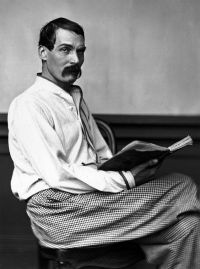 Sir Richard Francis Burton,
The City of the Saints, and Across the Rocky Mountains to California
“ On the lower banks the timber is mostly cleared off. Upon the higher slopes grow the mountain mahogany and the scrub maple wherever there is a foot of soil. There is a fine, sturdy growth of abies. The spruce, or white pine, rises in a beautifully regular cone often 100 feet high; there are two principal varieties of fir, one with smooth light bark, and the other, which loves a higher range, and looks black as it bristles out of its snowy bed, is of a dun russet. ”
The New Student's Reference Work (1914)
“ In these forests are found pine, spruce, hemlock, fir, rock and white maple, oak, white, yellow and gray birch, beech, cedar, black larch, cherry, bass-wood, white and brown ash, poplar, elm and chestnut. Fruit-trees are abundant. Apples, pears and plums are extensively grown. ”
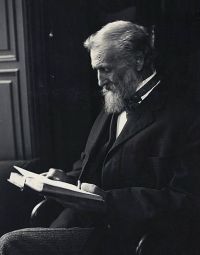 John Muir,
The Mountains of California
“ It is by far the most majestic spruce I ever beheld in any forest, and one of the largest and longest lived of the giants that flourish throughout the main pine belt, often attaining a height of nearly 200 feet, and a diameter of six or seven. Where the growth is not too close, the strong, spreading branches come more than halfway down the trunk, and these are hung with innumerable slender, swaying sprays, that are handsomely feathered with the short leaves which radiate at right angles all around them. ”
 Mary Rogers Miller,
The Library of Work and Play: Outdoor Work
“ When once you know the spruces by the looks or the feel, you will begin to know the white from the red and black spruce by the colour. Everything about the white spruce is paler than the others. The foliage is light, almost pea-green, and the bark is not ruddy but grayish-brown. There are thousands of acres of spruce woods in our northern Central and New England states. Boys and girls on camping trips can sometimes collect spruce gum enough to [82] pay expenses and have fun doing it. ”
J. B. Wagner, Seasoning of Wood
“ Used like soft pine, but also employed as resonance wood in musical instruments and preferred for paper pulp. Spruces, like pines, form extensive forests. They are more frugal, thrive on thinner soils, and bear more shade, but usually require a more humid climate. "Black" and "White" spruce as applied by lumbermen usually refer to narrow and wide-ringed forms of black spruce (Picea nigra) .35. Black Spruce (Picea nigra var. mariana) . Medium-sized tree, forms extensive forests in northwestern United States and in British America ”