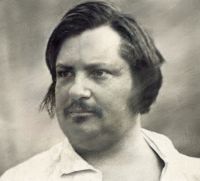
“ Undoubtedly the position of supernumerary in a government office is precisely what the novitiate is in a religious order,—a trial. It is a rough trial. The State discovers how many of them can bear hunger, thirst, and penury without breaking down, how many can toil without revolting against it; it learns which temperaments can bear up under the horrible experience—or if you like, the disease—of government official life. From this point of view the apprenticeship of the supernumerary, instead of being an infamous device of the government to obtain labor gratis, becomes a useful institution. ”
Supernumerary
Definition and stakes
The theme of “supernumerary” has been addressed by authors such as Honoré de Balzac, Thomas Wilhelm, William Duane, Anonymous and by the Alabama State Legislature. It is often associated with terms like states, census, Congress, house and state.
Quotes about “supernumerary”
William Duane, A military dictionary
“ When a company has lost the step, (a circumstance which frequently happens) the supernumerary officer of that company must watch a seasonable moment to suggest a change of step, in which operation, he will be assisted by the supernumerary serjeants. For it must be an invariable rule among officers in the ranks, never to deviate from their own perpendicular line of march, to correct the errors of their several companies. That business belongs entirely to the major and adjutant, who are occasionally assisted by the supernumeraries, in the manner just mentioned. ”
Thomas Wilhelm, A Military Dictionary and Gazetteer
“ In case supernumerary members are detailed for a court-martial, they are sworn, and it is right that they should sit and be present at all deliberations even when the court is cleared, in order to be prepared to take the place of any absent member. ”
Anonymous, Infantry training, 1905 (1905)
“ In other respects the instructions in Parts II and III are applicable to the formation of companies, and to the position of supernumeraries. Signallers and pioneers will remain in the supernumerary rank of their companies. When a non-commissioned officer is in command of a company, he will, in marching past in column, or column of double companies, take post three paces in rear of the centre of the company. ”
Thomas Wilhelm, A Military Dictionary and Gazetteer
“ Officers or men in excess of the establishment, but borne on the rolls of the corps till absorbed. Supernumeraries, or supernumerary rank, also signifies the officers and non-commissioned officers in the infantry, cavalry, etc., who are not included among rank and file, and stand in the third rank on parade, when the troops are drawn up in double ranks.Supersede. Is to deprive an officer of rank and pay for any offense or neglect, or to place one officer over the head of another, who may or may not be more deserving. ”
“ The poor supernumerary, on the other hand, who is the only real worker, is almost always the son of some former clerk’s widow, who lives on a meagre pension and sacrifices herself to support her son until he can get a place as copying-clerk, and then dies leaving him no nearer the head of his department than writer of deeds, order-clerks, or, possibly, under-head-clerk. ”
by the Alabama State Legislature, Alabama State Constitution of 1901… (1901)
“ No elected or appointed Bullock County official, including the sheriff, may assume a supernumerary office after the effective date of this amendment. Any person who, on the effective date of this amendment, is entitled to participate in a supernumerary program may continue to participate in that supernumerary program, which shall include the assumption of a supernumerary office according to the terms and conditions of the law which established that supernumerary program. ”
Stafford H. Northcote and Sir C. E. Trevelyan, Report on the Organisation of the Permanent Civil Service (1854)
“ If more have been elected (in order to maintain the average) than there is immediate demand for, they should be sent as supernumerary clerks to the offices in which the work happens to be the heaviest, unless there is any special service upon which they can with advantage be temporarily employed, or they might wait to take their turn. As vacancies occur from time to time before the next general examination, the supernumeraries should be appointed to them, and, if the whole have not been placed before that time, it will only be necessary to make the next batch the smaller. ”
Samuel Pepys, Diary of Samuel Pepys — July, 1666
“ I asked him whether he did never desire an account of the number of supernumeraries, as I have done several ways, without which we shall be in great errour about the victuals; he says he has done it again and again, and if any mistake should happen they must thanke themselves. ”
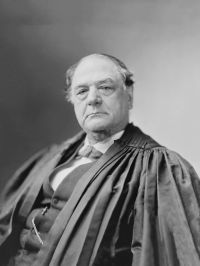 Noah Haynes Swayne,
McPhaul v. Lapsley — Opinion of the Court
Noah Haynes Swayne,
McPhaul v. Lapsley — Opinion of the Court
“ An act of 20th December, 1836, after requiring all persons who claim lands, by deed, lien, or any other color of title, to record their instruments of title in the clerk's office of the county where the land lies within twelve months from the 1st April, makes it, by the thirty-fifth section, the duty of the clerk to record all deeds, conveyances, mortgages, and other liens, and all other instruments in writing, provided that one of the witnesses shall swear to the signature of the signer, or he, himself, shall acknowledge the same. ”
John Asgill, An Essay on a Registry, for Titles of Lands (1698)
“ But why of all troubles the trouble of a Registry should be only grievous, I can't tell, unless because it puts an End to Strife: Is it such a mighty trouble for an Attorneys Clerk, when he is to enter up a Judgment, to step into the Registry and leave an Entry made of it? and is it such a great trouble for a Man when he has sealed a Deed to go to the Register to acknowledge it? ”
The Postal Service (Fifth Edition…
“ In the system of counting every place, or column, counting from the right, has a value ten times greater than the one in the place or column nearest on the right. Thus in the number 36,542 the first figure on [71] the right represents “ones,” the next ten times as much or “tens,” the next ten times as much again or “hundreds,” and so on. We really read this number backward when we name it, for in handling it in any way we have to start with the last figure, representing the “ones.” The number really means two ones, four tens, five hundreds, six thousands and three ten thousands. ”
Portal:United States Congress, United States Statutes at Large (1845)
“ The oath or affirmation of an assistant shall be,—“I, A. B., do solemnly swear, (or affirm) that I will make a just and perfect enumeration and description of all persons resident within the division assigned to me by the marshal of the district of (or the secretary of the territory of as the case may be) , and make due return thereof to the said marshal, or secretary, agreeably to the directions of an act of Congress, intituled ‘an act providing for the enumeration of the inhabitants of the United States,’ according to the best of my abilities.”Commencement and close of the enumeration. ”
Record Commission, ../../ (1810)
“ He will set down which Statutes are warranted by the Record, and which not. He will correct the printed Book by the Record. For which Purpose he requireth free Access at all Times to the Records in the Tower. Being very aged, viz. almost Fourscore, he desireth that for his Ease and better enabling in his Work, the Keeper of the Records within the Tower of London may every Day deliver unto him, when he shall so require, One Parliament Roll, to be by him and his Clerk perused and viewed, in a Lodging which he hath taken near unto the said Office ”
Luke Owen Pike, The Public Records and The Constitution (1907)
“ There are abundant materials in the Record Office, beginning in the reign of Richard I, for the proof and illustration of all these matters in detail. The records themselves which have fortunately been preserved are of inestimable value for those who know how to use them, teaching us how the Courts of King's Bench and Common Pleas acquired their respective jurisdictions, and the relations which each bore to the other, and the Eyre to both. ”
Walter Francis Willcox, 1911 Encyclopædia Britannica (1911)
“ The average extent of each beat is arranged to include about 300 persons. Thus, in 1901, not far from a million men were required for enumeration alone. To this army must be added the controlling agency, of at least a tenth of the above number, charged with the instruction of their subordinates, the inspection and correction of the preliminary record, and the transmission of the schedule books to the local centre after the census has been taken. ”
Record Commission, The Statutes of the Realm/Volume 1 (1810)
“ Whereas the Knights, Citizens, and Burgesses, and Commissioners of Shires and Boroughs in Our Parliament of Great Britain assembled, having taken into their Consideration the State of the Public Records of this Kingdom, and the necessity of providing for the better arrangement, preservation, and more convenient use of the same, have heretofore humbly laid before Us a Report of their Proceedings thereon, and also humbly represented unto Us that the Public Records of the Kingdom are in many Offices unarranged, undescribed, unascertained ”
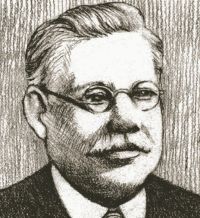 Charles Hose,
The Pagan Tribes of Borneo
Charles Hose,
The Pagan Tribes of Borneo
“ If a larger number than twenty is to be counted, as when, for example, a chief has to pay in tax for each door of his house, he calls in the aid of several men, who sit before him. One of these tells off his fingers and toes as the chief utters the names of the heads of the rooms; and when twenty have been counted in this way, a second man begins on his fingers, while the first continues to hold on to all his toes. A third and a fourth man may be used in the same way to complete the count ”
Luke Owen Pike, The Public Records and The Constitution (1907)
“ Annual account of the revenue to be sent to the King or his officer: the Great Rolls. You will have noticed the words of the writs 'how much the King ought to have in twelve months from each shire'. You see here the determination of the King and his Court or Council to have an annual account of the royal revenues; and accordingly the earliest records after Domesday are rolls which show the annual accounts of the Sheriffs, and which, like Domesday, were not retained in the respective shires, but were sent to the King or his proper officer. ”
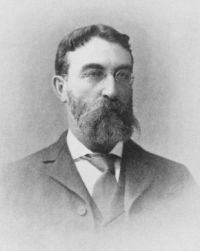 George Burton Adams,
1911 Encyclopædia Britannica
(1911)
George Burton Adams,
1911 Encyclopædia Britannica
(1911)
“ In time the private lord, who had never been an officer of the state, assumed the old administrative titles and called himself count or viscount, and perhaps with some sort of right, for his position in his territories, through the development of the immunity, did not differ from that now held by the man who had been originally a count. ”
Robert Kerr, A General History and Collection of Voyages and Travels…
“ Several nations in America have no other instruments of calculation. It was probably the same in the primitive ages. It is another strong presumption of the truth of what I now advance, that all civilized nations count by tens, tens of tens, or hundreds, tens of hundreds, thousands, and so on; still from ten to ten. We can discover no reason why the number ten should be chosen rather than any other for the term of numeration, except this primitive practice of counting by the fingers. ”
 Thomas Hodgkin,
The history of England, from the earliest times to the Norman Conquest
(1906)
Thomas Hodgkin,
The history of England, from the earliest times to the Norman Conquest
(1906)
“ There has been much discussion as to the kind of unit, five-score of which made up the Anglo-Saxon Hundred, but on the whole the prevailing opinion seems to be that it was composed, in theory at least if not invariably in practice, of a hundred hides or households.215 The charter, if we may so call it, of the Hundred-court is furnished us by a document which is believed to date from the reign of Edgar and which begins: “This is the arrangement, how men shall hold the Hundred. First, that they always gather themselves together once in four weeks: and that each man shall do right to the rest. ”
George Sutherland, Springer v. Government of the Philippine Islands ex rel…
“ Where a statute contains a grant of power enumerating certain things which may be done and also a general grant of power which, standing alone, would include these things and more, the general grant may be given full effect if the context shows that the enumeration was not intended to be exclusive. ”
 Thomas Curtis Clarke,
American Pocket Library of Useful Knowledge
(1841)
Thomas Curtis Clarke,
American Pocket Library of Useful Knowledge
(1841)
“ The actual enumeration shall be made within three years after the first meeting of the Congress of the United States, and within every subsequent term of ten years, in such manner as they shall by law direct. The number of Representatives shall not exceed one for every thirty thousand, but each State shall have at least one Representative ”
 Arthur Charles Fox-Davies,
A Complete Guide to Heraldry
(1909)
Arthur Charles Fox-Davies,
A Complete Guide to Heraldry
(1909)
“ After the field has been specified, the principal charge must be mentioned first, and no charge can take precedence of a bend, fess, pale, pile, chevron, cross, or saltire, except one of themselves. If there be any reason for a subdivision those charges must stand by themselves, and might be termed the honourable ordinaries, but I can see no reason for treating the chief, the quarter, the canton, gyron, flanche, label, orle, tressure, fret, inescutcheon, chaplet, bordure, lozenge, fusil, mascle, rustre, roundel, billet, label, shakefork, and pairle, as other than ordinary charges. ”
Luke Owen Pike, The Public Records and The Constitution (1907)
“ The old King's Court or Council six principal subdivisions. At the beginning of this lecture I asked you to think of the Conqueror's Court or Council, and the records which it brought into being, as the starting-points of our Constitution and of our Public Records. After more than eight hundred years you may still see that old King's Court represented in six principal subdivisions, though some of them have various branches. These are (1) the Parliament (including, of course, the House of Lords, with its legal jurisdiction, as well as the House of Commons) ”
C. J. Coffman, Manual of the Enumeration
“ When the values of the initials added together make 22, it indicates an ability to come before the public in a masterly vibration, as an organizer. The admiration and applause of the crowd may take the form of many gifts and the money almost too easily obtained. This may cause you to degenerate your 22 into its sum, as 4, the material, organizing and even mercenary type of mind. The possession of a 22, as the sum of your initials or your Public Appearance Number, will not prevent this. Numbers only indicate the latent powers possessed, the influences that can be used. ”
Edward William Brabrook and Carroll Davidson Wright, 1911 Encyclopædia Britannica (1911)
“ Registry under a particular name may be refused if in the opinion of the registrar the name is likely to deceive the members or the public as to the nature of the society or as to its identity. It is the duty of the chief registrar, among other things, to require from every society a return in proper form each year of its receipts and expenditure, funds and effects; and also once every five years a valuation of its assets and liabilities. ”
 James Moore Wayne,
Wiseman v. Chiappella — Opinion of the Court
James Moore Wayne,
Wiseman v. Chiappella — Opinion of the Court
“ But while the courts evidently speak of well-known places where the presentment is to be made, they lay no stress upon the manner in which they became known. The proper place to present a bill to a firm is, undoubtedly, their counting-house; and whether that be known to the notary by the number of the house stated in the bill, or in any other positive manner, the reason of the thing and the conclusion must be the same. Here the notary knew the counting-house so well, and so positively, that he went to it several times. ”
 Carl Schurz,
Report of the Secretary of the Interior
(1878)
Carl Schurz,
Report of the Secretary of the Interior
(1878)
“ Better methods of enumeration have become known, through our own experience at three censuses taken under the act of 1850, and through the experiences of other nations in conducting similar services. Even the conditions of the country have greatly changed. ”
Beatrice Webb, English Poor Law Policy
“ As with all nineteenth-century history, the extent, the variety, and the intricacy of the various sources are simply overwhelming. The number of official records—Statutes, Orders, Circulars, Minutes, Reports, Letters, etc.—dealt with for the present small volume (although we have confined ourselves in the main to the publications of the Central Authority itself, and have not been able to consult the manuscript records and letter-books of more than a score of the Boards of Guardians) runs into, literally, tens of thousands. ”
 Samuel Freeman Miller,
Leftwitch v. Lecanu — Opinion of the Court
Samuel Freeman Miller,
Leftwitch v. Lecanu — Opinion of the Court
“ If a paper which is to constitute a part of a bill of exceptions, is not incorporated into the body of the bill, it must be annexed to it, or so marked by letter, number, or other means of identification mentioned in the bill, as to leave no doubt, when found in the record, that it is the one referred to in the bill of exceptions. ”
