 Jean Paul,
Hesperus; or, Forty-Five Dog-Post-Days…
Jean Paul,
Hesperus; or, Forty-Five Dog-Post-Days…
“ One learns taciturnity best among people who have none, and loquacity among the taciturn. ”
Jean Paul,
Hesperus; or, Forty-Five Dog-Post-Days…
“ One learns taciturnity best among people who have none, and loquacity among the taciturn. ”
Stanley Lane-Poole, The Thousand and One Nights, Vol…
“ Live then apart, and rely upon no man: I have given thee, in these words, good advice, and sufficient. Accustom thyself to taciturnity: occupy thyself with thine own affairs, and use not many words: for the poet saith,— Taciturnity is an ornament, and in silence is security: therefore, when thou speakest, be not loquacious: For if thou repent once of thy silence, thou wilt assuredly repent many times of thy speech. Beware of drinking wine; for it is the source of every kind of mischief. The poet32 saith on this subject,— I have abandoned wine and those who drink it ”
 Ludwig Tieck,
The Rebellion in the Cevennes
(1845)
Ludwig Tieck,
The Rebellion in the Cevennes
(1845)
“ I read in solitary and consecrated moments, and experieneed what every thirsty one feels, who is susceptible of humiliation, in whom the utter sense of helplessness is not entirely extinct, which, indeed, is so indispensably necessary before the spiritual word can take root in the uncultivated heart. ”
 Henry Fielding,
An Enquiry into the Causes of the late Increase of Robbers…
(1751)
Henry Fielding,
An Enquiry into the Causes of the late Increase of Robbers…
(1751)
“ With Patience therefore must we wait, till this notable Mistress of the Few shall, in her good time, accomplish so desirable a Change: In Fact, till Great Men become wiser or better; till the Prevalence of some laudable Taste shall teach them a worthier Manner of employing their Time; till they have Sense enough to be reasoned, Modesty enough to be laughed, or Conscience enough to be frightened out of a silly, a shameful and a sinful Profligacy, attended with horrid Waste of Time, and the cruel Destruction of the Families of others, or of their own. ”
Richard Baxter, A Christian Directory, Part 1: Christian Ethics
“ If you are bred up in temperance and modesty, where there are no great temptations to gluttony, drinking, sports, or wantonness, you may think a while that your natures have little or none of this concupiscence, and so may walk without a guard: but when [Pg 55] you come where baits of lust abound, where women, and plays, and feasts, and drunkards are the devil's snares, and tinder, and bellows, to inflame your lusts, you may then find to your sorrow, that you had need of watchfulness, and that all is not mortified that is asleep or quiet in you. ”
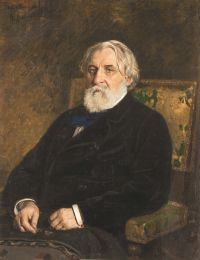 Ivan Turgenev,
The Novels of Ivan Turgenev
(1920)
Ivan Turgenev,
The Novels of Ivan Turgenev
(1920)
“ You ought to be writing rhymes, and sulking and nursing your own petty thoughts and sensations, and busying yourself with psychological fancies and subtleties of all sorts, but at least don't mistake your sickly, nervous whims and irritability for manly indignation, for the honest anger of a man of convictions! ”
 Harriet Beecher Stowe,
The Atlantic Monthly
(1866)
Harriet Beecher Stowe,
The Atlantic Monthly
(1866)
“ Who can tell the countless temptations to evil which flow in from a neglected, disordered, deranged nervous system,—temptations to anger, to irritability, to selfishness, to every kind of sin of appetite and passion? ”
Henry James, The Turn of the Screw
“ I replied; “only you haven’t my dreadful boldness of mind, and you keep back, out of timidity and modesty and delicacy, even the impression that, in the past, when you had, without my aid, to flounder about in silence, most of all made you miserable. ”
 Edwin Abbott Abbott,
The Kernel and the Husk
(1886)
Edwin Abbott Abbott,
The Kernel and the Husk
(1886)
“ Since we cannot take this machinery to pieces, or experiment with it freely, we must derive our knowledge largely from the consciousness of our own motives. Tickling produces laughter in us, and pricking, a cry; affection, and the command of those whom we love, produce in us obedience; desire of a result or reward produces effort; fear of pain or penalty produces avoidance of certain actions, performance of others. Hence we infer that, in others also, similar effects have been produced, or will be produced, by similar causes. ”
Th. Ribot, The Psychology of the Emotions (1897)
“ II. The generally accepted formula connecting pleasure with medium activities is supported by a commonly observed fact—viz., that pleasure carried to excess or continued too long often transforms itself into its opposite. The pleasures of eating may lead to nausea, tickling soon becomes a torture, as well as heat and cold, and one cannot endure even a favourite melody when played for two consecutive hours. In a word, a sensation or representation at first agreeable may, either gradually or suddenly, be found to have its opposite associated with it. ”
 William Makepeace Thackeray,
The Virginians
William Makepeace Thackeray,
The Virginians
“ You might when racked with gout, in solitude, the fear of death before your eyes, the doctor having cut off your bottle of claret, and ordered arrowroot and a little sherry,—you might then be humiliated, and acknowledge your own shortcomings, and the vanity of things in general; but, in high health, sunshine, spirits, that word miserable is only a form. You can't think in your heart that you are to be pitied much for the present. ”
“ My private perversity, as I here glance at it, has had its difficulties—most of all possibly that of one's addiction, in growing older, to allowing a supreme force to one's earlier, even one's earliest, estimates of physical felicity; or in other words that of the felt impulse to leave the palm for good looks to those who have reached out to it through the medium of our own history. ”
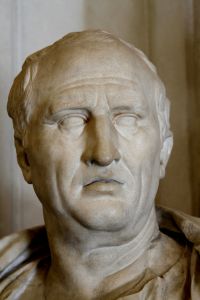 Marcus Tullius Cicero,
The Orations of Marcus Tullius Cicero…
Marcus Tullius Cicero,
The Orations of Marcus Tullius Cicero…
“ Therefore the accuser, when he says that anything has been done in compliance with some impulse, ought to exaggerate that impulse, and any other agitation or affection of the mind, with all the power of language and variety of sentiments of which he is master, and to show how great the power of love is, how great the agitation of mind which arises from anger, or from any one of those causes which he says was that which impelled any one to do anything. ”
Thomas More, Utopia (1901) — Chapter 6: Of the Travelling of the Utopians (1901)
“ Among those foolish pursuers of pleasure they reckon all that delight in hunting, in fowling, or gaming, of whose madness they have only heard, for they have no such things among them. But they have asked us, 'What sort of pleasure is it that men can find in throwing the dice?' (for if there were any pleasure in it, they think the doing it so often should give one a surfeit of it) ”
Ludwig Tieck,
The Pictures; The Betrothing: Novels
“ Hence wherever it has been strongly excited, whatever bears the name or is allied to the nature of amusement and diversion has been proscribed, not so much on an ascetic principle of mortification, as sensual indulgence, but because it is thought to distract the attention from the great business of life. ”
 Booth Tarkington,
The Red Book Magazine, Volume 37…
(1921)
Booth Tarkington,
The Red Book Magazine, Volume 37…
(1921)
“ She went indoors, and having ascended to her own room, presently sat down and engaged herself with writing materials. Little shadows of despondency played upon her charming forehead as she wrote: Life is so terrible! ”
Mary Hays, Memoirs of Emma Courtney
“ Had I not, in the wild career of fervent feeling, had sufficient strength of mind to stop short, and to reason calmly, how often, in the bitterness of my spirit, should I have accused you of sporting with my feelings, by involving me in a hopeless maze of conjecture—by leaving me a prey to the constant, oppressive, apprehension of hearing something, which I should not have had the fortitude to support with dignity ”
Marcus Tullius Cicero,
The Academic Questions, Treatise De Finibus…
(1891)
“ By all which considerations it is understood that cowardice and idleness are not blamed, and that courage and patience are not praised, for their own sakes; but that the one line of conduct is rejected as the parent of pain, and the other desired as the author of pleasure. ”
 H. C. Bailey,
The Highwayman (Bailey) — XXXIV. HARRY WAKES UP
(1915)
H. C. Bailey,
The Highwayman (Bailey) — XXXIV. HARRY WAKES UP
(1915)
“ Not so much for the comfort of penance, not even for the luxury of sensation which makes self-torture pleasure, but that she might be sure of realizing her sins against the love which was now in command of all her being, and go on to serve it with a clean devotion. ”
 Earl Lind,
Autobiography of an Androgyne
(1918)
Earl Lind,
Autobiography of an Androgyne
(1918)
“ That I desire such indulgence does not spring from the fact that I have become licentious or a debauchee, placing my own selfish sensual enjoyment above everything else. I am as ardent as ever in my yearnings to alleviate human misery and to deny myself for others. ”
 Letitia Elizabeth Landon,
Francesca Carrara
(1834)
Letitia Elizabeth Landon,
Francesca Carrara
(1834)
“ Suddenly, the floor gave way, and the guests were precipitated into the darkness below, there to meditate at leisure over their former blind enjoyment. Human life is just such a tyrant—the pleasure hides the pain ”
Ludwig Tieck,
The Old Man of the Mountain — SECTION IV
“ Be pacified, said the man with one eye, the whole affair is mere child's play. Had the fire burnt out your eye, had you had to endure unspeakable torments in your brain, and to toss through sleepless feverish nights, then indeed you would have something to complain of. ”
 Tertullian,
Ante-Nicene Fathers Vol. III, Apologetic…
(1885)
Tertullian,
Ante-Nicene Fathers Vol. III, Apologetic…
(1885)
“ Why do you take offence at us because we differ from you in regard to your pleasures? If we will not partake of your enjoyments, the loss is ours, if there be loss in the case, not yours. We reject what pleases you. ”
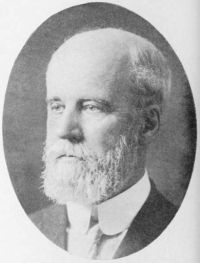 James Champlin Fernald,
English Synonyms and Antonyms
James Champlin Fernald,
English Synonyms and Antonyms
“ Antonyms: TACITURN. Synonyms: Dumb, mute, silent and speechless refer to fact or state; taciturn refers to habit and disposition. The talkative person may be stricken dumb with surprise or terror; the obstinate may remain mute; one may be silent through preoccupation of mind or of set purpose; but the taciturn person is averse to the utterance of thought or feeling and to communication with others, either from natural disposition or for the occasion. One who is silent does not speak at all; one who is taciturn speaks when compelled, but in a grudging way that repels further approach. ”
Satya Bhushan Bandyopadhyay, Tales of Bengal (1910)
“ The poor creature, indeed, underwent every sort of humiliation from her worthless husband, which she bore in silence, hoping that time would bring him to his senses. Drunken men are proverbially cunning. ”
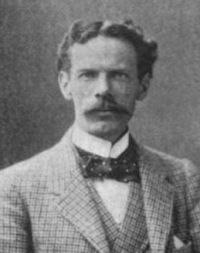 T. G. Tucker,
Life in the Roman World of Nero and St…
T. G. Tucker,
Life in the Roman World of Nero and St…
“ Doubtless this is logical enough, but how is one to attain to such right mental operations, and to become what was called a "sage"? Only by acting always according to reason and not according to passion. ”
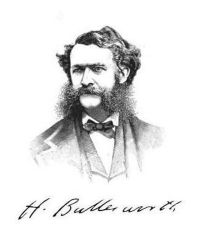 Hezekiah Butterworth,
True to His Home: A Tale of the Boyhood of Franklin
Hezekiah Butterworth,
True to His Home: A Tale of the Boyhood of Franklin
“ When I meet a man of pleasure, sacrificing every laudable improvement of mind, or of his fortune, to mere corporeal sensations, Mistaken man, says I, you are providing pain for yourself instead of pleasure; you give too much for your whistle. ”
Marcus Tullius Cicero,
The Academic Questions, Treatise De Finibus…
(1891)
“ But on this subject we have put a sufficient number of arguments into the mouth of Lælius, in our books on a Republic. XIX. Now apply the same arguments to modesty, or temperance, which is a moderation of the appetites, in subordination to reason. Can we say that a man pays sufficient regard to the dictates of modesty, who indulges his lusts in such a manner as to have no witnesses of his conduct? ”
Ludwig Tieck,
The Old Man of the Mountain — SECTION IX
“ Now a sentimental melancholy inhaloes every ordinary object around us; and amid the meek abasht feelings of a pining anguish and remorse, suddenly starts up nauseous arrogance, vaunting the grandeur of a spoilt capricious heart. O what poor wretches our fellow creatures now seem to us in their commonplaceness, who yet all, as the patient children and drudges of mother earth, are better than we. ”
 Theodore Dreiser,
Free, and other stories
(1918)
Theodore Dreiser,
Free, and other stories
(1918)
“ She was cuddling up to him, her voice quavering, her hand stroking his cheek, in a curious effort to combine affection and punishment at the same time. Duer felt nothing but wrath, resentment, discouragement, failure. ”
 Charles Robert Maturin,
Melmoth the Wanderer, Vol. 4
Charles Robert Maturin,
Melmoth the Wanderer, Vol. 4
“ A cold and sluggish mediocrity in their occupations or their amusements, is all they require—pleasure has with them no meaning but the exemption from actual suffering, nor do they annex any idea to pain but the immediate infliction of corporeal suffering, or of external calamity—the source of pain or pleasure is never found in their hearts—while those who have profound feelings scarce ever look elsewhere for either. ”
 Alfred Plummer,
The Expositor's Bible: The General Epistles of St…
Alfred Plummer,
The Expositor's Bible: The General Epistles of St…
“ There is pleasure in gluttony, in drunkenness, in lust, in pride, in avarice, in revenge. But where is the pleasure in an oath? The sensualist, the hypocrite, the miser, and the murderer can at least plead strong temptation, can at least urge that they get something, however pitiful, in exchange for eternal loss. ”
Marcus Tullius Cicero,
Cicero's Tusculan Disputations
(1888)
“ In pleasure they comprehend malevolence—that is, pleased at another's misfortune—delight, boastfulness, and the like. To lust they associate anger, fury, hatred, enmity, discord, wants, desire, and other feelings of that kind. ”
Booth Tarkington,
The Fascinating Stranger, and Other Stories
“ The point of knowing when to say no rests in the “when;” and when a man is already at home and safe in bed, “Why, my Glory!” he had reasoned it, “Why, if they ever is a time to say yes, it must be then!” So he had said “Yes,” to the White Mule and in the morning awoke feeling most perishable. Even then, as in the night, from time to time he had vagrant thoughts of Tilly and her noble build, of the white and shining kitchen, and of those disbelieving cool blue eyes that seemed to triumph over him and indict him, accusing him of things she appeared to think he would do if he had the chance. ”
 Elinor Glyn,
The Reflections of Ambrosine: A Novel
Elinor Glyn,
The Reflections of Ambrosine: A Novel
“ But patience and discipline were necessary to enable one to get through life with decency and pleasure, and while I untangled the silk I should have time to reflect upon how comically ridiculous I had been to throw down and trample upon an inanimate thing that only my personal stupidity had caused to annoy me. ”
Palladius of Galatia, The Paradise (1907)
“ What then is the beautiful thing which thou expectest to acquire now that thou hast sated thyself with every kind of wickedness? Wilt thou not stand away from where thou art, and come with us and [enjoy] the things which thou usually hast? Behold, whores and tavern companions are waiting for thee, wilt thou not then come and gratify thy lust with us? Every hope for thee hath been extinguished, and truly thy punishment shall arrive swiftly, and in this manner thou wilt slay thyself. ”
Marcus Tullius Cicero,
On Friendship
(44 BC)
“ In fact, there is no crime, no evil deed, to which the appetite for sensual pleasures does not impel us. Fornications and adulteries, and every abomination of that kind, are brought about by the enticements of pleasure and by them alone. ”
 Harriet Martineau,
Once a Week
(1861)
Harriet Martineau,
Once a Week
(1861)
“ If their hearts are warm, and their habits of mind simple, unselfish, and self-respecting, they often show themselves surprised that their “quiet way of life” is so full of amusement, so devoid of dulness, though few sights or sounds reach them, and they have no pleasure in eating and drinking, and seldom have a good night’s sleep. ”
 F. H. Bradley,
Ethical Studies — Essay VII.
(1876)
F. H. Bradley,
Ethical Studies — Essay VII.
(1876)
“ The natural material of the bad self is consequently supplied partly by sensuous appetite, partly by other tendencies which oppose the good system (such as violent irascibility, jealousy, laziness, &c.) , and, further, by natural inclination to activities and pursuits which lead to collision with the superior. Passionateness or laziness encouraged grows into habit; sensuous appetite reflected on grows into lust, the idea of sensuous satisfaction, and the habit of pursuing that idea ”
baron d' Paul Henri Thiry Holbach, The System of Nature, or, the Laws of the Moral and Physical World…
“ On the contrary, we see them grow listless with satiety; disgusted with their own inordinate indulgences; obliged to recur to strange pleasures, to awaken their benumbed faculties; to run headlong into the most costly follies, in the fruitless attempt to keep up the activity of their souls, the spring of which they had for ever relaxed, by the profligacy of their enjoyment. ”
P. V. N. Myers, History as past ethics; an introduction to the history of morals (1913)
“ One explanation of this is that new and untried sources of pleasure, most often illicit sensuous pleasure, are opened up, and the temptation to selfish indulgence is irresistible, coming as it does before self-restraint, in the face of these unaccustomed solicitations, has become a habit. ”
Ludwig Tieck,
The Pictures — SECTION III
(1822)
“ The only question is as to the absurdity of which men are guilty when they avoid all other distractions, and seek to wean themselves from their subjection to sudden impulses of passion, while nevertheless for some time past it has become a common boast, and has been considered even as necessary to life, to have experienced love, and its wild moods and passionate distractions. ”
 Samuel Johnson,
The Works of Samuel Johnson, LL.D. in Nine Volumes…
Samuel Johnson,
The Works of Samuel Johnson, LL.D. in Nine Volumes…
“ The dependant who cultivates delicacy in himself, very little consults his own tranquillity. My unhappy vigilance is every moment discovering some petulance of accent, or arrogance of mien, some vehemence of interrogation, or quickness of reply, that recals my poverty to my mind, and which I feel more acutely, as I know not how to resent it. ”
