Tank (armored vehicle)

Definition and stakes

The boy mechanic, book 3 (1919)

“ Among the engines of war in action on land, probably none has created greater interest than the now famous “fighting tank,” which, according to reports, pours out missiles of destruction on the enemy from armored turrets, and crawls over trenches, shell craters, and similar obstructions, like a fabled giant creature of prehistoric ages. The tank described in this article, while not as deadly as those on the battle fields of Europe, performs remarkable feats of hurdling trenches, and crawling over obstructions, large in proportion to its size. ”
Source: Gutenberg

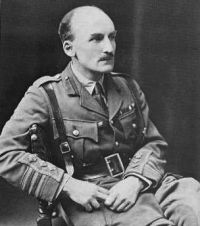
Portrait of J. F. C. Fuller J. F. C. Fuller,  Tanks in the Great War, 1914-1918

“ In defence, as a mobile ‘pill-box,’ the possibilities of the tank are great—any man who has led infantry ‘over the top’ knows the demoralising and disorganising effect of the ‘surprise packet’ machine-gun nest—what more admirable type of nest can be devised? Continually changing position, hidden from enemy aircraft by smoke and the dust of battle, offering no target for aimed artillery fire. ”
Source: Gutenberg

Francis A. March,  History of the World War, Volume 1…

“ To these was later added the whippet tank, named after the racing dog developed in England. These whippet tanks averaged eighteen miles an hour, carrying death and terror into the ranks of the enemy. All the tanks were heavily armored [214] and had as their motto the significant words “Treat ’Em Rough.” The Germans designed a heavy anti-tank rifle about three feet longer than the ordinary rifle and carrying a charge calculated to pierce tank armor. These were issued to the German first line trenches at the rate of three to a company. ”
Source: Gutenberg

Get perspective with Kwize: daily news enlightened by great literature