Theory of relativity

Definition and stakes

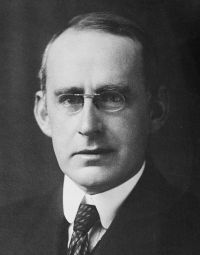
Portrait of Arthur Eddington Arthur Eddington Space Time and Gravitation: An outline of the general relativity theory… (1920)

The theory of relativity has passed in review the whole subject-matter of physics. It has unified the great laws, which by the precision of their formulation and the exactness of their application have won the proud place in human knowledge which physical science holds to-day. And yet, in regard to the nature of things, this knowledge is only an empty shell—a form of symbols. It is knowledge of structural form, and not knowledge of content. All through the physical world runs that unknown content, which must surely be the stuff of our consciousness.
Source: Wikisource

Max Planck Eight Lectures on Theoretical Physics… (1915)

The principle of relativity holds, not only for processes in physics, but also for the physicist himself, in that a fixed system of physics exists in reality only for a given physicist and for a given time. But, as in the theory of relativity, there exist invariants in the system of physics: ideas and laws which retain their meaning for all investigators and for all times, and to discover these invariants is always the real endeavor of physical research.
Source: Wikisource

Portrait of Arthur Eddington Arthur Eddington The theory of relativity and its influence on scientific thought (1922)

If I have succeeded in my object, you will have realized that the present revolution of scientific thought follows in natural sequence on the great revolutions at earlier epochs in the history of science. Einstein's special theory of relativity, which explains the indeterminateness of the frame of space and time, crowns the work of Copernicus who first led us to give up our insistence on a geocentric outlook on nature;
Source: Wikisource

Get perspective with Kwize: daily news enlightened by great literature