“ Heat a Degraded Form of Energy.—We have seen that thermal energy is not directly transformed into chemical energy. There is yet another restriction in the case of this thermal energy if we study the laws which govern the circulation and the transformations of thermal energy; and the most important comes from the impossibility of transporting it from a body at a lower temperature to a body at a higher temperature. On the whole, and because of these restrictions, thermal energy is an imperfect variety of universal energy, or, as the English physicists call it, a degraded form. ”
Thermal energy
Definition and stakes
Thermal energy, defined as the internal energy of a system related to its temperature, includes both microscopic molecular movement and larger thermodynamic processes. While physicists like Mark Zemansky warn against its unclear application, authors such as A. Dastre describe it as a "degraded form" of energy, highlighting its irreversible transformation and limited usefulness.
Joseph Larmor links it to mechanical energy, pointing out its loss during heat transfer, while James Clerk Maxwell emphasizes its irreversible decline in conduction. These viewpoints illustrate thermal energy’s dual nature—as both a key thermodynamic measure and an indicator of energy dissipation—shaping our comprehension of heat’s relationship with work and entropy.
Quotes about “thermal energy”
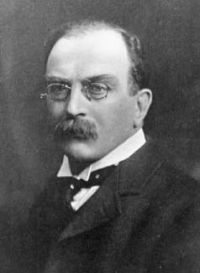 Joseph Larmor,
1911 Encyclopædia Britannica
(1911)
Joseph Larmor,
1911 Encyclopædia Britannica
(1911)
“ Mechanical and Thermal Energy.—The amount of energy, defined in this sense by convertibility with mechanical work, which is contained in a material system, must be a function of its physical state and chemical constitution and of its temperature. The change in this amount, arising from a given transformation in the system, is usually measured by degrading the energy that leaves the system into heat; for it is always possible to do this, while the conversion of heat back again into other forms of energy is impossible without assistance, taking the form of compensating degradation elsewhere. ”
“ This is due to a condition of thermal energy which is called temperature. The same quantity of thermal energy, of heat, may be stored in the same thermal body at different temperatures. If this quantity of thermal energy is in a very hot body we can utilize a large portion of it; if it is in a relatively cold body we can only convert a small portion of it into mechanical work. Thus the value of energy,—i.e., its capacity of being converted into a higher and more useful form,—depends on temperature. ”



Related terms
Authors who wrote about “thermal energy”
 Balfour Stewartactive 1883-1912 James Weir
 Nikola TeslaA. DastreJoseph Larmor
 John Joly
 William John Macquorn RankineClive M. Countryman
 Elisha GrayMax PlanckWilliam George Hooper
 John Arthur ThomsonWarren HiltonWilliam GarnettJ. Arthur ThomsonThomas D. Cope
 Robert S. BallLucien PoincaréAndrew GrayJames Walker