Thermodynamic equilibrium

Definition and stakes

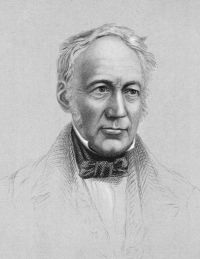
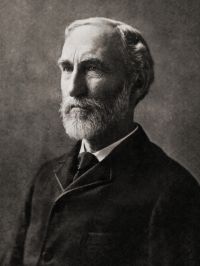
Portrait of Josiah Willard Gibbs Josiah Willard Gibbs,  Scientific Papers of Josiah Willard Gibbs (1906)

“ If the body is in a state represented by any point of the surface of dissipated energy, of course no work can be obtained from it under the given conditions. But even if the body is in a state of thermodynamic equilibrium, and therefore in one represented by a point in the thermodynamic surface, if this point is not in the surface of dissipated energy, because the equilibrium of the body is unstable in regard to discontinuous changes, a certain amount of energy will be available under the conditions for the production of work. ”
Source: Wikisource

Portrait of Josiah Willard Gibbs Josiah Willard Gibbs,  Scientific Papers of Josiah Willard Gibbs (1906)

“ It may be added that the thermodynamic equilibrium which subsists between two such solid states of the same substance differs from that which subsists when one of the states is fluid, very much as in statics an equilibrium which is maintained by friction differs from that of a frictionless machine in which the active forces are so balanced, that the slightest change of force will produce motion in either direction. ”
Source: Wikisource

Various,  Popular Science Monthly (1909)

“ The system must have and maintain the greatest entropy consistent with constant energy; or for adiabatic systems (at constant entropy) , the intrinsic energy or heat function should have minimum values for constant volume or pressure, respectively, but for isothermal systems (at constant temperature) the free energy potential or the thermodynamic potential should have minimum values for constant volume or pressure. Any deviation from these maxima or minima will again disturb equilibrium and produce changes of physical or chemical state. ”
Source: Wikisource

Get perspective with Kwize: daily news enlightened by great literature