“ Such is the theory opposed to the theory of chemical and vital energy. It has on its side a large number of experts, among whom are Rubner, Stohmann, and von Noorden. It has been defended in an article in the Dictionnaire de Physiologie by Ch. Richet and Lapicque. They hold that thermogenesis absolutely dominates the play of nutritive exchanges; [Pg 141] and it is the need for the production of heat that regulates the total demand for Calories which every organism requires from its ration. ”
Thermogenesis
Definition and stakes
The theme of “thermogenesis” has been addressed by authors such as A. Dastre. It is often associated with terms like oxygen, heat, chemical, temperature and thermometer.
Quotes about “thermogenesis”
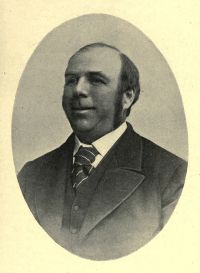 Robert S. Ball,
The Earth's Beginning
Robert S. Ball,
The Earth's Beginning
“ This we know will happen when compound substances are raised to a very high temperature. We shall suppose that the heat has been sufficient to separate each particle of water into its constituent atoms of oxygen and hydrogen; we shall suppose that the heat has been sufficient to decompose even lime itself into its constituent parts, and exhibit them in the form of vapour. The heat is to be so great that even carbon itself, the most refractory of substances, has had to yield, so that after passing through a stage of dazzling incandescence it has melted and ultimately dissolved into vapour. ”
 Robert Stawell Ball,
In the High Heavens
(1910)
Robert Stawell Ball,
In the High Heavens
(1910)
“ As the growing plant must have carbon, it draws that carbon from the atmosphere, and the heat that is required to effect the decomposition of the carbonic acid is obtained from sunbeams. When the carbon thus derived by the plant comes ultimately to be burned it reunites with the oxygen of the air, and in the act of doing so evolves an amount of heat precisely equivalent to that which was absorbed from the sunbeams. Thus it is that the heat now radiating from our fireplaces has at some time previously been transmitted to the earth from the sun. ”
Robert Hunt, The Poetry of Science; or, Studies of the Physical Phenomena of Nature
“ Heat is not matter itself any more than light is; but it is only the act of motion in the primary matter. In heat, as well as in light, there certainly resides a material substratum; yet, this substratum does not give out heat and light; but the motion only of the substratum gives out heat, and the tension only of the substratum light. There is no body of heat; nitrogen is the body of heat, just as oxygen may be called the body of fire. Heat is real space; into it all forms have been resolved, as all materiality has been resolved into gravity, and all activity, all polarity, into light. ”
Thomas Garnett, Popular Lectures on Zoonomia
“ When a body passes from a state of solidity to that of fluidity, it absorbs a quantity of heat, which becomes chemically combined with it, and insensible to the touch or the thermometer; in the same manner, when it passes from a fluid state to that of vapour or gas, it combines with a still larger quantity of heat, which remains latent in it, so long as it continues in the state of gas, but when it returns to the liquid or solid state, it gives out the heat which was combined with it, which, being set at liberty, flows into the surrounding bodies, and augments their temperature. ”
Robert Hunt, The Poetry of Science; or, Studies of the Physical Phenomena of Nature
“ By friction, two pieces of ice may be made to melt each other; and could we, by mechanical pressure, force water into a solid state, an immense quantity of heat would be set free. By the condensation of hydrogen and oxygen gases, pulverulent platinum will become glowing red-hot, and, with certain precautions, even the compact metal, platinum, itself; the heat being derived from the gases, the union of which it has effected. A body passing from the solid to the fluid state absorbs heat from all surrounding substances, and hence a degree of cold is produced. ”
George Macilwain, Memoirs of John Abernethy
“ It has always struck us as a curious thing that chemists should have attached such a dominant influence, in the production of heat in animals, to the union of carbon and oxygen; because nobody is necessarily so familiar as they are with the fact that the evolution of heat is not at all peculiar to the union of these bodies, but is a circumstance common to all changes of every kind, in all forms of matter—there always being either the absorption or the evolution of heat. ”
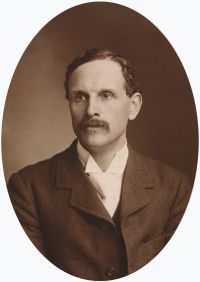 Hugh Longbourne Callendar,
1911 Encyclopædia Britannica
(1911)
Hugh Longbourne Callendar,
1911 Encyclopædia Britannica
(1911)
“ The metal tin actually changes into powder below a certain temperature, and in so doing evolves a measurable quantity of heat. A mixture of the gases oxygen and hydrogen, in the proportions in which they combine to form water, evolves when burnt sufficient heat to raise more than thirty times its weight of water from the freezing to the boiling point ”
 Svante Arrhenius,
Worlds in the making: The evolution of the universe
(1908)
Svante Arrhenius,
Worlds in the making: The evolution of the universe
(1908)
“ The mechanical theory of heat teaches us only that at rising temperatures products are formed whose formation goes hand in hand with an absorption of heat. Thus, at a high temperature, ozone is formed from oxygen, although ozone is more complex in composition than oxygen, and by this reaction 750 calories are consumed when one gramme of oxygen is transformed into one gramme of ozone. We likewise know that in the electric arc, at a temperature of about 3000°, a compound is formed under consumption of heat by the oxygen and nitrogen of the atmosphere. ”
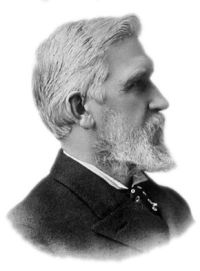 Elisha Gray,
Familiar Talks on Science: World-Building and Life…
Elisha Gray,
Familiar Talks on Science: World-Building and Life…
“ When the ice is all melted potential energy is no longer stored, but is manifested in the sensible heating of water, the degree of which is measurable by the thermometer, until it reaches the boiling point, where it is again arrested. All of the surplus heat above that temperature is consumed in rending the liquid water into moisture globules that float away into the air, each one of them charged with a store of potential energy. Let us follow this vapor spherule as it floats into the upper regions of the atmosphere. ”
W. Mattieu Williams, Science in Short Chapters
“ There will, however, be somewhere an elevation at which the heat evolved by the joint compression of the elementary and combined gases will be just sufficient to dissociate the latter, and here will be the meeting surface of the combined and the uncombined constituents of water. There will be a sphere containing combined oxygen and hydrogen surrounded by an atmospheric envelope containing large quantities of aqueous vapor, and the temperature at this limiting surface will be equal to that of the oxyhydrogen flame under a corresponding pressure. ”
Robert Routledge, Discoveries and Inventions of the Nineteenth Century
“ Besides the limit of temperature occasioned by the nature of the materials, there is a chemical reason why the regenerative stoves cannot increase the temperature indefinitely. It is noticed that when the temperature of the furnace has become very high indeed, the flame over the hearth assumes a peculiar appearance, being interrupted by dark spaces. These are attributable to what is called in chemistry “dissociation,”—in this case the dissociation of carbonic acid gas, which by the heat alone separates into carbonic oxide and oxygen gases. ”
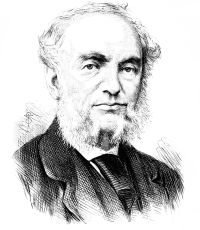 Balfour Stewart,
The conservation of energy
(1875)
Balfour Stewart,
The conservation of energy
(1875)
“ Thus, when a solid melts, or when a liquid is rendered gaseous, a considerable amount of heat is spent in the process, which does not become sensible, that is to say, does not affect the thermometer. Thus, in order to melt a kilogramme of ice, heat is required sufficient to raise a kilogramme of water through 80° C., and yet, when melted, the water is no warmer than the ice. ”
Elisha Gray,
Familiar Talks on Science: World-Building and Life…
“ If we push the process still further, with a sufficient application of energy we can separate the vapor molecules into their original elements, oxygen and hydrogen.Let us go back now to the freezing point of water and see what is becoming of the heat that is consumed in melting the cake of ice, and still does not produce any effect upon the mercury in the thermometer. Sensible heat, [Pg 183] as before stated, is a movement of the atoms of matter, and temperature, as it affects the thermometer, is a measure of the intensity of motion exhibited by these atoms. ”
Chautauqua Institution, The Chautauquan, Vol. 05, March 1885
“ Rise of temperature, expansion, liquefaction, evaporation. The first indication of the presence of heat is discovered by an elevation in temperature. Though man is not a reliable thermometer, he would be able, ordinarily, even if blind, to chronicle the progress of the sun, from horizon to horizon, by the increasing and decreasing warmth. The little thermometer placed beneath the tongue of the invalid gives reliable report of the combustion going on within his system. We see a thousand illustrations of the expansive effects of heat, many of which are familiar to all. ”
Max Planck, Translation:On the Dynamics of Moving Systems (1907)
“ According to the theory developed here, we therefore have to imagine an energy store in the interior of each body, whose amount is so enormous that the usually observed heating and cooling processes, and even quite deep invasive chemical transformations associated with considerable heat effects, changes it by only an imperceptible fraction. This is valid down to the lowest attainable temperatures: for both the specific heat of a body as well as the reaction enthalpy of chemical processes keep up their magnitude close to absolute zero. ”
“ For example, in the combination of hydrogen and oxygen by setting light to an explosive mixture, heat only acts as a primer to the phenomenon, because the two gases which are passive at ordinary temperatures, require to be raised to 400° C. before chemical affinity comes into play. And so it is with the reactions which go on in the organism. They have a maximum temperature, and the part played by animal heat is to furnish them with it. ”
Robert Stawell Ball,
In the High Heavens
(1910)
“ Before discussing the prospect of the duration of sunbeams we may first consider a few other less important sources of heat. So far as the coal goes, we have already observed that as it is limited in quantity it can offer no perennial supply. Doubtless there is in the earth some quantity of other materials capable of oxidation, or of undergoing other chemical change; in the course of which, and as an incident of such change, heat is evolved. The amount of heat that can possibly arise from such sources is strictly limited. ”
 S. Laing,
A Modern Zoroastrian
S. Laing,
A Modern Zoroastrian
“ Thus, the rocks, earths, metallic oxides, water, carbonic dioxide, and nitrogen are extremely stable, and resist decomposition, or chemical union with other substances, with great energy. With regard to all substances this law holds good, that the tendency is to fall back from a less stable to a more stable condition, and that such a falling back is always attended with an evolution of heat; while, on the other hand, heat is always absorbed and disappears whenever the elements of a more stable substance are made to enter into a less stable condition. ”
Robert S. Ball,
The Earth's Beginning
“ In the extraordinary fervour which prevails in the interior of the sun all substances of every description must submit to be melted, nay, even to be driven into vapour. An iron poker, for instance, would vanish into iron vapour if submitted to this appalling solar furnace. Even carbon itself is unable to remain solid when subjected to the intense heat prevailing in the inner parts of the sun. At that heat carbon must assume the form of gas or vapour, just as iron or the other substances which yield more readily to the application of heat. ”
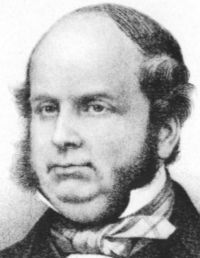 Henry Thomas Buckle,
History of Civilization in England…
Henry Thomas Buckle,
History of Civilization in England…
“ Just in the same way, we find that the temperature of plants is maintained by the combination of oxygen with carbon: see Balfour's Botany, pp. 231, 232, 322, 323. As to the amount of heat caused generally by chemical combination, there is an essay well worth reading by Dr. Thomas Andrews in Report of British Association for 1849, pp. 63–78. See also Report for 1852, Transac. of Sec. p. 40, and Liebig and Kopp's Reports on the Progress of Chemistry, vol. i. p. 34, vol. iii. p. 16, vol. iv. p. 20; also Pouillet, Elémens de Physique, Paris, 1832, vol. i. ”
by Sir William Thomson, Reflections on the Motive Power of Heat (1897)
“ In our demonstrations we tacitly assume that after a body has experienced a certain number of transformations, if it be brought identically to its primitive physical state as to density, temperature, and molecular constitution, it must contain the same quantity of heat as that which it initially possessed; or, in other words, we suppose that the quantities of heat lost by the body under one set of operations are precisely compensated by those which are absorbed in the others. ”
1911 Encyclopædia Britannica, Volume 6… (1911)
“ If we may disregard the kinetic energy of the atoms, and this is legitimate for low temperatures, it follows that both heat-evolution and chemical affinity are merely equal to the decrease of the potential energy of the above-mentioned forces, and it is at once clear that the evolution of heat during a reaction between only pure solid or pure liquid substances possesses special importance. ”
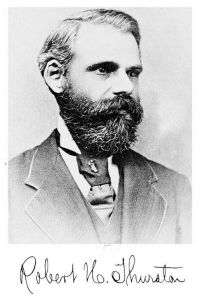 Robert Henry Thurston,
A History of the Growth of the Steam-Engine
Robert Henry Thurston,
A History of the Growth of the Steam-Engine
“ During the past life of the globe, the heat-energy received from the sun upon the earth’s surface was partly expended in the production of great forests, and the storage, in the trunks, branches, and leaves of the trees of which they were composed, of an immense quantity of carbon, which had previously existed in the atmosphere, combined with oxygen, as carbonic acid. ”
Balfour Stewart,
The conservation of energy
(1881)
“ Thus, when a gas is absorbed by water, much heat is evolved, and we may suppose the result to be due in part to chemical combination, and in part to the condensation of the gas into a liquid, by which means its latent heat is rendered sensible. On the other hand, when a liquid unites with a solid, or when two solids unite with one another, and the product is a liquid, we have very often the absorption of heat, the heat rendered latent by the dissolution of the solid being more than that generated by combination. ”
 Antoine Lavoisier,
Elements of Chemistry
(1790)
Antoine Lavoisier,
Elements of Chemistry
(1790)
“ In this high temperature, either no oil is formed, or, if any was produced during the lower temperature at the beginning of the experiment, it is decomposed by the action of the red heat. Thus the decomposition of vegetable matter, under a high temperature, is produced by the action of double and triple affinities; while the charcoal attracts the oxygen, on on purpose to form carbonic acid, the caloric attracts the hydrogen, and converts it into hydrogen gas. ”
Robert Hunt, The Poetry of Science; or, Studies of the Physical Phenomena of Nature
“ The deductions to be drawn from the results obtained by abstracting heat from bodies are equally instructive. By taking advantage of the cooling produced by the rapid solution of salts of several kinds in water, an intense degree of coldness may be produced. [80] Indeed, the absorption of heat by liquefaction may be shown by the use of metallic bodies alone. If lead, tin, and bismuth, are melted together, and reduced to a coarse powder by being poured into water, and the alloy then dissolved in a large quantity of quicksilver, the thermometer will sink nearly 50 degrees. ”
Various, Popular Science Monthly (1882)
“ By this fan action, hydrogen, hydrocarbons, and oxygen are supposed to be drawn in enormous quantities toward the polar surfaces of the sun; during their gradual approach they pass from their condition of extreme attenuation and intense cold to that of compression, accompanied with increase of temperature, until, on approaching the photo-sphere, they burst into flame, giving rise to a great development of heat, and a temperature commensurate with their point of dissociation at the solar density. ”
Robert Hunt, The Poetry of Science; or, Studies of the Physical Phenomena of Nature
“ Gases in many cases undergo a remarkable condensation when chemically combined. In slaking lime, the water becomes solid in the molecules of the hydrate of lime formed, and the intense heat produced arises from the liberation of that caloric which had been employed to keep the water liquid. When a solid passes into the liquid state, cold is produced by the abstraction from surrounding objects of the heat required to effect fluidity. An alteration of temperature occurs whenever chemical change takes place, as we have already shown, with a few trivial and uncertain exceptions. ”
Clive M. Countryman, Heat-Its Role in Wildland Fire… (1975)
“ Through the science of thermodynamics, heat has a place in many of the industrial processes that bring us the conveniences of modern life. But as recently as 200 years ago, the true nature of heat was not understood. In the early days of science the phenomena associated with heat were ascribed to a mystical and intangible fluid called "caloric." This fluid was believed to have the power of penetrating and expanding materials, sometimes melting or dissolving them, and converting some substances to vapor. ”
