Transit (astronomy)

Definition and stakes

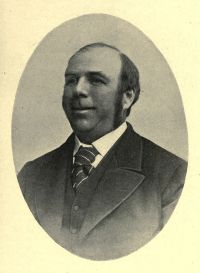
Portrait of Agnes M. Clerke Agnes M. Clerke,  A Popular History of Astronomy During the Nineteenth Century

“ The present period of coupled eccentric transits will, in the course of ages, be succeeded by a period of single, nearly central transits. The alignments by which transits are produced, of the earth, Venus, and the sun, close to the place of intersection of the two planetary orbits, now occur, the first a little in front of, the second, after eight years less two and a half days, a little behind the node. But when the first of these two meetings takes place very near the node, giving a nearly central transit, the second falls too far from it, and the planet escapes projection on the sun. ”
Source: Gutenberg

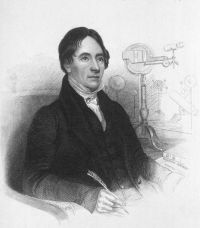
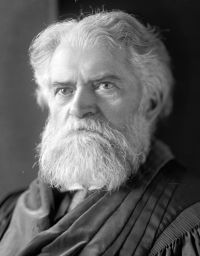
Portrait of George Biddell Airy George Biddell Airy,  Popular Astronomy: A Series of Lectures Delivered at Ipswich (1881)

“ The thing to which I would first direct your attention is, the way in which we ascertain how far the globe must turn before the star comes into the meridian. Figure 9 represents what is called the Transit Instrument. It is an instrument in perpetual use in every observatory. You see the instrument is not adapted to gaze at all points of the heavens; in ordinary use it can be turned round the axis AB, and has no other motion whatever. ”
Source: Wikisource

Get perspective with Kwize: daily news enlightened by great literature