“ The values of trump cards are thus arranged:—The first and best trump is the Ace of Spades, Spadille.The second best trump is the lowest card of the trump suit, the two of trumps in a black suit, or the seven of trumps if the trump suit be red. This second trump is called Manille.The third trump is the Ace of Clubs, Basto.When the trump suit is red, its Ace becomes the fourth trump. Thus if Diamonds be trumps the Ace of Diamonds can take the King of Diamonds; the Ace of Hearts can take the King of Hearts if Hearts be trumps, not otherwise. ”
Trump card
Definition and stakes
A "trump card" in card games refers to a suit or specific card that supersedes others in determining the winner of a trick, particularly in games such as whist and euchre. Authors like Honoré de Balzac emphasized its strategic importance, identifying the "Mistigris" as a key card, while Robert Kemp Philp outlined the rules governing declarations and exchanges.
Passages from Playful Poems and The Laws of Euchre clarify the hierarchy of values and procedural details, highlighting the trump card’s role as both a tactical asset and a foundational element of gameplay. These diverse viewpoints collectively underscore its dual nature as a regulated mechanism and a driver of competitive strategy.
Quotes about “trump card”
Robert Kemp Philp, Enquire Within Upon Everything
“ Only one Declaration can be made after each trick. If, in making a declaration, a player put down a wrong card or cards, either in addition to or in the place of any card or cards of that declaration, he is not allowed to score until he has taken another trick. Moreover, he must resume the cards, subject to their being called for as "faced" cards. The seven of trumps may be exchanged for the trump card, and for this exchange ten is scored. ”
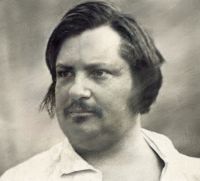
Honoré de Balzac,
Beatrix
(1839)
“ The turned-over trump card belongs to the dealer, who is always the last; he has the right to exchange it for any card in his own hand. One powerful card is of more importance than all the rest; it is called Mistigris. ”
1911 Encyclopædia Britannica (1911)
“ If the trump card is black and either player makes the other black suit trumps, he “makes it next”; if he makes a red suit trumps he “crosses the suit”; the same applies to trumps in a red suit, mutatis mutandis. The non-dealer leads; the dealer must follow suit if he can, but he need not win the trick, nor need he trump if unable to follow suit. The left bower counts as a trump, and a trump must be played to it if led. ”
James Dwight,
The Laws of Euchre
“ Should a player pass, and then attempt to assist, or order up the trump, his partner also must pass. The adversaries, however, may elect that it shall be played.81. Should a player make a declaration, and his partner not hear it and pass, the declaration is not invalidated.82. No player can take away another's right by passing, ordering up, or assisting, out of turn; but should the dealer turn down the trump card, or on the second round throw his cards on the table, such action is binding on his partner. ”
W. H. Peel, Round Games with Cards
“ The holder of the highest trump card may sell it at any time, so that it may change hands several times during the same deal, and each time there is a change the player on the buyer’s left-hand side is the next to proceed. ”
Milton C. Work,
Auction of To-day
“ If, after the cards have been dealt, and before the trump declaration has been finally determined, any player lead or expose a card, the partner of the offending player may not make any further bid or double during that hand, and the card is subject to call. When the partner of the offending player is the original leader, the declarer may prohibit the suit of the exposed card being the initial lead. ”
1911 Encyclopædia Britannica (1911)
“ Each player, beginning with the player on the dealer's left, turns up a card; if it is not a trump, or is a lower trump than the trump-card, the next player turns up one of his cards, and so on till a higher trump than the trump-card appears, the values being reckoned as at whist. ”
1911 Encyclopædia Britannica (1911)
“ A player who plays a high or low trump is entitled to ask if they are High or Low. The game is 10 or 11 points. Six cards are dealt to each, the thirteenth being turned up for trumps. The non-dealer may propose or beg if he does not like his hand. If the dealer refuses the elder hand scores a point, if he consents he gives and takes three more cards, the seventh being turned up for trumps, which must be of a different suit from the original trump card ”
Milton C. Work,
Auction of To-day
“ It is possible that the question is one rather of the temperament of the player than of card judgment. It is susceptible of almost mathematical deduction that five or more cards of a long suit are of greater trick-taking value when that suit is the Trump than when No-trump is being played, and it does not require any argument to substantiate the proposition that the slight difference in the score, between the total in the trick and honor columns netted from a game made without a Trump and a game made with Royals or Hearts, is so infinitesimal as not to be worthy of consideration. ”
Various, Blackwood's Edinburgh Magazine…
“ With one topic more, we close our article. The tactics of the Opposition, as far as developed on the evening of Monday the 15th March—especially in the House of Commons, where Sir James Graham, was to be seen publicly and eagerly bidding for revolutionary support—to our eye clearly indicate that their trump card is—a premature dissolution, and on one particular question, selected by themselves—and framed so as to admit of their war-cry being, as of old, "bread-tax—cheap bread!" ”
Cavendish, The Laws and Principles of Whist Stated and Explained…
“ The situations in which it is most necessary to refuse to overtrump your right-hand adversary, or to refuse to trump a winning card, occur when you have four trumps and a very strong suit, or a suit established early in a hand. For then, by trumping, you prejudice your chance of bringing in the suit in order to secure one trick. By refusing to part with a trump in these cases, you obtain the advantages just enumerated, at the time when they are most likely to become of service; and, where you refuse to overtrump, your adversary is left with one trump less, by which your hand is strengthened. ”
Milton C. Work,
Auction of To-day
“ Being void or holding only a singleton of a suit, especially if it be the suit declared by the adversary, is to be considered in reckoning the trick-taking value of a hand which contemplates assisting a partner's Trump declaration. For example, four small Hearts, the Ace and three other Clubs, and five small Diamonds, when the partner has called one Heart, are worth three or four tricks, although the hand contains but one Ace and no face card. Holding such a combination, a partner's bid of one Heart should be advanced at least twice. ”
Milton C. Work,
Auction of To-day
“ When the original Third Hand returns a suit opened by his partner, he should lead the winning card, if he hold it. If without the best card, when the lead is against a No-trump declaration, it is far more important that a high card should be led through strength, and also that the holder of the length should be accurately advised as to his partner's high cards, than that he should be told the exact number of small ones. ”
1911 Encyclopædia Britannica (1911)
“ Hence the rule not to discard two cards, unless holding the king of trumps, applies to the dealer. The hands with which to refuse are the same as those with which to play without proposing, except as follows:— 1. Two trumps and three cards of one plain suit should not be played unless the plain suit is headed by a court card. 2. One trump and a tierce major is too weak, unless the fifth card is a court card. With similar hands weaker in the tierce major suit, accept unless the fifth card is a queen. 3. One trump and four cards of a plain suit is too weak to play. ”
Milton C. Work,
Auction of To-day
“ The average holding of high cards is one Ace, one King, one Queen, and one Knave. From the average standpoint it is immaterial whether they are all in one suit or divided. Any hand containing a face card or Ace above this average is a No-trumper, whenever it complies with the other above-mentioned requirements. When the average is exceeded by holding two Aces, instead of an Ace and King, a No-trump should be called, but two Kings, instead of a King and Queen, or even a King and Knave, is a very slight margin, and the declaration is doubtful for any but the most expert. ”
Cavendish, The Laws and Principles of Whist Stated and Explained…
“ With hands containing only a suit of four small cards—say none higher than the seven or eight, and suits of three cards of higher value—the choice is sometimes difficult. Also, with hands in which your only four-card suit is the trump suit, you might sometimes deem it advisable to open one of the other suits, as a smaller evil than leading a trump. As a rule, when you are in doubt, stick to the general principle, and lead from your four-card suit, even though it is the trump suit. ”
H. D. Catlin, Catlin's Historic Origin of the Playing Cards
“ It will be observed that the trump suit will always be one card more than one-fourth of all the cards in use, and the three side suits (not trump) will always be one card less than three fourths of all the cards in use—ten trumps and twenty-six suit cards. Thirteen points constitute the full game. ”
Various, Encyclopaedia Britannica, 11th Edition…
“ When much behind in the score a risky no-trumper such as one with an established suit of seven or eight cards without a card of entry, may be declared.Declaring to the score is often overdone; an ordinary weak no-trump declaration carries with it small chances of three by tricks unless dummy holds a no-trump hand. ”
Various, Encyclopaedia Britannica, 11th Edition…
“ With a suit declaration, if there is no chance of letting the weak hand make a trump by ruffing, it will generally be the dealer's aim to discard the losing cards in the declaring hand either to high cards or to the cards of an established suit in the other hand, sometimes after the adverse trumps have been taken out, but often before, there being no time for drawing trumps. With no card of any value in a suit in one hand, the lead should come from that hand, but it is better, if possible, to let the adversaries open the suit. ”
Cavendish, The Laws and Principles of Whist Stated and Explained…
“ In the above cases, A, by not drawing the trump, makes his adversaries a present of a trick.On the other hand, A should not draw the trump if one opponent (Z) has an established suit, which Y (Z's partner) can lead, the losing trump being in Y's hand. And, it is especially incumbent on A not to draw the trump, if either he or his partner has a suit which will probably be established by leading it, and if A can infer from the fall of the cards that Y has only one card of his partner's established suit in his hand, subject, of course, to the qualifications already noted. ”
Various, Cassell's Book of In-door Amusements…
“ Should any one not be able to follow suit, he may either play a card from another suit, or give one of the trump suit, and may possibly, by adopting the latter method, secure the trick for himself and his partner from the hands of their adversaries. ”
Various, Cassell's Book of In-door Amusements…
“ Beginning with his left-hand neighbour, the whole pack is then dealt out to the players one by one, faces downward, until the last one is arrived at, which, though the property of the dealer, is turned up, displaying the trump suit. If dealt properly, every player will hold in his hand thirteen cards, which he is now at liberty to look at and arrange in order, the owner of each hand being in honour bound not to look at any cards but his own. ”
Donald John Trump, Presidential Weekly Address - 4 August 2017
“ We are ending the War on Coal and unleashing American energy. We are introducing a tax plan to grow our economy and create more jobs. Factories and plants are coming back into Michigan and Ohio and Pennsylvania, and many other states. They are coming back instead of leaving like they have been for decades. And just this week, we announced a historic immigration bill to create a merit-based Green Card system that ends the abuse of our welfare system, stops chain migration, and protects our workers and our economy. ”
Milton C. Work,
Auction of To-day
“ Being without a suit, or holding a singleton, is an element of strength for a Trump declaration; of weakness for a No-trumper. When, if you do not bid, the adversary will be left in with a declaration with which he cannot make game, do not take him out unless you expect to score game with your declaration. Do not, by reckless bidding, make the loss of one rubber equal the usual value of two. With a love score, it requires three tricks in No-trumps, four in Royals or Hearts, and five in Diamonds or Clubs, to make game. ”
R. F. Foster, Foster's Complete Hoyle: An Encyclopedia of Games
“ The dealer’s strength in a no-trumper is usually scattered, and he may often be found with a weak or missing suit, which is generally the suit in which the eldest hand or his partner is long.We shall first consider the leads against trump declarations, because they are more common and are also the more useful. If a player makes a trump-hand lead against a no-trump declaration, he will not do nearly so much harm as if he make a no-trump-hand lead against a trump declaration. ”
Earl Warren,
United States v. O'Brien (391 U.S. 367…
“ The committee has taken notice of the defiant destruction and mutilation of draft cards by dissident persons who disapprove of national policy. If allowed to continue unchecked, this contumacious conduct represents a potential threat to the exercise of the power to raise and support armies. For a person to be subject to fine or imprisonment, the destruction or mutilation of the draft card must be "knowingly" done. This qualification is intended to protect persons who lose or mutilate draft cards accidentally. ”
Anonymous, The Royal Game of the Ombre
“ In playing Trump; you are to note, that if any playes an ordinary Trump, and you have onely the three best Cards, or Matadors, singly or can jointly in your hands, you may refuse to play them, without Renouncing, because of the priviledge which those Cards have, that none but commanding Cards can force them out of your hands; as for example, the Spadillio forces the Mallilio, and the Mallilio the Basto; for all the rest you are to follow Trump. ”
Milton C. Work,
Auction of To-day
“ When the adversaries have a long suit of which they have all the high cards, the chances are that it will be opened; but if not, it will soon be found unless the Declarer can at once run a suit of considerable length. When a suit is established by the adversaries, the Declarer is put in an embarrassing position, and would probably have been better off playing a Trump declaration. It is a reasonable risk to trust the partner to stop one suit, but it is being much too sanguine to expect him to protect two. ”
Cavendish, The Laws and Principles of Whist Stated and Explained…
“ When you ask for trumps, you command your partner to abandon his own game, and to lead a trump; and you promise him, in return, if he has reasonably good cards, either to win the game or to make a considerable score. It has been laid down, that the minimum strength in trumps which justifies you in issuing such an order to your partner is four trumps, two being honours, or five trumps, one being an honour, accompanied by such cards in your own or your partner's suits that you are reasonably secure of not having a suit brought in against you. ”
Milton C. Work,
Auction of To-day
“ The Second Hand, therefore, should be somewhat diffident about bidding two in a suit. He should make the declaration only when his hand is so strong that in spite of the No-trump, there seems to be a good chance of scoring game, or he has reason to think he can force and defeat an adverse two No-trumps, or the No-trump bidder is a player who considers it the part of weakness to allow his declaration to be easily taken away, and can, therefore, be forced to dangerous heights. ”