Utility (economics)

Definition and stakes

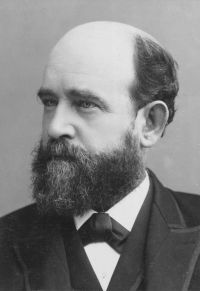
Portrait of Louis F. Post Louis F. Post,  The basic facts of economics (1927)

“ Utility is an absolute term indicative of essential desirability. Value is a relative term indicative of the relative Utility of commodities; or, more precisely, of the degree of desirability of one variety of Labor or Land or form of Wealth in comparison with other varieties. One variety of Labor or of Land or of Wealth may be twice as desirable as another, unit for unit, in which case one unit of the former will exchange in Trade for two units of the latter. Thus the relative Utility of a Commodity is indicated in Trade by its Value. ”
Source: Gutenberg

Portrait of Arthur Latham Perry Arthur Latham Perry,  Principles of Political Economy

“ We are now in a good place to see once for all the sharp distinction there is between Utility and Value. These two are often confounded to the deep detriment of our Science; and no clear thinking is possible in Economics without drawing this line sharp, and then holding it fast; for the hazard of this confusion is all the greater, because Utility is always connected with Value, although it is a totally different thing from Value. We will see. Utility is the simple capacity of anything to gratify the desire of [43] anybody. ”
Source: Gutenberg

Portrait of Friedrich von Wieser Friedrich von Wieser,  The Austrian School and the Theory of Value (1891)

“ The value of the productive elements is determined on the ground of utility as afforded by the products, and this holds good of the labour no less than of the coals, the machinery, and all the other means of production. To insist then on cost of production is ultimately to insist on some utility. There is no new principle to be discovered, none save utility. ”
Source: Wikisource

Get perspective with Kwize: daily news enlightened by great literature