Valve (biology)

Definition and stakes

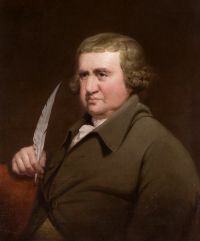
Portrait of Erasmus Darwin Erasmus Darwin,  Zoonomia; Or, the Laws of Organic Life…

“ But as these valves are placed in vessels, which are indued with life, and are themselves indued with life also; and are very irritable into those natural motions, which absorb, or propel the fluids they contain; it is possible, in some diseases, where these valves or vessels are stimulated into unnatural exertions, or are become paralytic, that during the diastole of the part of the vessel to which the valve is attached, the valve may not so completely close, as to prevent the relapse of the lymph or chyle. ”
Source: Gutenberg

Ray Vaughn Pierce,  The People's Common Sense Medical Adviser in Plain English

“ The valves are so arranged that they present no obstacle to the free flow of blood from the auricles into the ventricles, but if any is forced the other way, it gets between the valve and the wall of the heart, and drives the valve backwards and upwards, thus forming a transverse partition between the auricle and ventricle, through which no fluid can pass. ”
Source: Gutenberg

Frederick Chapman,  Australasian Fossils: A Students' Manual of Palaeontology

“ Each valve is equilateral, but the valves differ from one another in that one is larger and generally serves to attach the animal to rocks and other objects of support by a stalk or pedicle. Thus the larger valve is called the pedicle valve and the smaller, on account of its bearing the calcareous supports for the brachia or arms, the brachial valve. ”
Source: Gutenberg

Get perspective with Kwize: daily news enlightened by great literature