Lingula

Definition and stakes

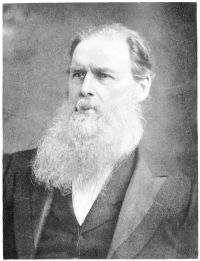
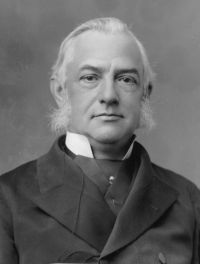
Portrait of Arthur Everett Shipley Arthur Everett Shipley,  1911 Encyclopædia Britannica, Volume 4… (1911)

“ In Discinisca and Lingula, however, the sub-oesophageal ganglion is not drawn out, but lies medianly; it gives off two posteriorly directed nerves to the stalk, which in Lingula unite and form a substantial nerve. Sense organs are unknown in the adult. The larval forms are provided with eye-spots, but no very specialized sense organs are found in the adult.
The histology of Brachiopods presents some peculiar and many primitive features. As a rule the cells are minute, and this has especially stood in the way of embryological research.
”
Source: Wikisource

A. H. Cooke,  The Cambridge natural history, Vol… (1895)

“ It is remarkable that some of the earliest types of Brachiopoda exist generically unchanged at the present day. Such are Lingula, ranging from the Cambrian; Discina and Crania, ranging from the Ordovician; and amongst the hinged forms Terebratula from the Devonian, and Rhynchonella from the Ordovician.
In the lowest Cambrian (Olenellus beds) the most important genera are Linnarssonia and Kutorgina. The hinged forms appear in the Cambrian, being represented by Orthis; but the majority in this formation belong to the Ecardines. Lingula, Lingulella, and Obolella are characteristic.
”
Source: Gutenberg

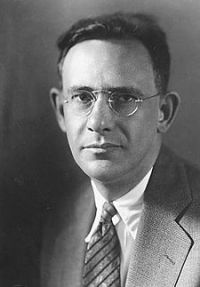
Portrait of Charles Darwin Charles Darwin,  Life and Letters of Charles Darwin…

“ You have put the view much better in your letter. Instead of saying, as I often have, that very few species vary at the same time, I ought to have said, that very few species of a genus EVER vary so as to become modified; for this is the fundamental explanation of classification, and is shown in my engraved diagram...
I quite agree with you on the strange and inexplicable fact of Ornithorhynchus having been preserved, and Australian Trigonia, or the Silurian Lingula. I always repeat to myself that we hardly know why any one single species is rare or common in the best-known countries.
”
Source: Gutenberg

Get perspective with Kwize: daily news enlightened by great literature