Vegetable oil

Definition and stakes

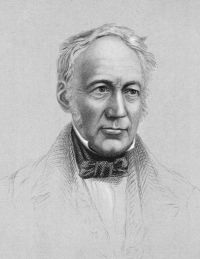
Sir Charles Alexander Cameron,  The Stock-Feeder's Manual

“ Digestible cellulose is probably equal in nutritive power to starch.
Oils and fats occur abundantly in vegetables, more particularly in their seeds. In the seeds of many cruciferous plants the proportion of fat and oil exceeds 35 per cent. The oils and fats termed fixed are those which possess the greatest interest to agriculturists; the volatile oils being those which confer on certain plants their fragrant odour. There are a great variety of vegetable oils, but the proximate constituents of most of them are chiefly stearin, margarin, olein, and palmitin.
”

Source: Gutenberg

Edwin E. Slosson,  Creative Chemistry: Descriptive of Recent Achievements in the Chemical Industries

“ It would be impossible to enumerate all the available sources of vegetable oils, for all seeds and nuts contain more or less fatty matter and as we become more economical we shall utilize of what we now throw away. The germ of the corn kernel, once discarded in the manufacture of starch, now yields a popular table oil. From tomato seeds, one of the waste products of the canning factory, can be extracted 22 per cent. of an edible oil. Oats contain 7 per cent. of oil. From rape seed the Japanese get 20,000 tons of oil a year. ”
Source: Gutenberg

Portrait of Sir Francis Bond Head Sir Francis Bond Head,  The Horse and His Rider

“ We all know that throughout our country, and indeed throughout the world, there are exposed for sale two descriptions of oil; and as one of them is compressed from vegetables, and the other obtained from animals, without reflecting for a moment, it ought surely, at once, to occur to everybody, that as all things were created good, "according to their kind," vegetable oil would not prove to be "good" for animal substances ”
Source: Gutenberg

Get perspective with Kwize: daily news enlightened by great literature