Wave motion

Definition and stakes

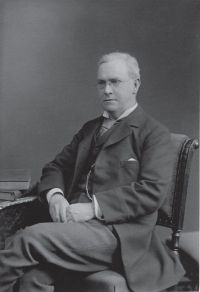
Portrait of Horace Lamb Horace Lamb,  1911 Encyclopædia Britannica (1911)

“ Thus in the wave method the actual motion of the string is considered as the resultant of two wave motions, neither of which is of itself, and without the other, consistent with the condition that the ends of the string are fixed. Each of the wave motions is periodic with a wave-length equal to twice the distance between the fixed points, and the one set of waves is the reverse of the other in respect of displacement and velocity and direction of propagation ”
Source: Wikisource

Sir J. A. Fleming,  Waves and ripples in water, air… (1912)

“ A little examination of wave-motion shows us, therefore, that we always have at any instant associated with the material in which the wave is being propagated, both Energy of Strain and Energy of Motion. It can be shown that in a true wave of permanent type, the whole energy at any one moment is half energy of strain and half energy of motion, or, as it is called, half potential and half kinetic. ”
Source: Gutenberg

Sir J. A. Fleming,  Waves and ripples in water, air… (1912)

“ Briefly speaking, any material or medium in or on which a true self-propagating wave-motion can be made must resist and persist. It must have an elastic resistance to some change or deformation, and it must have an inertia which causes it to persist in movement when once set in motion. These two qualities, or others equivalent to them, must invariably be present if we are to have a true wave produced in a medium. ”
Source: Gutenberg

Get perspective with Kwize: daily news enlightened by great literature