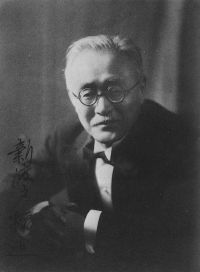
Inazo Nitobe

Biographical details

Portrait of Inazo Nitobe Inazo Nitobe,  Bushido, the Soul of Japan

“ We needed no Shakespeare to feel—though, perhaps, like the rest of the world, we needed him to express it—that mercy became a monarch better than his crown, that it was above his sceptered sway. How often both Confucius and Mencius repeat the highest requirement of a ruler of men to consist in benevolence. Confucius would say, “Let but a prince cultivate virtue, people will flock to him; with people will come to him lands; lands will bring forth for him wealth; wealth will give him the benefit of right uses. Virtue is the root, and wealth an outcome.” ”
Source: Gutenberg

Portrait of Inazo Nitobe Inazo Nitobe,  Bushido, the Soul of Japan

“ Alas for knightly virtues! alas for samurai pride! Morality ushered into the world with the sound of bugles and drums, is destined to fade away as “the captains and the kings depart.”
If history can teach us anything, the state built on martial virtues—be it a city like Sparta or an Empire like Rome—can never make on earth a “continuing city.” Universal and natural as is the fighting instinct in man, fruitful as it has proved to be of noble sentiments and manly virtues, it does not comprehend the whole man.
”
Source: Gutenberg

Portrait of Inazo Nitobe Inazo Nitobe,  Bushido, the Soul of Japan

“ Of the causes in comparison with which no life was too dear to sacrifice, was
THE DUTY OF LOYALTY,
which was the key-stone making feudal virtues a symmetrical arch. Other virtues feudal morality shares in common with other systems of ethics, with other classes of people, but this virtue—homage and fealty to a superior—is its distinctive feature. I am aware that personal fidelity is a moral adhesion existing among all sorts and conditions of men,—a gang of pickpockets owe allegiance to a Fagin; but it is only in the code of chivalrous honor that Loyalty assumes paramount importance.
”
Source: Gutenberg

Get perspective with Kwize: daily news enlightened by great literature