Summary

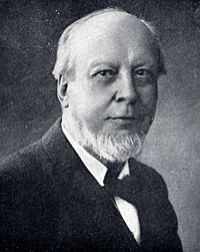
Portrait of Dudley Buck Dudley Buck The Influence of the Organ in History

Music was a serious matter. They revelled in fugue, and even danced contrapuntally. Although not a direct influence, perhaps, [Pg 28] is not this state of things, after all, a sufficient proof of the absolutism of the organ in a derived manner,—the regal sway of the king of instruments at this period? Bach breathed new life into these dry and purely scientific forms, and it is his greatest glory that in many, if not all, of his profoundest works, his genius enabled him to unite the emotional and æsthetic element with the purely intellectual and scientific.
Source: Gutenberg

Portrait of Dudley Buck Dudley Buck The Influence of the Organ in History

The organ was no more disposed to give up its long sway, and be narrowed to its own particular sphere, than any other sovereign, when the limiting influences of modern times first began to make themselves felt. Like them, however, it was obliged to yield. Little by little the piano emancipated itself from the strict contrapuntal chain which bound it to the organ, until, in the sonatas of Mozart and Beethoven, it emerged into a new life.
Source: Gutenberg

Portrait of Dudley Buck Dudley Buck The Influence of the Organ in History

How often we hear the remark that contrapuntal treatment is best suited to the organ! True; but how many reflect that the organ, so to speak, first dictated counterpoint to the world? An influence, which (the free forms being derived from the stricter) is carried clear down into the realm of Italian opera, i.e., when it is good of its kind. Is not, then, this influence, which the organ has indisputably exerted upon not merely its own literature, but the musical literature at large, an all-sufficient proof of its right to the royal title?
Source: Gutenberg

Get perspective with Kwize: daily news enlightened by great literature