“ The Yi were both powerful and independent until after the Yuan Dynasty when their princess made a deal with the invading Mongols. They wore impressive armour, examples of which can be seen online here at Sichuan University Museum and here at Harvard, or in person at the Anthropology Museum of Yunnan University on Beimenjie in Kunming. ”
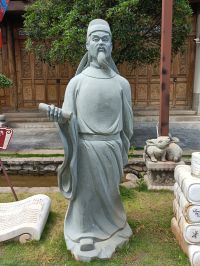
Fan Chuo
Summary
“Translation:Manshu”, is a work by Fan Chuo. It explores elements such as Luce, Sichuan and the Red River.
Quotes from Translation:Manshu (Fan Chuo)
“ In ancient times, this Yunnan-Guizhou plateau/Sichuan basin transition area was the domain of the Bo people, whose neolithic but similarly cliff-inspired culture incorporated hanging cliff tombs, a tradition still preserved to this day in only one location by an offshoot emigrant community who moved to Bainitang in Wenshan prefecture, southeastern Yunnan. Sadly that community is now endangered by open cut mining. See for example this Chinese source for further information on the pass itself, which is discussed further subsequently in this section of the text. ”
“ More sophisticated boats in the region appear to have been limited to Yunnan's major lakes, the Red River (technology via Vietnam) and the edge of the Sichuan basin, these were of wood rather than skin and probably represented a completely different and independent evolutionary lineage of watercraft.↑ In modern times, the name apparently refers to the town of Liuku, capital of Nujiang prefecture in far western Yunnan (bordering Burma's Kachin State) . ”
