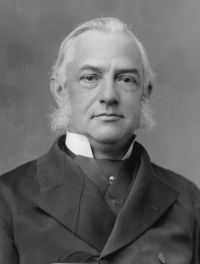
Friedrich Max Müller

Friedrich Max Müller

Summary

Portrait of Friedrich Max Müller Friedrich Max Müller India—what can it teach us? (1892)

If I were to look over the whole world to find out the country most richly endowed with all the wealth, power, and beauty that nature can bestow—in some parts a very paradise on earth—I should point to India. If I were asked under what sky the human mind has most fully developed some of its choicest gifts, has most deeply pondered on the greatest problems of life, and has found solutions of some of them which well deserve the attention even of those who have studied Plato and Kant—I should point to India.
Source: Wikisource

Portrait of Friedrich Max Müller Friedrich Max Müller India—what can it teach us? (1892)

India wants more such dreamers as Sir William Jones, then 37 years of age, standing alone on the deck of his vessel and watching the sun diving into the sea with the memories of England behind and the hopes of India before him, feeling the presence of Persia and its ancient monarchs, and breathing the breezes of Arabia and its glowing poetry. Such dreamers know how to make their dreams come true, and how to change their visions into realities.
Source: Wikisource

Portrait of Friedrich Max Müller Friedrich Max Müller India—what can it teach us? (1892)

But because I feel bound to protest against the indiscriminate abuse that has been heaped on the people of India from the Himalâya to Ceylon, do not suppose that it is my wish or intention to draw an ideal picture of India, leaving out all the dark shades, and giving you nothing but 'sweetness and light.' Having never been in India myself, I can only claim for myself the right and duty of every historian, namely, the right of collecting as much information as possible, and the duty to sift it according to the recognised rules of historical criticism.
Source: Wikisource

Get perspective with Kwize: daily news enlightened by great literature