Summary

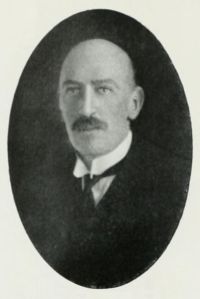
Portrait of Maurice Baring Maurice Baring An Outline of Russian Literature

The pictures of nature, the portraits of the people, all the good and all the bad of the good and the bad old times pass before one with epic simplicity and the magic of a fairy-tale. One is spellbound by the charm, the dignity, the good-nature, the gentle, easy accent of the speaker, in whom one feels convinced not only that there was nothing common nor mean, but to whom nothing was common or mean, who was a gentleman by character as well as by lineage, one of God’s as well as one of Russia’s nobility.
Source: Gutenberg

Portrait of Maurice Baring Maurice Baring An Outline of Russian Literature

Turgenev is above all things a poet. He carried on the work of Pushkin, and he did for Russian prose what Pushkin did for Russian poetry; he created imperishable models of style. His language has the same limpidity and absence of any blur that we find in Pushkin’s work. His women have the same crystal radiance, transparent simplicity, and unaffected strength; his pictures of peasant life, and his country episodes have the same truth to nature; as an artist he had a severe sense of proportion, a perfect purity of outline, and an absolute harmony between the thought and the expression.
Source: Gutenberg

Portrait of Maurice Baring Maurice Baring An Outline of Russian Literature

It is—
“Old in grief and very wise in tears”:
and its chief gift to mankind is an expression, made with a naturalness and sincerity that are matchless, and a love of reality which is unique,—for all Russian literature, whether in prose or verse, is rooted in reality—of that grief and that wisdom; the grief and wisdom which come from a great heart; a heart that is large enough to embrace the world and to drown all the sorrows therein with the immensity of its sympathy, its fraternity, its pity, its charity, and its love.
Source: Gutenberg

Get perspective with Kwize: daily news enlightened by great literature