Summary

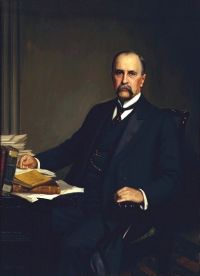
Portrait of William Osler William Osler The Evolution of Modern Medicine

The worth of a book, as of a man, must be judged by results, and, so judged, the "Fabrica" is one of the great books of the world, and would come in any century of volumes which embraced the richest harvest of the human mind. In medicine, it represents the full flower of the Renaissance. As a book it is a sumptuous tome a worthy setting of his jewel—paper, type and illustration to match, as you may see for yourselves in this folio—the chef d'oeuvre of any medical library.
In every section, Vesalius enlarged and corrected the work of Galen.
Source: Gutenberg

Portrait of William Osler William Osler The Evolution of Modern Medicine

We do not forget the magnitude of his labors, but a new generation has new problems—his message was not for you—but that medicine today runs in larger moulds and turns out finer castings is due to his life and work. It is one of the values of lectures on the history of medicine to keep alive the good influences of great men even after their positive teaching is antiquated. Let no man be so foolish as to think that he has exhausted any subject for his generation. Virchow was not happy when he saw the young men pour into the old bottle of cellular pathology the new wine of bacteriology.
Source: Gutenberg

Portrait of William Osler William Osler The Evolution of Modern Medicine

Side by side, as substance and shadow—"in the dark backward and abysm of time," in the dawn of the great civilizations of Egypt and Babylon, in the bright morning of Greece, and in the full noontide of modern life, together have grown up these two diametrically opposite views of man's relation to nature, and more particularly of his personal relation to the agencies of disease.
Source: Gutenberg

Get perspective with Kwize: daily news enlightened by great literature