“ Again and again, as we study Greek thought and literature, behind the veil woven by time and distance, the face that meets us is our own, younger, with fewer lines and wrinkles on its features and with more definite and deliberate purpose in its eyes. For these reasons we are to-day in a position, as no other age has been, to understand Ancient Greece, to learn the lessons it teaches, and, in studying the ideals and fortunes of men with whom we have so much in common, to gain a fuller power of understanding and estimating our own. ”
Ancient Greece
Definition and stakes
Ancient Greece, spanning from c. 1200 BC to 600 AD, was a Mediterranean civilization distinguished by its city-states, cultural cohesion, and significant impact on Western thought. From the Archaic period’s polis structures to the Classical era’s philosophical and artistic peak, Greece influenced politics, art, and science.
Authors like Percy Bysshe Shelley emphasized its lasting importance, pointing out its relevance for contemporary society, while William Stubbs contrasted the paths of ancient and modern Greece. Melvin Winstock underscored Athens’ ideals as pivotal to global history. This civilization’s legacy, as scholars note, lies in its blend of humanism, curiosity, and creativity, which continues to shape the foundations of Western heritage.
Quotes about “Ancient Greece”
 Percy Bysshe Shelley,
The Prose Works of Percy Bysshe Shelley…
(1897)
Percy Bysshe Shelley,
The Prose Works of Percy Bysshe Shelley…
(1897)
“ The history of ancient Greece is the study of legislators, philosophers, and poets; it is the history of men, compared with the history of titles. What the Greeks were, was a reality, not a promise. And what we are and hope to be, is derived, as it were, from the influence and inspiration of these glorious generations.Whatever tends to afford a further illustration of the manners and opinions of those to whom we owe so much, and who were perhaps, on the whole, the most perfect specimens of humanity of whom we have authentic record, were infinitely valuable. ”
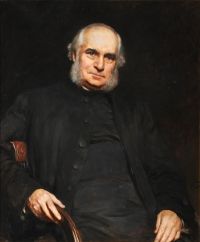 William Stubbs,
Seventeen lectures on the study of medieval and modern history and kindred subjects
(1886)
William Stubbs,
Seventeen lectures on the study of medieval and modern history and kindred subjects
(1886)
“ Every factor is new, even the area, the nationality of the actors, the whole idea in its origin and every stage of growth is new. Or let the area be the same; what has modern Greece in continuity with ancient Greece, but the soil and sky and the, to it, unintelligible wreck of ancient magnificence, from which it fails apparently to draw even the ordinary lessons of civilisation: what period and region of the whole history of the world conveys a less important lesson than Greece during the Middle Ages of European History? ”