“ I think that nowhere so much as in London do people wear—to the eye of observation—definite signs of the sort of people they may be. If you like above all things to know the sort, you hail this fact with joy; you recognise that if the English are immensely distinct from other people, they are also socially—and that brings with it, in England, a train of moral and intellectual consequences—extremely distinct from each other. ”
Anglophone people
Definition and stakes
The theme of “Anglophone people” has been addressed by authors such as Various, H. G. Wells, George Bernard Shaw, National People's Congress and Ian Hay. It is often associated with terms like England, English, culture, language and civilization.
Quotes about “Anglophone people”
 Fanny Kemble,
Journal of a Residence in America
“ I not only hear the voice of England in the language of this people, but I recognise in all their best qualities, their industry, their honesty, their sturdy independence of spirit, the very witnesses of their origin—they are English; no other people in the world would have licked us as they did; nor any other people in the world built up, upon the ground they won, so sound, and strong, and fair an edifice. ”
H. E. Marshall, English Literature for Boys and Girls
“ When, then, after nearly four hundred years the Romans went away, the people of Britain were still British. But soon another people came. These were the Anglo-Saxons, the English, who came from over the sea. And little by little they took possession of Britain. They drove the old dwellers out until it was only in the north, in Wales and in Cornwall, that they were to be found. Then Britain became Angleland or England, and the language was no longer Celtic, but English. And although there are a few words in our language which can be traced to the old Celtic, these are very few. ”
John R. Dos Passos, The Anglo-Saxon Century and the Unification of the English-Speaking People
“ Let us take up together the work so magnificently performed by the United States and by England down to the commencement of this century. Once for all let prejudices be cast aside. Let us unite in a great English-speaking family. Let us be content to learn from each other. And when the curtain of the twenty-first century is raised, may the successful anglicisation of the world be revealed; may the real spirit of our institutions and laws prevail everywhere, and the English language have become the universal dialect of mankind. ”
Various, Blackwood's Edinburgh Magazine…
“ But, we say it with the gratification of Englishmen, proud of their country's fame, and still prouder of its principles—that the lead in this noblest of all human victories, has been clearly taken by England. It is she who pre-eminently stimulates the voyage, and plants the colony, and establishes the commerce, and civilizes the people. ”
Ian Hay, The Oppressed English
“ To the average Englishman it seems simpler to say "England."But there are other and deeper reasons. England is a big nation, while the others are small. There are more people in London than in the whole of Scotland, or Ireland, or, until recent years, Canada. And a small nation is always intensely sensitive, and assertive, of its own nationality. The English, too, are an exceedingly placid nation. Their enemies call them self-satisfied, but this is hardly just. ”
John Richard Green, History of the English People, Volume I
“ The settlement of the English in the conquered land was nothing less than an absolute transfer of English society in its completest form to the soil of Britain. The slowness of their advance, the small numbers of each separate band in its descent upon the coast, made it possible for the invaders to bring with them, or to call to them when their work was done, the wives and children, the læt and slave, even the cattle they had left behind them. The first wave of conquest was but the prelude to the gradual migration of a whole people. ”
Robert Bell, Once a Week (1860)
“ Five or six hundred years ago it was as well known to the English as any spot on the globe to which they adventured for trade or pleasure; and at this present time the advent of an Englishman is so rare in the place that, when such an apparition appears, the worthy people collect at their shop-doors to gaze at him, and the little children gather about him with gaping eyes, and examine him from head to foot, with an expression of mixed curiosity and fear. ”
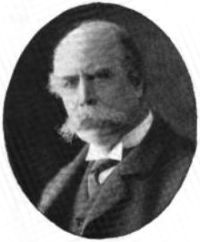 H. Sutherland Edwards,
Old and New Paris: Its History…
“ But in order to affirm and manifest this sentiment the English have no need to group themselves, to form themselves into a society. An Englishman is to himself England alone; he carries his nation in him, with him, on him ”
Thomas William Shore, Origin of the Anglo-Saxon Race (1906)
“ The Old English race grew by the absorption into it of tribal people descended from various ancient races. It assimilated to a great extent their dialects, and the Old English speech, as it prevailed in various parts of England, was formed by this process. No example of an Anglo-Saxon language has even been found out of Britain itself. ”
 Rudyard Kipling,
The Kipling Reader
“ Winds of the World, give answer! They are whimpering to and fro— And what should they know of England who only England know?— The poor little street-bred people that vapour and fume and brag, They are lifting their heads in the stillness to yelp at the English Flag! ”
Chautauqua Institution, The Chautauquan, Vol. 05, February 1885
“ It has freed itself from those trammels; for at one time it was hampered by them sorely. Anglo-Saxon, or Old English, was an inflected speech, and was tied up in the bonds of gender and other grievous grammatical tetherings. This was long ago; but it was after Britain had become England, or Engle-land, the land of the English people and of English speech. ”
Roger Williams, The Bloudy Tenent of Persecution for Cause of Conscience Discussed and Mr…
“ But now, few nations of the world but are a mixed seed; the people of England especially: the Britons, Picts, Romans, Saxons, Danes, and Normans, by a wonderful providence of God, being become one English people. ”
Ellwood Patterson Cubberley, The History of Education
“ The strength of England is in part due to its wonderful mixture of peoples— Britons, Angles, Saxons, Jutes, Danes, Northmen, to mention only the more important earlier peoples which have been welded together to form the English people. ”
James Wood, The Nuttall Encyclopædia — E
“ Under a limited monarchy and a widely embracing franchise, the people of England enjoy an unrivalled political freedom. Since Henry VIII.'s time, the national religion has been an established Protestantism, but all forms are tolerated. In 1896 education was made free. The name England is derived from Engle-land, or land of the Angles, a Teutonic people who, with kindred Saxons and Jutes, came over from the mainland in the 5th century, and took possession of the island, driving Britons and Celts before them. ”
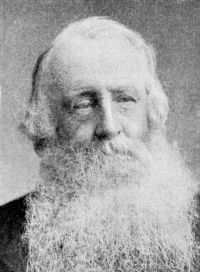 Edward A. Freeman,
Greater Greece and Greater Britain…
“ The Englishman of Britain shrinks from bestowing the English name on the Englishman of America, lest he should seem to be wounding the national pride of a people the very root of whose political life was the denial of all English political allegiance. ”
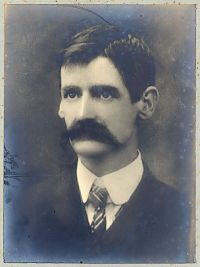 Henry Lawson,
United Division
(1888)
“ Why on earth do we want closer connection with England? We have little in common with English people except our language. We are fast becoming an entirely different people. ”
John Richard Green, History of the English People, Volume I
“ England remained a country of Englishmen. The conquerors sank into the mass of the conquered, and Woden yielded without a struggle to Christ. The strife between Briton and Englishman was in fact a strife between men of different races, while the strife between northman and Englishman was a strife between men whose race was the same. The followers of Hengest or of Ida were men utterly alien from the life of Britain, strange to its arts, its culture, its wealth, as they were strange to the social degradation which Rome had brought on its province. ”
Great Men and Famous Women. Vol…
“ England contained less than five million inhabitants, and of these probably not one-tenth spoke a language which could be understood to-day by the English-using people of the world. The mass of the populace were steeped to the lips in brutality and ignorance. ”
 James Anthony Froude,
History of England
(1893)
“ Invariably, by friend and enemy alike, the English are described as the fiercest people in all Europe (the English wild beasts, Benvenuto Cellini calls them) ; and this great physical power they owed to the profuse abundance in which they lived, and to the soldier's training in which every man of them was bred from childhood. ”
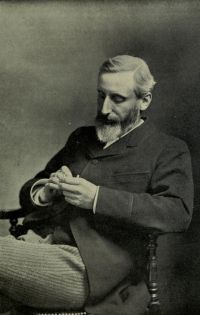 Grant Allen,
Anglo-Saxon Britain
“ This little book is an attempt to give a brief sketch of Britain under the early English conquerors, rather from the social than from the political point of view. For that purpose not much has been said about the doings of kings and statesmen; but attention has been mainly directed towards the less obvious evidence afforded us by existing monuments as to the life and mode of thought of the people themselves. The principal object throughout has been to estimate the importance of those elements in modern British life which are chiefly due to purely English or Low-Dutch influences. ”
John Richard Green, History of the English People, Volume VII
“ William and Marlborough carried more than English arms across the Channel; they carried English ideas. The combination of material and military greatness with a freedom of thought and action hardly known elsewhere, which was revealed in the England that sprang from the Revolution of 1688, imposed on the imagination of men. For the first time in our history we find foreigners learning English, visiting England, seeking to understand English life and English opinion. ”
John R. Dos Passos, The Anglo-Saxon Century and the Unification of the English-Speaking People
“ When an Englishman and an American meet, no matter how casually, their common tongue furnishes, immediately, a means of communication which makes them "Native to the manner born." A few spoken words, a few lines of correspondence, open up, if need be, the whole life of each nation: its politics, its forms and principles of justice, its religion, its domestic interests and feelings, its science, its drama, its literature, its past, present, and future. It establishes a sympathy and bond in all common things. ”
Nevin O. Winter, Chile and Her People of To-day
“ The predominance of the British is shown by the prevalence of the English language. Nearly every one engaged in business has at least a slight acquaintance with that tongue. One can not go far without crossing the path of some ruddy Briton or voluble Irishman. Many of the best stores bear English names, and one will see the same goods displayed as in New York or London. In fact it is more predominantly English in appearance than any other city of South America. ”
 Laurence Sterne,
A Sentimental Journey Through France and Italy
“ The English, like ancient medals, kept more apart, and passing but few people’s hands, preserve the first sharpnesses which the fine hand of Nature has given them;—they are not so pleasant to feel,—but in return the legend is so visible, that at the first look you see whose image and superscription they bear.—But the French, Monsieur le Count, added I (wishing to soften what I had said) , have so many excellences, they can the better spare this;—they are a loyal, a gallant, a generous, an ingenious, and good temper’d people as is under heaven;—if they have a fault—they are too serious. ”
 Adam Smith,
The Wealth of Nations
(1776)
“ The rulers of Great Britain have, for more than a century past, amused the people with the imagination that they possessed a great empire on the west side of the Atlantic. This empire, however, has hitherto existed in imagination only. ”
 George Bernard Shaw,
Heartbreak House, Great Catherine…
(1919)
“ Go anywhere in England where there are natural, wholesome, contented, and really nice English people; and what do you always find? That the stables are the real centre of the household; ”
Maria Mitchell, Maria Mitchell: Life, Letters, and Journals
“ At the same time England has a class to which we have happily no parallel in our country—a class to which even English gentlemen liken the Sepoys, and who would, they admit, under like circumstances be guilty of like enormities. But the true Englishman shuts his eyes for a great part of the time to the steps in the social scale down which his race descends, and looks only at the upper walks. ”
Various, The Continental Monthly, Vol. 1…
“ While a popular French author sums up the elements of life in England as being la vie de famille, la politique, et les affaires,—'domestic life, politics, and business,'—he complacently infers that le fond du caractère Anglais, 'the basis of the English character,' is nothing more nor less than le manque de bonheur—'a want of anything like happiness.' An English thinker, on the other hand, finds in the very language of France the evidence of superficial emotion and unaspiring, irreverent intelligence. ”
George Bernard Shaw,
Getting Married
(1908)
“ The whole strength of England lies in the fact that the enormous majority of the English people are snobs. ”
Charles Robert Leslie Fletcher, A School History of England (1911)
“ When, in the eighth and ninth centuries, we begin to see a little into the darkness, we find that England has become a purely English country, with a purely English and rather absurd system of law, and a purely English language ”
“ The irresistible genius and propagation of the English race are fast Anglicizing the world, and thus centering it around the heart of civilization and commerce. Under the sceptre of England alone, there live, it is said, one hundred and forty million of human beings, embracing all races of men, dwelling between every two degrees of latitude and longitude around the globe. And there is the Anglo-American hemisphere of the English race, doubling its population every twenty-five years, and propelling its propagation through the Western World. ”
 Anatole France,
The White Stone
“ England is less a nation than a race. The Anglo-Saxons know no fatherland but the sea. England, looked upon as wealthy in her vast domains, owes her fortune and her power to her commerce. It is not her colonies which should be envied her, but her merchants, the authors of her wealth. ”
Marie Carmichael Stopes, Conquest; Or, A Piece of Jade; a New Play in Three Acts
“ What race are we? Britons! Why, lads, the British over there aren’t as British as we are; They are English and Scotch and Irish and Welsh—but what are we? All these British strains mixed! Most of us have some Scotch blood and some English blood and some Irish blood mixed in our veins, many of us have been to other parts of Britain and got a touch of Canada, or Australia, or South Africa into us. I say lads we are more British than the folks in the Old Dart. We are a fine blend of all the flavours of different Britons, we are the very essence of Britain! We are epitomes of Empire. ”
 Gilbert Parker,
The Weavers: a tale of England and Egypt of fifty years ago - Complete
“ When an Englishman in England leaves office, no matter how unfaithful, though he be a friend of any country save his own, they send him to the House of Lords—or so I was told in France when I was there. ”
 H. G. Wells,
The Passionate Friends
“ Before, my eyes again as I sit here in this quiet walled French garden, the great space before the Jumna Musjid at Delhi reappears, as I saw it in the evening stillness against a glowing sky of gold, and the memory of countless worshippers within, praying with a devotion no European displays. And then comes a memory of that long reef of staircases and temples and buildings, the ghats of Benares, in the blazing morning sun, swarming with a vast multitude of multicolored people and the water also swarming with brown bodies. ”
H. G. Wells,
The Country of the Blind, and Other Stories
“ There they were, people like ourselves and yet not like ourselves, frozen in careless attitudes, caught in mid-gesture. A girl and a man smiled at one another, a leering smile that threatened to last for evermore; a woman in a floppy capelline rested her arm on the rail and stared at Gibberne's house with the unwinking stare of eternity; a man stroked his moustache like a figure of wax, and another stretched a tiresome stiff hand with extended fingers towards his loosened hat. ”
Edna Worthley Underwood, The taste of honey (1930)
“ And where is the blood to be fired?England made better use of Latin, of Greek mind, than other races, by incorporating them into daily life. She made of them an integral part of the nation. Wide-spread mental contact, with such great races, which were both old and enriched with much experience, ripened her ahead of time, strengthened her, gave her most of what she has best. England set about forming life and mind upon some of the finest thinkers the world has seen. That was her master-stroke of diplomacy. She transposed geniuses into living, breathing ideals. ”
 Albert Bigelow Paine,
Mark Twain: A Biography. Complete
“ An Englishman may write with the most brutal frankness about any man or institution among us and we republish him without dreaming of altering a line or a word. But England cannot stand that kind of a book written about herself. It is England that is thin-skinned. It causeth me to smile when I read the modifications of my language which have been made in my English editions to fit them for the sensitive English palate. Now, as I say, I have taken laborious pains to so trim this book of offense that you'll not lack the nerve to print it just as it stands. ”
Related terms
Authors who wrote about “Anglophone people”
VariousH. G. WellsGeorge Bernard ShawNational People's CongressIan HayHenry JamesFanny KembleH. E. MarshallThomas William ShoreRobert BellJohn Richard GreenRudyard KiplingJames WoodChautauqua InstitutionRoger WilliamsEllwood Patterson CubberleyHenry LawsonEdward A. FreemanJames Anthony FroudeAdam Smith
H. G. WellsGeorge Bernard ShawNational People's CongressIan HayHenry JamesFanny KembleH. E. MarshallThomas William ShoreRobert BellJohn Richard GreenRudyard KiplingJames WoodChautauqua InstitutionRoger WilliamsEllwood Patterson CubberleyHenry LawsonEdward A. FreemanJames Anthony FroudeAdam Smith