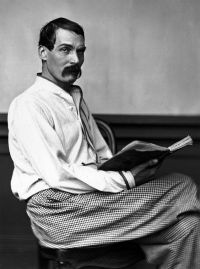
“ Ah, but we don’t understand Armenian, it cannot be expected that we should understand Armenian, or Welsh, or . . . Hey, what’s this? The mighty we not understand Armenian or Welsh, or . . . Then why does the mighty we pretend to review a book like Lavengro? From the arrogance with which it continually delivers itself, one would think that the mighty we is omniscient; that it understands every language; is versed in every literature; yet the mighty we does not even know the word for bread in Armenian. ”
Armenian language
Definition and stakes
The Armenian language, an Indo-European tongue with a rich literary heritage, has long fascinated scholars for its historical depth and linguistic flexibility. From George Borrow’s remarks on its elusive vocabulary to Viscount James Bryce’s admiration for its ability to convey classical texts, writers have emphasized its unique role as a link between Eastern and Western traditions.
Frederick Conybeare noted its scholarly revival through Venetian presses, while Diana Agabeg Apcar traced its written beginnings to St. Mesrope’s fifth-century alphabet. These viewpoints collectively reveal a language whose literary tradition, grounded in ancient culture yet continuously evolving, remains a testament to Armenia’s enduring intellectual and artistic identity.
Quotes about “Armenian language”
Viscount James Bryce Bryce, Armenian Legends and Poems
“ There are upwards of fifty chronicles and histories written in ancient Armenian, which is richer in literature than the Greek of the same period, and the Armenian language is so flexible and so well adapted to the exact rendering of every kind of literature that if, for instance, the Anabasis of Xenophon were lost, it might be reproduced in Greek, almost word for word, from the Armenian version. ”
Frederick Cornwallis Conybeare,
1911 Encyclopedia Britannica
(1911)
“ The press which has done most in printing Armenian authors is that of the Mechitharists of Venice. Here in 1836 was issued a magnificent thesaurus of the Armenian language, with the Latin and Greek equivalents of each word. At that time there was no dictionary of any language and literature to be compared with this for exhaustiveness and accuracy. There are now Armenian presses all over the world, reprinting old books or issuing new works, often translations of modern writers, English, French, Russian and German. ”
Viscount James Bryce Bryce, Armenian Legends and Poems
“ What is most remarkable is that, at the very beginning of the intellectual movement, when the alphabet had just been formed, the literary language is so highly developed, so rich and subtle, that it is more like a language which is the product of centuries of culture. This very fact shows that culture was no novelty in Armenia. The new movement only introduced a fresh era in Armenian civilisation. ”
Diana Agabeg Apcar, Betrayed Armenia
“ Anany and his companions are supposed to be the “certain Greeks” who came to Philip asking to see Jesus. And here I have to explain that the letters of the Armenian alphabet were invented by St. Mesrope in the beginning of the fifth century of the christian era; previous to the time of Mesrope there were no special Armenian letters, and as this invention was hailed as a signal national boon we have to conclude that there was no written Armenian language previous to the fifth century. ”
Viscount James Bryce Bryce, Armenian Legends and Poems
“ Few among us have acquired their language, one of the most ancient forms of human speech that possess a literature. Still fewer have studied their art or read their poetry even in translations. There is, therefore, an ample field for a book which shall present to those Englishmen and Frenchmen, whose interest in Armenia has been awakened by the sufferings to which its love of freedom and its loyalty to its Christian faith have exposed it, some account of Armenian art and Armenian poetical literature. ”
Viscount James Bryce Bryce, Armenian Legends and Poems
“ Armenian mediaeval poetry does not possess the burning hues of oriental verse, and is [225] perhaps less luxurious, but the grace, charm, ease, and fancy of the Armenian lays are inimitable, and their originality and occasional quaintness are so marked that one feels there is a magic in them. These characteristics are the outcome of the mutual assimilation of eastern and western art, so that the poetry of Armenia, like its language, its art, its Church, stands by itself. ”
Viscount James Bryce Bryce, Armenian Legends and Poems
“ Metaphor and allegory abound. In colour and splendour these songs might vie with any classical poem, and their existence is a proof that long before the Christian era the Armenians had a perfected poetical language, which, in its construction, imaginative force, brilliancy, and grammatical development, bears the impress of literary culture.Most of the nouns and adjectives in this poem are in the diminutive form, which expresses endearment:—The adjectives used here do not qualify the nouns, but simply serve as epithets, or attributes, like the adjectives in the Homeric poems. ”
Vahram, Vahram's chronicle of the Armenian kingdom in Cilicia…
“ A literary journey to Armenia, undertaken by an active laborious scholar, who unites the knowledge of the Armenian language with classical studies, would prove of the greatest importance to the knowledge of ancient history and to the advancement of general literature. ”
George H. Filian, Armenia and Her People; or, The Story of Armenia by an Armenian
“ The peculiar value of the Armenian literature is not realized as it should be, by European and American scholars; the language is well worth learning for what it can give the student. Not alone is the original [101] work that comes from the first Christian nation specially valuable for its bearing on primitive Christianity, but the Armenian scholars translated great numbers of works from other languages, and these translations are preserved in Armenian monasteries when the originals have been irretrievably lost in the wars, and burnings, and devastations of other countries. ”
Viscount James Bryce Bryce, Armenian Legends and Poems
“ Armenian hymns are written in a style which is not only picturesque, but which also has a charm of its own; its colours are very rich; the pictures it conjures up are vivid. When one remembers that many of them were written when national life and death were hanging in the balance, because of foreign oppression, at a time when they had no one to turn to but the Creator, we understand how it is that so much tenderness, hope, and devotion are embodied in these “rows of gems,” nor can one help thinking that Armenian is the natural language for religious poems. ”
The treasury of languages (1873)
“ Ararat. Armenian is written from left to right, and has an alphabet peculiar to itself, which has been modernized from an older original, attributed to Miesrob, A.D. 406.⁂ The language is essentially an Aryan dialect, akin to Achæmenian Persian and Zend, but still distinct from either: into which have been absorbed a large number of Turanian roots. G. R. Armenic.A branch of the great Indo-European family of speech not yet clearly defined. It is the parent of modern Armenian, and of an older form of the same language, called Old Armenic, now extinct. ”
Julius R. Van Millingen, Peeps at Many Lands: Turkey
“ The language spoken by the people principally is Turkish, while that used in the Church services is Ancient Armenian, which is not understood by the illiterate, but efforts are now made to revive the use of Modern Armenian, and it is being taught in their schools, and spoken more extensively. ”
Sadik Shahid Bey, Islam, Turkey, and Armenia, and How They Happened (1898)
“ The other opinion lately brought forward is that the Armenian nation, belonging to the Aryan race, came from the north, from Caucasia, and did not occupy the country before the seventh century B.C. They followed the track of the Medes, owing to the gradual decline of the Assyrian Empire. The arguments in favor of this theory are the facts that the Armenians in their physiognomy and natural construction and in their traditions and language have close connection and resemblance with other Aryan nations, which would be the contrary if they had an Assyrian or Chaldean origin. ”
Leon Dominian,
The Frontiers of Language and Nationality in Europe
“ Modern research, however, places the inhabitants of the plateau of Anatolia and of the Armenian mountain land in the same racial type.Planted squarely on the scene of the secular conflict between the civilization of Europe and Asia, Armenia became the prey of the victor of the moment. But the united influence of site and configuration was more than once during this long struggle strong enough to confer independence on the Armenian. As a buffer between eastern and western empires the country enjoyed three distinct periods of native rule prior to the Ottoman conquest. ”
Leon Dominian,
The Frontiers of Language and Nationality in Europe
“ Fully one-third of Armenian consists of words of Persian stock. Some Armenian philologists point to the existence of a small remnant of highly ancient words which cannot be traced to Aryan forms and which probably represent the survival of a language indigenous to the Armenian highlands. ”
Helen Davenport Gibbons, The Red Rugs of Tarsus: A Woman's Record of the Armenian Massacre of 1909
“ The predominating four are Turks, Arab Fellahin, Armenians and Greeks. There is a babel of these four tongues. One hears also Russian, Persian, Hindustani and Italian. We manage with French in Mersina, but it is little spoken in Tarsus. The Turkish language rules in inter-racial transactions. Armenians must use this language. Educated Armenians struggle valiantly to maintain the two surviving elements of national identity: the church and the language. But oddly enough the mother-tongue of the average Armenian is Turkish. Greek has a strong hold upon the Greeks here. ”
Leo Wiener,
The History of Yiddish Literature in the Nineteenth Century
“ They always choose the everyday language in which to speak to them, not the tongue of literature, which is less accessible to them. Mainly by their efforts the Modern Armenian and Bulgarian have been raised to a literary dignity, and with it there has always followed a regeneration of letters and a national consciousness that has in some cases led to political independence. ”
George H. Filian, Armenia and Her People; or, The Story of Armenia by an Armenian
“ The old Armenian classic language is very difficult, from the number of particles and participles in it; but modern Armenian is one of the easiest of languages to learn, very regular in inflection and the spelling entirely phonetic. ”
Sadik Shahid Bey, Islam, Turkey, and Armenia, and How They Happened (1898)
“ This, too, made the Turks jealous that giaours were better acquainted with their business and books than themselves. In an old style Turkish school the Arabic grammar was a life work, while in the Armenian schools the necessary principles of that language are simply a few months' work. Many poor and honest Armenian young men gain name and position through education, while hosts of Turkish boys are loafing in the streets and stepping over wild street dogs and building a character worse than dogs. ”
Viscount James Bryce Bryce, The treatment of Armenians in the Ottoman Empire (1916)
“ The reverse side of the picture is the uprooting of the nation from its native soil. The immigrant tribes from Central Asia did not make a permanent lodgment in the Armenian homelands. Some of them drifted back into Azerbaijan and the steppe country along the coast of the Caspian and the lower courses of the Aras and the Kur; others were carried on towards the north-west, along the ancient Royal Road, and imposed the Moslem faith and the Turkish language upon the population of Central Anatolia. ”
Viscount James Bryce Bryce, Armenian Legends and Poems
“ Armenian religious and devotional poetry has characteristics of its own. This class of literature falls into two divisions. In the first division are works of a purely literary character written in old Armenian; in the second, works meant for popular use, written in the language of the people. ”
Leon Dominian,
The Frontiers of Language and Nationality in Europe
“ In addition to the foregoing fundamental wanderings, the inflow of an Iranian element, composed of men of Aryan speech, may be observed. This contingent marched out of the plateau of Iran and reached the Turkish highland without having to scale its slopes. As a result of this migration Persian words permeate Armenian [214] extensively. The Turks also have appropriated a certain amount of Persian words and culture from the [273] same source. Racially, however, the eastern element was absorbed by the Armenoid population. ”
H. F. B. Lynch,
Armenia, Travels and Studies (Volume 1 of 2…
“ All the machinery of whatever civilisation the land may possess is furnished by Armenians. The language which you most often hear is the somewhat harsh Armenian tongue; the legends and historical memories which attach to the great works of Nature have for the most part an Armenian origin. Over the area of the Armenian tableland, as it is delimited in the present work, these people are found in nearly double the numbers of any other race. In the preceding chapter I have established the natural frontiers of the country within Russian territory ”
Leon Dominian,
The Frontiers of Language and Nationality in Europe
“ Hittite dominance extended to the southern group of mountains. It may be assumed that the Armenians of the present day are direct descendants of these ancient populations, due allowance being made for the invasion of Iranian peoples who brought eastern culture to the land. The free inflow of this eastern element was impeded, however, by the highly dissected table-land of Armenia. It trickled westward without ever assuming the proportion of a flood. Hence the Armenian physical type is preserved with considerable purity beneath the shroud of Aryan culture. ”
Armenia and the Armenians: A List of References in the New York Public Library
“ A grammar, Armenian and English, by P. Paschal Aucher and Lord Byron. Venice: printed in the Armenian monastery of St. Lazarus, 1873. 144 p. 12°. *ONLAukerian, Mëgërdich. See Avedikian, Gabriele, Khatchadroh Surmelian and Mëgërdich Aukerian.Avdall, Johannes. See Avtaliantz, John.Avedikian, Gabriele, Khatchadroh Surmelian and Mëgërdich Aukerian. Nor parkirk Haigasyian lezui. [New dictionary of the Armenian language.] Venice, 1836–37. 2 v. 4°. †*ONLAvtaliantz, John, baron. Authors of Armenian grammars, from the earliest stages of Armenian literature up to the present day. By Johannes Avdall. ”
C. Oscanyan, The Sultan and His People
“ The Armenians of the present day are also many of them distinguished for their acquisitions in both Armenian and Turkish literature; and so great is their aptitude for acquiring languages, that they are often well versed in the various dialects of Europe. ”
Viscount James Bryce Bryce, Armenian Legends and Poems
“ The new national alphabet had charms that wrought like magic and, coupled with the new religion of hope, captivated all Armenian hearts. Armenians realised that it was a religion for the people, not merely for the great and powerful. All over Armenia national schools were opened. Nearly every book of importance written in Greek and Syriac was translated into Armenian, as well as some of the Latin authors. Translation was a recognised profession, and “translator” was a title of honour, like the European “doctor.” ”
Herbert Adams Gibbons,
The blackest page in modern history…
(1916)
“ They have made researches into Armenian history and have given to the world the results of those researches. They have taught the Armenians European languages, and have imparted to a race that had become ignorant and backward, because separated from Europe, the spirit of Occidental civilization. ”
George H. Filian, Armenia and Her People; or, The Story of Armenia by an Armenian
“ Who are the Armenians? The average American knows very little about them, while few even of the educated classes have much knowledge of the race or its history. Many people regard them as barbarians, partially Christianized. Some think them of Chinese type; most often they are considered as Turks because the chief portion of Armenia is part of the Turkish Empire; every Armenian feels justly indignant at the latter classification. ”
Sir Richard Francis Burton,
Personal Narrative of a Pilgrimage to Al-Madinah & Meccah…
“ Most Eastern nations, owing to their fine ear for sounds, are quick at picking up languages; but the Armenian is here, what the Russian is in the West, the facile princeps of conversational linguists. I have frequently heard them speak with the purest accent, and admirable phraseology, besides their mother tongue, Turkish, Arabic, Persian, and Hindustani, nor do they evince less aptitude for acquiring the Occidental languages. ”
E. Alexander Powell,
The New Frontiers of Freedom from the Alps to the Ægean
“ As just and accurate an estimate of the Armenian character as any I have read is that written by Sir Charles William Wilson, perhaps the foremost authority on the subject, for the Encyclopædia Britannica: "The Armenians are essentially an Oriental people, possessing, like the Jews, whom they resemble in their exclusiveness and widespread dispersion, a remarkable tenacity of race and faculty of adaptation to circumstances. They are frugal, sober, industrious and intelligent and their sturdiness of character has enabled them to preserve their nationality and religion under the sorest trials. ”
Various, Encyclopaedia Britannica, 11th Edition…
“ When the Persian and other loan-words are removed, a stock remains of native words and forms governed by other phonetic laws than those which govern the Aryan, i.e. Indian and Iranic, branch of the Indo-European tongues. Armenian appears to be a half-way dialect between the Aryan branch and Slavo-lettic. Much, however, in Armenian philology remains unexplained. For example the plural of nouns, pronouns and the first and second persons plural of verbs are all formed by adding a q or k, which has no parallel in any Indo-Germanic tongue. ”