“ I have no desire to tilt against the Beef Trust, which is very probably an excellent institution, but one that, since it openly lays no claim to a purely philanthropical policy, cannot be expected to safeguard the welfare of concerns that do not tend towards its own advancement. Should this corporation, therefore, attain its present object of securing the frigorificos, and the consequent monopoly of the purchase of cattle for export, the actual producers of the live stock will find themselves face to face with a situation of which they have previously had no experience. ”
Beef Trust
Definition and stakes
The theme of “Beef Trust” has been addressed by authors such as William Carter Stubbs, Florida State Live Stock Association, Alfred Charles True, Andy Adams and Graham Lusk. It is often associated with terms like meat, cattle, food, states and disease.
Quotes about “Beef Trust”
 Upton Sinclair,
The Condemned-Meat Industry
(1906)
“ Armour, in an article in the "Saturday Evening Post," makes the flat-footed assertion that the Government inspection of the Beef Trust slaughter-houses is an impregnable wall protecting the public from impure meat, and that not an atom of diseased meat finds its way into the products of the Armours. ”
Anna M. Cooley, Foods and Household Management…
“ Good beef is largely obtained from the cattle ranges of the West, but there is no reason why cattle should not be raised to greater extent in the East. Sheep for mutton are best raised where the climate is not too severe. Methods of slaughter, transportation, and preservation210 all affect the quality of beef. The pure food laws and Federal meat inspection law are valuable to the consumer in their control of the quality of the meat, that it shall be free from disease and from adulterations. See Chapter XVII for the discussion of preservatives and pure food laws. Fig. 58.—Cuts of Beef. ”
 Brigham Young,
Discourses of Brigham Young
“ Do not keep so many cattle, or, in other words, more than you can well provide for and make profitable to yourselves and to the Kingdom of God. We have hundreds and thousands of fat cattle upon the ranges, and yet we have no beef to eat, or very little. Kill your cattle when they are fat, and salt down the meat, that you may have meat to eat in the winter and some to dispose of to your neighbors for their labor to extend your improvements. ”
The Livestock Producer and Armour
“ While nothing positive can be predicted, better conditions is a practical certainty. The domestic consumption of beef is increasing to a gratifying degree; the arranging of international credits and the opening of foreign markets is a matter of comparatively short time. European need for pork products will be urgent and excessive for a considerable time, and this will not only take care of our surplus hogs, but will react favorably upon the market for cattle and sheep. ”
Henry Thompson, Popular Science Monthly (1879)
“ At the present day it appears desirable, before all things, to secure the highest quality of all produce, both animal and vegetable; a respectable standard being rarely attained throughout our country in regard to the products of the latter kingdom. Great Britain has long held, and still maintains, the first place as to quality for her beef and mutton; in no other country in Europe—I can not speak of America—is it possible to obtain these meats so tender, juicy, and well developed. ”
Joseph Harris, Talks on Manures
“ Why, then, should our dairymen confine their attention to the production of the cheapest of farm products, and neglect almost entirely the production of the dearest? If beef is high and cheese low, why not raise more beef? ”
 Mark Twain,
The Facts in the Case of the Great Beef Contract
(1870)
“ Young man, you love the bright creature yonder with the gentle blue eyes and the steel pens behind her ears -- I see it in your soft glances; you wish to marry her -- but you are poor. Here, hold out your hand -- here is the beef contract ”
 Isabella Beeton,
Mrs. Beeton's Book of Household Management
(1907)
“ Of course, the butcher takes care to regulate his prices so as to secure a remunerative profit on his outlay. Prime parts of beef are sirloins, ribs and rounds; of mutton, legs and loins. Middling pieces of beef are top ribs, back ribs, and silverside; of mutton, shoulders. Inferior pieces of beef are shins, brisket and flank, clod, or shoulder, sticking piece, or neck; of mutton, necks and breasts. The prices given in the table are such as would be paid for meat of the best quality. ”
The Livestock Producer and Armour
“ An experienced buyer of keen judgment, constantly in touch with the market, should prove as valuable to producers as the expert buyer of fat cattle is to the packer.Such expert selection of feeders would take the guesswork out of the first and most important step in feeding.Generally speaking, the consumers’ demand is constantly for better meats from comparatively young animals. Taking the situation the country over with present prices of feed stuffs considered, it has been found that beef cattle make most money for the producer if not held past the age of two years. ”
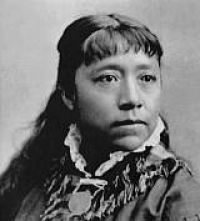 Sarah Winnemucca Hopkins,
Life Among the Piutes
(1883)
“ It has always been a mystery to me what this beef contract is for. If they mean it for a license to sell beef, why don’t they say so? I defy them to find a man, woman, or child outside their ring who has ever received a pound of meat of any kind from them. I have a brother who lives on the agency, and he has never got an ounce of meat that he has not paid for. The contractors, Griswold, McMasters, etc., really keep a butcher’s shop, but call it a beef contract. Those that have money can come up and buy. Those that have none stand back and cry, often with hunger. ”
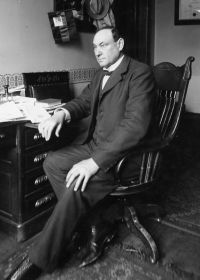 Harvey Washington Wiley,
Foods and Their Adulteration
“ For this reason cured meats, such as beef and pork, are often preferred for making potted and deviled meats because of the agreeable flavor and aroma which they impart thereto. These meats are therefore used in potting, although they cost more than corresponding quantities of fresh meat. In a character of goods so variegated as these it is impossible to lay down any rule which may guide the consumer in his choice. The widest latitude is left to the manufacturer, and the only real protection is in a strict inspection of the factory or factories where such goods are made. ”
Joseph Harris, Talks on Manures
“ It may give us no more grain to sell than at present, but it will enable us to produce much more mutton, wool, beef, cheese, butter, and pork, than at present.“But, then, will there be a demand for the meat, wool, etc.?” The present indications are highly favorable. But we must aim to raise good meat. The low-priced beef and mutton sold in our markets are as unprofitable to the consumer as they are to the producer. We must feed higher, and to do this to advantage we must have improved stock. There is no profit in farming without good tillage, larger crops, improved stock, and higher feeding. ”
Thomas C. Hinkle, How to Eat: A Cure for "Nerves"
“ I do not find fault with the raising of beef in the feeding yards, but if beef must be raised let us confine the industry to the cattle pens and stock yards. Let us not worship it to the degree that we would rather live in hell than part with a few extra pounds that overload our own bodies. ”
Harvey Washington Wiley,
Foods and Their Adulteration
“ When there is a surplus of beef offered for sale or in case of war, where the army contracts for large quantities of canned meat, the opposite conditions probably prevail, and the best meats are used for canning purposes and those of a less desirable quality offered for sale in the fresh state. ”
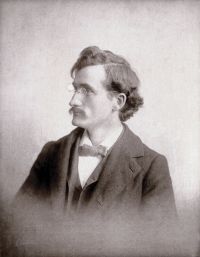 L. H. Bailey,
The Country-Life Movement in the United States
“ But when the vast Western ranges were opened, and the great packing houses were established, the cheapness of range beef, refrigerated and delivered in Eastern cities, was used as a weapon to kill off the cattle industry of the East. ”
Robert Jennings, Cattle and Their Diseases
“ Whatever theoretical objections may be raised against over-fed cattle, and great as may be the attempts to disparage the mountains of fat,—as highly-fed cattle are sometimes designated,—there is no doubt of the practical fact, that the best butcher cannot sell any thing but the best fatted beef ”
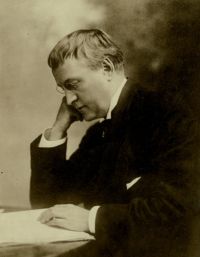 Henry T. Finck,
Food and Flavor: A Gastronomic Guide to Health and Good Living
“ However, we had a rapid view of great beef carcasses hung in rows, hundreds of lambs, calves and other creatures, and of the neat stalls where calves' heads, pigs' and lambs' feet, livers, sweetbreads, brains, and even lungs are all hung in neat array, or displayed attractively on slabs. French dealers know to perfection how to set off their wares. They have special methods of presenting their fine poultry so that no buyer can resist them, no matter what the price may be for turkeys, ducks, capons and poulardes. ”
Charles Morris, Home Life in All Lands—Book III—Animal Friends and Helpers
“ In the United States the raising of cattle for meat is a great business. For years past this country has fed its own people and helped to feed those of Europe. The meat of cattle killed in Chicago and other cities is sold in the markets of London and other parts of England and the people of that country have long been growing fat on American beef. ”
Isabella Beeton,
Mrs. Beeton's Book of Household Management
(1907)
“ In providing for a large number of persons, where quantity and cheapness are of more importance than first-rate quality, joints of large, full-flavoured beef and mutton are by far the most advantageous to buy, and for strong soup, stews with vegetables, and such dishes, there is no reason for choosing the most delicate meat. ”
Sir A. E. Shipley, More Minor Horrors
“ There is also the loss caused by the warble to the butcher—and through the butcher to the Army Service Corps. The presence of the fly-larva, which is quite a large creature, induces chronic inflammation in the tissues, and a state of things known to the trade as ‘licked beef,’ and unless the meat-salesman cuts away the affected parts the meat is unsaleable in the market, or greatly depreciated in value. ”
Various, The Century Illustrated Monthly Magazine…
“ This means that the American people have nearly reached the point where the home market absorbs all cattle grown in the country, and that in future [Pg 891] other peoples, who in the past have been dependent upon the United States for their beef supply, must look elsewhere. ”
Sir Charles Alexander Cameron, The Stock-Feeder's Manual
“ If we find beef possessing a good color and odour, and firm to the touch, and appearing to be in every respect healthy flesh, are we under such circumstances to take it for granted that it must be healthy? This is a very important question, involving as it does the interests of both the producers and consumers of animal food. If the flesh of all diseased animals be unwholesome, a very large number of oxen now sold whilst laboring under pleuro-pneumonia should not be sent into the market. This, of course, would be a heavy loss to the stockowner, but a still heavier one to the meat consumer ”
 Frank G. Carpenter,
Cairo to Kisumu
(1923)
“ We seem to have every disease to which cows, horses, or sheep are subject in other parts [265] of the world, and I believe we have some peculiarly our own. We have ticks by the millions and flies by the myriads. So far, however, our experiments with cattle are turning out well, and we know that we can produce excellent beef and good butter. We hope to find our first market for our meats and dairy products in South Africa, and later on to ship such things to Europe. ”
“ The British people have suffered no hardship in the recent reduction of their meat ration.A British Commission has reported to Parliament that it takes three times as much fodder to produce beef as it does to produce milk or pork of the same food value. Since cows eat chiefly hay and grass and pigs eat grain the cost of the production of a unit value of milk is much less than the cost of the same value in the form of pork. It takes only fifty per cent. more fodder to produce veal than to produce pork. ”
The Livestock Producer and Armour
“ The local butcher or livestock producer can little better afford to kill and prepare his own beef than he can afford to tan the hide and make his own shoes. There was a time, even in America, when the farmer himself actually did these things. ”
“ Beef intended for delivery at this post must arrive here with sufficient flesh to withstand the rigors of our winter. When possible to secure them, we prefer Northern wintered cattle, but if they are not available, and we are compelled to receive Southern ones, they must be of the first quality in conformation and flesh. It now becomes my duty to say to you that your beeves are rough, have been over-driven, are tender-footed and otherwise abused, and, having in view the best interests of the service, with the concurrence of my associates, I decline them. ”
 Harriet Martineau,
Once a Week
(1860)
“ If the aristocracy and gentry would take the hint to try the American beef and pork, it would be a great benefit to their neighbours. Every joint of English meat which they dispense with will be left for others who may want it more; while the superior cookery of their kitchens would prove whether this food might not be made as agreeable as it is certainly nourishing. We ought to prepare immediately for the greatest possible economy of home-grown meat, and a large consumption of all good foreign meat, for many months to come. ”
Florida State Live Stock Association, Florida: An Ideal Cattle State
“ We know that under normal conditions the beef production of America has not kept pace with the population, and [Pg 7] that even without the influence of war values of beef, stock cattle values have shown a steady increase for the past ten years. There is, therefore, every reason to believe that for a very long period in the future, even taking into consideration reduced beef consumption as the result of substitutes or every other influence, there is a reasonable expectation for strong values and a profit on production under normal expense. ”
George Thomas Love, A Five Years' Residence in Buenos Ayres…
“ In a place where so many animals exist upon beef, the pig, it may be believed, comes in for his full share. Indeed, all animals, in this country, appear to live upon beef. The quantity that is wasted would be most acceptable to the poor in populous Europe.This country is as famous for the quantity of beef produced, as the Cape of Good Hope is for sheep. A bullock- 83 - now costs eight dollars, without the hide; formerly, they could be purchased at ten reals. The hide now sells for six dollars. Some of the estancias have from forty to fifty thousand head of cattle of all classes. ”
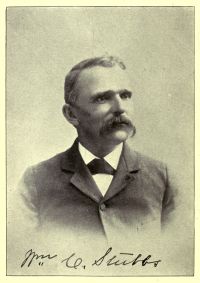 William Carter Stubbs,
Louisiana Beef Cattle
“ There are a multitude of reasons why it will never be possible for the growers of the Eastern Hemisphere, with the exception of Great Britain and the Scandinavian countries, to successfully compete with the United States in bringing the standard of their beef cattle up to the high point already attained in this country. ”
 Henry Walter Bates,
The Naturalist on the River Amazons
“ Although every one knows it cannot be wholesome, such is the scarcity of meat and the uncontrollable desire to eat beef, that it is eagerly bought, at least by those residents who come from other provinces where beef is the staple article of food. ”
John D. Billings, Hardtack and coffee (1887)
“ In the sketch on Army Rations I named fresh beef as one of the articles furnished, but I gave no particulars as to just how the army was supplied with it. This I will now endeavor to do.When there came an active demand for fresh and salt meat to feed the soldiers and sailors, at once the price advanced, and Northern farmers turned their attention more extensively to grazing. Of course, the great mass of the cattle were raised in the West, but yet even rugged New England contributed no inconsiderable quantity to swell the total. ”
Isabella Beeton,
Mrs. Beeton's Book of Household Management
(1907)
“ Grass fed beef is esteemed as superior to that of winter fed animals fattened upon turnips, oil-cake and other artificial foods. The best beef is red in colour and marbled or mottled, with fat finely intermingled with the lean. The hindquarters of cattle are superior to the fore-quarters, and in fact, necks, shoulders and "crops" of beef are never seen on the best tables, but are sold by contract to shippers, etc., at a low price. The hind-quarters contain the ribs, the sirloins, the rumps, the buttocks, and the "rounds." ”
Florida State Live Stock Association, Florida: An Ideal Cattle State
“ The Government is authority for the statement that the economical production of beef is the calf, taken at weaning time, not allowed to go back, but kept coming in the matter of feeding, and if this calf is to be taken at that age, you can run twenty per cent more cows on your range, producing an average of fifteen per cent more calves, as against developing a steer to the three or four year old period, in which his individual gain is your revenue in the matter of a carrying charge. ”
Related terms
Authors who wrote about “Beef Trust”
William Carter StubbsFlorida State Live Stock Association Alfred Charles True
 Andy Adams
 Graham LuskGeorge Thomas LoveIsabella BeetonBrigham YoungW. H. KoebelHarvey Washington WileyAlexander FilippiniJoseph Harris
 Nellie BlyUpton SinclairAnna M. CooleyMark TwainHenry ThompsonL. H. BaileySarah Winnemucca HopkinsThomas C. Hinkle
