Benjamin Price

Definition and stakes

Benjamin M. Anderson,  The Value of Money

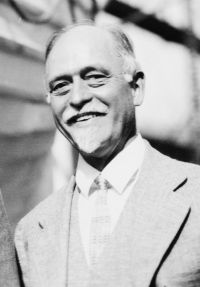
“ Second, Professor Fisher has no absolute value in his scheme. By the value of money he means merely its pur [Pg 156] chasing power, and by its purchasing power he means nothing more than the fact that it does purchase: the purchasing power of money is defined as the reciprocal of the level of prices, "so that the study of the purchasing power of money is identical with the study of price levels." (Loc. cit., p. 14.) In this, again, Professor Fisher is absolutely true to the spirit and logic of the quantity theory doctrine. ”
Source: Gutenberg

Benjamin M. Anderson,  The Value of Money

“ The quantity theory does, in certain connections, assign causal influence to the level of prices, particularly in the theory of foreign exchange, where the explanation of international gold movements rests on the doctrine that a price-level in one country, higher than the price-level of another country, drives money away. [332] It will be seen, in a moment, that Fisher relies on this principle to prove that the price-level [Pg 293] of a country cannot rise without an increase of money—if it did so rise, it would drive out the money, and so be forced down again. ”
Source: Gutenberg

Benjamin M. Anderson,  The Value of Money

“ But this is true only if the cause of the increase in demand is not a cause which simultaneously works on supply, neutralizing that tendency. If the increase in amount demanded at a given price be due to a lowered value of money, then the same lowered value of money will reduce the supply available at that price pro tanto, and the new equilibrium, cæteris paribus, will be at a higher price, to be sure, but with the same amount supplied and demanded. "Demand" is a term which carries the connotation of motivating power in economic theory. ”
Source: Gutenberg

Get perspective with Kwize: daily news enlightened by great literature