Brittonic languages

Definition and stakes

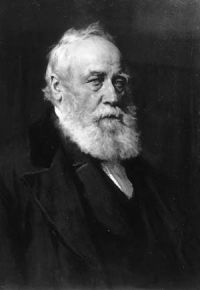
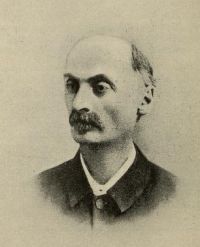
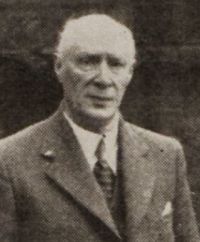
Portrait of Alexander MacBain Alexander MacBain,  An Etymological Dictionary of the Gaelic Language (1911)

“ The Brittonic languages—Welsh, Cornish, and Breton—appear first in glosses as early as the eighth century. These glosses are marginal or super-linear translations into Celtic of words or phrases in the Latin texts contained in the MSS. so "glossed." The period of the glosses is known as the "Old" stage of the languages—Old Breton, Old Cornish, Old Welsh. Real literary works do not occur till the "Middle" period of these tongues, commencing with the twelfth century and ending with the sixteenth. ”
Source: Wikisource

Portrait of Alexander MacBain Alexander MacBain,  An Etymological Dictionary of the Gaelic Language (1911)

“ The Gaelic languages—Irish, Manx, and Scottish Gaelic—have a much closer connection with one another than the Brittonic languages. Till the Reformation and, indeed, for a century or more thereafter, the Irish and Scottish Gaelic had a common literary language, though the spoken tongues had diverged considerably, a divergence which can be traced even in the oldest of our Gaelic documents—the Book of Deer. ”
Source: Wikisource

Portrait of Alexander MacBain Alexander MacBain,  An Etymological Dictionary of the Gaelic Language (1911)

“ At the beginning of the Christian era the Celtic languages were distributed much as follows: Gaulish, spoken in France and Spain, but fast dying before the provincial Latin (and disappearing finally in the fifth century of our era) ; Gallo-British or Brittonic, spoken in Britain by the conquering Gaulish tribes; Pictish, belonging to the Gallo-Brittonic or P group, and spoken in Scotland and, possibly, in northern England; and Gadelic, spoken in Ireland and perhaps on the West Coast of Scotland and in the Isles. ”
Source: Wikisource

Get perspective with Kwize: daily news enlightened by great literature