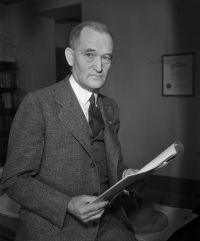
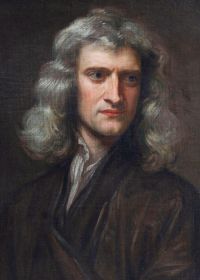
Charles Augustin Sainte-Claire de Taine

Definition and stakes

Portrait of George Saintsbury George Saintsbury A Short History of French Literature

M. Hippolyte Taine, chief of Sainte-Beuve's followers, has somewhat caricatured his master's method. Sainte-Beuve's principle was, it must be remembered, to examine carefully the circumstances of his author's time, in order to ascertain their bearing upon him. In M. Taine's hands this wise practice changed itself into a theory—the theory that every man is a kind of product of the circumstances, and that, by examining the latter, the man is necessarily explained. M. Taine chose for his principal exercising ground the history of English literature.
Source: Gutenberg

1911 Encyclopædia Britannica (1911)

Taine’s influence was great, and twofold. On his own generation it was considerable; during the epoch in which he lived, while a wave of pessimism was sweeping over French literature, he was the high priest of the cult of misanthropy, in which even science was held to be but an idol, worthy of respect and devotional service, but not of faith. In its turn came the reaction against positivism and pessimism, and an attempt at spiritual renascence. Around a man so remarkable as Taine a school is certain to form itself
Source: Wikisource

1911 Encyclopædia Britannica (1911)

Hence Race, Environment, Time—these are the three things to be studied before the man is taken into consideration. Taine completed this theory by another, that of the predominating faculty, the faculté maîtresse. This consists in believing that every man, and especially every great man, is dominated by one faculty so strong as to subordinate all others to if?, which is the centre of the man's activity and leads him into one particular channel. It is this theory, obviously the result of his love of abstraction, which is the secret of Taine's power and of his deficiencies.
Source: Wikisource

Get perspective with Kwize: daily news enlightened by great literature