Chloris

Definition and stakes

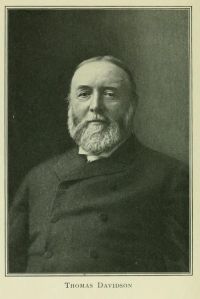
Portrait of William Smith William Smith,  Elizabethan Sonnet-Cycles — Chloris (1897)

“ Why should my Chloris then be so unkind?
That neither tears, nor sighs, nor streaming blood,
Can unto mercy move her cruel mood.
V
You fawns and silvans, when my Chloris brings
Her flocks to water in your pleasant plains,
Solicit her to pity Corin's strings,
The smart whereof for her he still sustains.
For she is ruthless of my woeful song;
My oaten reed she not delights to hear.
O Chloris, Chloris! Corin thou dost wrong,
Who loves thee better than his own heart dear.
”
Source: Wikisource

Anonymous,  A handy dictionary of mythology

“ Flo′ra, goddess of flowers and gardens, was wife of Zephyrus. She enjoyed perpetual youth. Her Grecian name was Chloris.
Flora′lia were licentious games instituted in honour of the goddess Flora.
Flowers, see Flora, Chloris, Hortensis, and Zephyrus.
Flute, see Marsyas.
Fortu′na, the goddess of fortune, had a temple erected to her by Servius Tullius. She was supposed to be able to bestow riches or poverty on mankind, and was esteemed one of the most potent of the ancient goddesses. She is usually represented [Pg 39] as standing on a wheel, with a bandage over her eyes, and holding a cornucopia.
”
Source: Gutenberg

Portrait of Miguel de Cervantes Miguel de Cervantes,  Don Quixote — Volume 1, Chapter XXXIV (1885)

“ SONNET
At midnight, in the silence, when the eyes Of happier mortals balmy slumbers close, The weary tale of my unnumbered woes To Chloris and to Heaven is wont to rise. And when the light of day returning dyes The portals of the east with tints of rose, With undiminished force my sorrow flows In broken accents and in burning sighs. And when the sun ascends his star-girt throne, And on the earth pours down his midday beams, Noon but renews my wailing and my tears; And with the night again goes up my moan. Yet ever in my agony it seems To me that neither Heaven nor Chloris hears.
”
Source: Wikisource

Get perspective with Kwize: daily news enlightened by great literature