Chukchi people

Definition and stakes

1911 Encyclopædia Britannica, Volume 6… (1911)

“ The Chukchi are nominally Christians, but sacrifice animals to the spirits of the rivers and mountains, and also practise Shamanism. In personal habits the people are indescribably filthy. They are polygamous, but the women are treated kindly. The children are specially petted, and are so wrapped up to protect them from the cold that they have been described as resembling huge balls crossed by a bar, their arms having to remain outstretched owing to the bulk of their wrappings. Chukchi women are often tattooed with two black-blue convex lines running from the eye to the chin. ”
Source: Wikisource

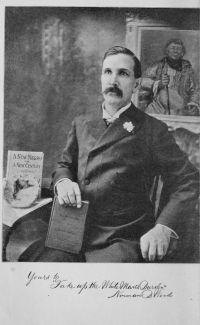
A. H. Keane,  Man, Past and Present

“ A. Schiefner regards as radically distinct from all others [633] , is disappearing even more rapidly than the people themselves, if it be not already quite extinct. In the eighties it was spoken only by about a dozen old persons, its place being taken almost everywhere by the Turki dialect of the Yakuts [634] .
Chukchi and Koryaks.
There appears to be a curious interchange of tribal names between the Chukchi and their Koryak neighbours, the term Koryak being the Chukchi Khorana, "Reindeer," while the Koryaks are said to call themselves Chauchau, whence some derive the word Chukchi.
”
Source: Gutenberg

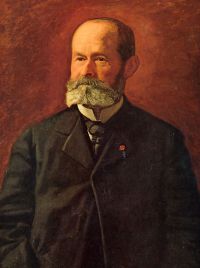
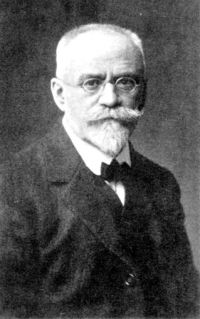
Portrait of Joseph Deniker Joseph Deniker,  The Races of Man: An Outline of Anthropology and Ethnography

“ The more important of these peoples are the following:—The Chuchi (or Chukchi) , numbering about 8000, are the most typical representatives of the group; they inhabit the north-east of Siberia, and the occupation of some is the breeding of reindeer, and fishing of others; however, the distinction between the nomadic and fishing Chukchi is both of an economic and ethnic order. [404] The Koriaks dwell to the south of the Chukchi, as far as Kamtchatka; they bear a close resemblance to them and speak the same language. ”
Source: Gutenberg

Get perspective with Kwize: daily news enlightened by great literature