“ Close to where the river Sheroka issues from a rocky gorge into a broad valley, there is a wooden column, ornamented with carving. At this column, which stands in the middle of a small meadow near the water, the nomad Tungus assemble annually from the neighbouring mountains. Hundreds of reindeer in the midst of a crowd of human beings make a charming picture as the caravans travel thither together. When the merry crowd enters the valley the splash of the river is lost in a ringing echo of voices. ”
Tungus
Definition and stakes
The theme of “Tungus” has been addressed by authors such as Robert Harry Lowie, Daniel G. Brinton, Peter Kropotkin and John Thomas Bealby, R. G. Latham and H. N. Hutchinson. It is often associated with terms like reindeer, people, river, Siberia and snowshoe.
Quotes about “Tungus”
“ Yet I too am a Tungus;—what would anyone gain from my accursed debts? They don't breed reindeer,' he ended, laughing.'Yes, indeed! We should die without you, Seltichan! Who supports us? Whose herds are larger than yours? Who has a better heart? What family is more distinguished and richer? Whose sons are more skilled shots, and finer huntsmen? Whose daughters, when grown-up, most attract our youths? Are you not the first among us,—you who neither suffer nor fear, never lie, and never deceive as we do, and bow to your fate? You, Seltichan! ”
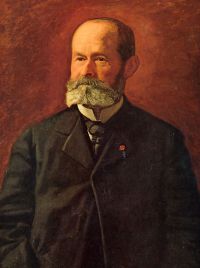 Daniel G. Brinton,
Races and Peoples: Lectures on the Science of Ethnography
Daniel G. Brinton,
Races and Peoples: Lectures on the Science of Ethnography
“ The Tungus to the north of them, inhabiting a vast district of forest, swamp and mountain, east of the Yenissei river, are of ruder life. They depend for subsistence on the chase and on their large herds 208 of reindeer. ”
Peter Kropotkin and John Thomas Bealby, 1911 Encyclopædia Britannica (1911)
“ Here in the impenetrable forests a few Tungus families live by hunting. Towards the S., in the basins of the Tuba, Sisim, Yus, Kan, Agul and Biryusa, the valleys of the alpine tracts contain rich auriferous deposits, and numerous gold-washings have been established along the taiga. A flattened range of mountains, hardly attaining more than 3000 to 3500 ft., shoots N.E. from the Kuznetskiy Ala-tau, and separates the dry steppes of Minusinsk and Abakan from the next terrace of plains, 1200 to 1700 ft. ”
R. G. Latham, The Natural History of the Varieties of Man
“ A more northern position, a greater range of climate, an approach in some cases to the hunter and fisher, rather than to the pastoral states, a more partial abandonment of the original Shamanistic Paganism, and a later literature are the chief points which differentiate the Tungús tribes from the Mongol. ”
1911 Encyclopædia Britannica, Volume 13… (1911)
“ They are the first Turkish people mentioned by the Chinese. A theory which seems plausible is that which assumes them to have been a heterogenous collection of Mongol, Tungus, Turki and perhaps even Finnish hordes under a Mongol military caste, though the Mongolo-Tungus element probably predominated. ”
Various, The National Geographic Magazine…
“ On the Tunguska, Ilima and Lena rivers to the Vitim live the so-called Tunguses, people who own reindeer which they use as draught animals, while those who do not own deer live near the rivers on fish and travel in canoes made of birch bark. These people are idolaters.From Uskutsk on fifteen barges, in the spring of 1726, we descended the Lena to Yakutsk. From the river Vitim down to the Lena, on both banks live Yakuts with a smaller proportion of Tunguses. ”
Robert Harry Lowie, Culture & Ethnology
“ It is true that a rationalistic motive can be given for the fact that the Chukchee do not ride reindeer-back since their variety seems physically unfit for the saddle. That, however, is not the essential point. We should like to know how the Tungus came to use the saddle with their animals while other tribes with the same variety did not do so, and for this positive reaction to their faunal environment geography furnishes no clue. ”
Robert Harry Lowie, Culture & Ethnology
“ The facts of domestication are unusually suggestive as regards our general problem for they show in an absolutely convincing manner that even where the same animals have been domesticated by different peoples the use to which they are put may differ widely and give a distinct aspect to this phase of culture. Thus, we find that of Siberian reindeer-breeders the Tungus and Lamut use their animals only for transportation, not for slaughter, and that many bands, unlike other Arctic populations, ride on their reindeer instead of harnessing them to sledges. ”
Anonymous, The Arctic World (1876)
“ Another important Siberian people are the Tungusi, who spread from the basins of the Upper, Middle, and Lower Tunguska to the western shores of the Sea of Ochotsk, and from the Chinese frontiers and the Baikal to the Polar Ocean. Their number does not exceed thirty thousand. According to their avocations, and the domestic animals which constitute their wealth, they are known as the Reindeer, Horse, Dog, Forest, and River Tungusi. Those who keep or rear horses and cattle are but a few; the majority depend on the reindeer. The condition of all is deplorably wretched. ”
“ Only a few rear horses and cattle, the reindeer being generally their domestic animal; and the impoverished Tunguse, who has been deprived of his herd by some contagious disorder or the ravages of the wolves, lives as a fisherman on the borders of a river, assisted by his dog, or retires into the forests as a promyschlenik, or hunter. ”
H. N. Hutchinson, Extinct Monsters
“ The heathens of Jakutsk, Tungus, and Ostiaks say that they continually, or at least, by reason of the very hard frosts, mostly live underground, where they go backwards and forwards; to confirm which they tell us that they have often seen the earth heaved up when one of these beasts was upon the march, and, after he passed, the place sink in, and thereby make a deep pit. ”
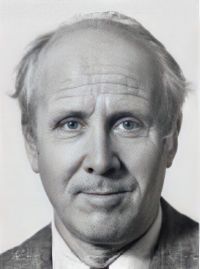 Wolfram Eberhard,
A history of China., [3d ed. rev…
Wolfram Eberhard,
A history of China., [3d ed. rev…
“ They were primarily of Turkish origin, but had absorbed many tribes of the older Hsiung-nu and the Hsien-pi. In considering the ethnical relationships of all these northern peoples we must rid ourselves of our present-day notions of national unity. Among the Toba there were many Turkish tribes, but also Mongols, and probably a Tungus tribe, as well as perhaps others whom we cannot yet analyse. These tribes may even have spoken different languages, much as later not only Mongol but also Turkish was spoken in the Mongol empire. ”
“ Meanwhile a third Tunguse skips over the rope, picks up a bow and arrow, spans the bow and shoots the arrow, without once touching the rope. Some particularly bold and expert Tungusi will dance over a sword which a person lying on his back on the ground is swinging about with the greatest rapidity. ”
Anonymous, The Arctic World (1876)
“ The Tungusi has no resource but fishing or hunting. When the rivers are frozen, he withdraws into the forest. Here his misery is so great and his need so extreme that he frequently becomes a cannibal, and attacks the wives and children of his more fortunate countrymen. ”
“ In East Siberia the Tungusi divide with the Jakuts the task of conveying goods or travellers through the forests, and afford the stranger frequent opportunities for admiring their agility and good-humor. On halting after a day’s journey, the reindeer are unpacked in an instant, the saddles and the goods ranged orderly on the ground, and the bridles collected and hung on branches of trees. The hungry animals soon disappear in the thicket, where they are left to provide for themselves. The men, who meanwhile have been busy with their axes, drag a larch-tree or two to the place of encampment. ”
Various, The National Geographic Magazine…
“ But near and around the post of Okhotsk wander the seaside Tunguses and some Lamuts with their herds and many reindeer, who travel about winter and summer where their deer can find pasturage; and some pedestrian Tunguses who live near the sea and rivers and are professional fishermen as among the Yakuts.February 1, ninety men with some dogs and sledges were collected and sent under Lieut. Spanberg to bring in the outfit left behind by the Yudoma river, and by the 1st of April about half of it had been transported safely to Okhotsk. ”
“ With the assistance of his long and narrow snow-shoes, he flies over the dazzling plain, and protects his eyes, like the Jakut, with a net made of black horse-hair. He never hesitates to attack the bear single-handed, and generally masters him. The nomad Tunguse naturally requires a movable dwelling. His tent is covered with leather, or large pieces of pliable bark, which are easily rolled up and transported from place to place. ”
Various, Robert Merry's Museum, Volumes I and II… (1842)
“ The fact is, that the Tunguses are such good hunters that the wild beasts have found them out, and have pretty much left their country. The fine sables are now seldom found where they used to be abundant, and those who would hunt them must go farther north, where we are going. These people have no books, and their religion is a strange belief in stupid gods, whom they worship under the guise of little wooden images. They believe in witchcraft and sorcery ”
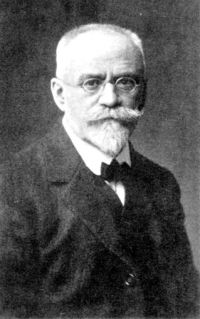 Joseph Deniker,
The Races of Man: An Outline of Anthropology and Ethnography
Joseph Deniker,
The Races of Man: An Outline of Anthropology and Ethnography
“ The Tunguses, while speaking a particular language, exhibit the Mongol type, softened by intermixtures with the primitive inhabitants (Palæasiatics?) of their territory, which extends from the Arctic Ocean to the 40th degree of north latitude, and from the Yenisei to the Pacific Ocean. Their number can hardly exceed 50,000 individuals over this immense stretch of country. They are divided into southern and northern Tunguses and maritime Tunguses or Lamuts. The river Amur forms the approximate boundary between the first two sections of Tunguses. ”
Various, Robert Merry's Museum, Volumes I and II… (1842)
“ Proceeding upon their journey, Linsk, according to his wont, began to talk, and these Tungusians were naturally the subject of his discourse.“They are very numerous,” said he, “occupying nearly half of Siberia, and being confined to the central portions of it. They are as restless as Tartars, always moving from place to place, and alternately feasting and starving. They go without food as long as a wolf, and, like a wolf, they will gorge themselves when they get a chance. They eat food when and where they can get it. ”
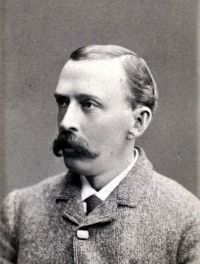 George Kennan,
Tent Life in Siberia
George Kennan,
Tent Life in Siberia
“ The Tunguse encampments were sometimes three or four days' journey apart; the cold, as we ascended the Stanavoi range, steadily increased in intensity until it became so severe as to endanger life, and day after day we plodded wearily on snowshoes ahead of our heavily loaded sledges, breaking a road in three feet of soft snow for our struggling, frost-whitened deer. We made, on an average, about thirty miles a day; but our deer often came in at night completely exhausted, and the sharp ivory goads of our Tunguse drivers were red with frozen blood. ”
A. E. Nordenskiöld, The Voyage of the Vega round Asia and Europe…
“ While the vessel was aground nine Tunguses came on board. They rowed in small boats, which were made of a single tree stem, hollowed out, and could just carry a man each. Johannesen endeavoured in vain to induce some of the Tunguses to pilot the steamer; he did not succeed in explaining his wish to them, notwithstanding all the attempts of the Russian interpreter, a proof of the slight contact these Tunguses had had [pg 368] with the rulers of Siberia, and also of the difficulty and unwillingness with which the savage learns the language of the civilised nations. ”
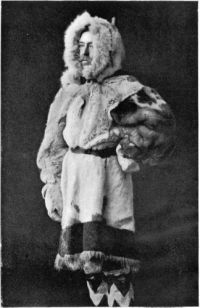 Harry De Windt,
From Paris to New York by Land
Harry De Windt,
From Paris to New York by Land
“ The intermediate layers are the abode of divinities and spirits of different degrees of light and darkness; most of them are the spirits of deceased men. All spirits exert influence on the destiny of man for good or evil; the children of men are unable to soften or to subdue these spiritual beings, whence the necessity of Shamans or Priests, who alone possess power over the spiritual world." [36] [35] The Tunguses number about 12,000 to 15,000, and inhabit the region lying to the north-west and north-east of Yakutsk. ”
“ But few of the Tungusi have been converted to Christianity, the majority being still addicted to Shamanism. They do not like to bury their dead, but place them, in their holiday dresses, in large chests, which they hang up between two trees. ”
Alexander Michie, The Siberian Overland Route from Peking to Petersburg…
“ The Tunguses and Ostiaks, who live in the northern parts of the provinces of the Irkutsk and Yeniseisk, are of a very low order of savages. The Tunguses are thievish, treacherous and cowardly, and live solely by fishing and hunting. The Ostiaks live almost entirely on and about the water, eat little else but fish when they can get it. They wander as far north as the Frozen Ocean. When deprived of their usual food in [302] winter, they are reduced to eating carrion and garbage of all kinds. In their habits they are filthily dirty. ”
Homer B. Hulbert, In Search of a Siberian Klondike
“ Often when they apprehend that the Tunguses may meet them and take away their booty, they put the skins into hollow pieces of wood and seal up the ends with snow, which being wetted soon freezes. These they hide in the snow near their huts, and gather them up when they return in a body. When the carriers are come with provisions, then the other half are sent for more; and thus they are employed in hunting, the leader always going before to build traps. When they find few sables in their traps they hunt with nets, which they can only do when they find the fresh tracks of sables in the snow. ”
Marco Polo, The Travels of Marco Polo — Volume 1
“ Yet he might have found in Witsen that the Reindeer are ridden by various Siberian Tribes, but especially by the Tunguses. Erman is very full on the reindeer-riding of the latter people, having himself travelled far in that way in going to Okhotsk, and gives a very detailed description of the saddle, etc., employed. The reindeer of the Tunguses are stated by the same traveller to be much larger and finer animals than those of Lapland. ”
Sven Anders Hedin, From Pole to Pole: A Book for Young People
“ In the neighbourhood of the Lena River dwell Yakuts of the Turkish-Tatar race. They number only 230,000 men, are nominally Christians, and pursue agriculture and trade. East of the Yenisei are the Tunguses, a small people divided into "settled," "horse," "reindeer," and "dog" Tunguses, according to the domestic animal of most importance to their mode of life. In western Siberia, the governments of Tobolsk and Tomsk, live Ostiaks, a small Finnish tribe of 26,000 persons, who are poor fisher folk, hunters and nomads with reindeer. This tribe is rapidly dying out. ”
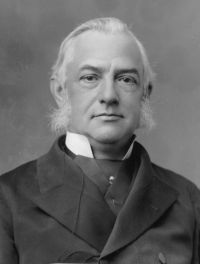 F. Max Müller,
Lectures on the Science of Language
F. Max Müller,
Lectures on the Science of Language
“ The Mongolic dialects excel the Tungusic, but in their grammar can hardly distinguish between the different parts of speech. The spoken idioms of the Mongolians, as of the Tungusians, are evidently struggling towards a more organic life, and Castrén has brought home evidence of incipient verbal growth in the language of the Buriäts and a Tungusic dialect spoken near Nyertchinsk. ”
Joseph Deniker,
The Races of Man: An Outline of Anthropology and Ethnography
“ They are being absorbed more and more by the Chinese, and hardly form a tenth part of the population of the country which bears their name (Pozdniéef) . It is probable that the Niu-chi or Yu-chi of Shan-alin and Sien-pi on the northern border of Corea, mentioned in the Chinese annals, were Tunguse tribes.The type which predominates among the Tunguses represents the secondary race called North Mongolian and characterised by mesocephaly or a slight sub-dolichocephaly, and by a rather elongated face. The stature varies; the Orochons are of average stature and the Manchus very tall, etc. ”
Peter Kropotkin and John Thomas Bealby, 1911 Encyclopædia Britannica (1911)
“ Tunguses hunt in the forests and meadows, but permanent agricultural settlements are impossible, corn seldom ripening on account of the early frost. The lower parts of the broad, flat valley of the Jida have, however, a few Cossack settlements, and Mongolian shepherds inhabit the elevated grassy valleys about Lake Kosso-gol (5300 ft. above the sea) . Quite different is the lower terrace of the plateau, occupied by the eastern Gobi and the Nerchinsk region, and separated from the upper terrace by the Yablonoi range. This last is the south-eastern border-ridge of the higher terrace. ”
Various, Popular Science Monthly (1888)
“ The remarkable natural talents and wonderful vital energy of the Tunguses are set forth by MiddendorfF. The Yakuts have been distinguished from the olden time for their cleverness, and take readily to civilization. The Kirghis have furnished a considerable number of able men, and are distinguished for their strong wit and rich fancy. The Altaians are not less gifted in religious intuitions and mental faculties; and missionaries have given accounts of very intelligent persons among them. The Tilents and black Tartars show decided inclinations toward civilization and a settled life. ”
