Cunard Line

Definition and stakes

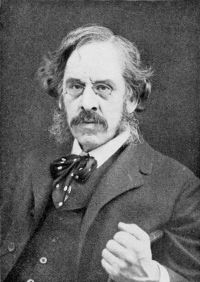
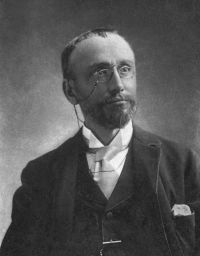
James Croil,  Steam Navigation and Its Relation to the Commerce of Canada and the United States

“ As a business man he is described as “honourable in the minutest particulars, accurate in all his dealings, faithful to every trust, tenacious of every promise, disdaining to take the least advantage of the weakness or incapacity of any man.” There is also much information in this volume, bearing on the history of the Cunard Line, that is valuable and interesting, and of which we have freely availed ourselves in compiling these pages. ”
Source: Gutenberg

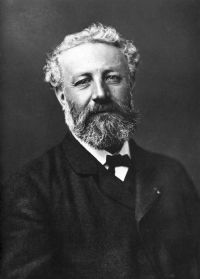
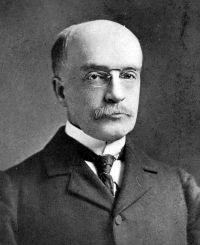
Portrait of John Bach McMaster John Bach McMaster,  A School History of the United States

“ The passage of the steamship Savannah across the Atlantic, partly by steam and partly by sail, in 1819, resulted in nothing practical. The wood used for fuel left little space for freight. But when better machinery reduced the time, and coal afforded a less bulky fuel, the passage across the Atlantic by steam became possible, and in 1838 two vessels, the Sirius and the Great Western, made the trip from Liverpool to New York by steam alone. No sails were used. This showed what could be done, and in 1839 Samuel Cunard began the great fleet of Atlantic greyhounds by founding the Cunard Line. ”
Source: Gutenberg

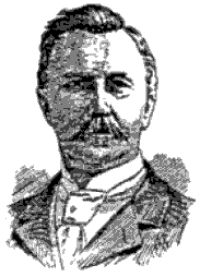
George Clement Boase,  Dictionary of National Biography… (1888)

“ The government on 4 May 1839 entered into a contract with Cunard for the conveyance of the mails between Liverpool and Halifax, Boston and Quebec, for seven years at 60,000l. per annum, stipulating at the same time that the ships should be of sufficient strength and capacity to be used as troopships in case of necessity, and to receive a fitting armament. The first voyage of this line across the Atlantic was made by the Britannia, which in the presence of an immense concourse of spectators left Liverpool on 4 July 1840, Cunard himself sailing in the vessel. ”
Source: Wikisource

Get perspective with Kwize: daily news enlightened by great literature