Dean of St Paul's Cathedral

Definition and stakes

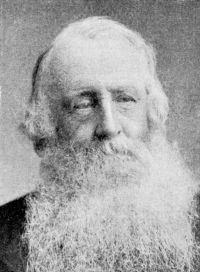
William Benham Old St. Paul's Cathedral

Paul's—The Lord Mayor's Proclamation—Alienation of the Nation from Romanism—Death of Mary and Accession of Elizabeth—The Reformed Liturgy Restored—Growth of Puritanism—Destruction of the Steeple by Lightning—Continued Irreverence—Retrospect, the Tudor Monuments.
It seems fitting that we should open the chapter of a new era in the history of St. Paul's with the name of its most famous Dean, a great, wise, good man. His name was John Colet. He was born in London, in the year 1466, within three months of his famous friend, Erasmus.
Source: Gutenberg

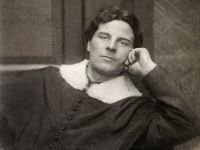
Portrait of Walter Besant Walter Besant London City

St. Faith was situated under the choir of old St. Paul’s. In 1549, Jesus Chapel in the cathedral being suppressed by Edward VI., the parishioners of St. Faith’s were allowed to remove from their crypt to this chapel. It continued so till St. Paul’s was burnt down, when the parish was annexed to St. Augustine’s by Act of Parliament (1670) . The earliest date of an incumbent is 1277.
The patronage of this church has always been in the hands of: The Dean and Chapter of St. Paul’s—as far back as 1148; and in 1277 Robert le Seneschal was rector.
Source: Gutenberg

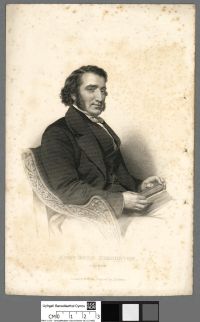
Augustus Robert Buckland Dictionary of National Biography… (1912)

In 1870 H. P. Liddon [q. v.] became canon, and in 1871 R. W. Church [q. v. Suppl. I] was made dean. With them Gregory worked in fullest harmony for the attainment of Church's purpose, to set St. Paul's in order, as the great English cathedral, before the eyes of the country ' (Life and Letters of Dean Church, p. 200) . As treasurer of the cathedral he negotiated with the ecclesiastical commission the arrangement of the cathedral finances which helped to make reform possible. The changes made were not universally welcomed, but Gregory was unmoved by criticism.
Source: Wikisource

Get perspective with Kwize: daily news enlightened by great literature