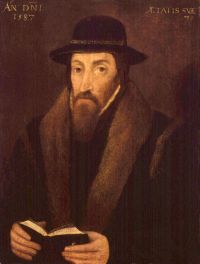
“ Still in these days, even at Rome, young men must receive some kind of education, and to meet this want the Sapienza College is provided. Both in the age of the scholars and the nature of the studies it bears a much closer resemblance to a Scotch high school than to an University, but still, such as it is, it forms the great lay-place of education in the Papal States. There is a separate theological faculty; p. 141the head of the college is a Cardinal, and the whole course of study is under the control and supervision of the priests. ”
English College, Rome
Definition and stakes
Quotes about “English College, Rome”
Richard Garnett, A History of Italian Literature (1901)
“ As was to be expected under such circumstances, one of the features of the time was the improvement of the old universities and the formation of private societies of scholars, which expressed Italian intellectual needs as clearly as the foundation of the Royal Society expressed English needs at a later date. Two achieved special celebrity—the Roman Academy, persecuted by Pope Paul II. for its relapse into paganism, and the Platonic Academy at Florence, cherished by the Medici. ”
Umberto Benigni,
Catholic Encyclopedia
(1913)
“ Naturally this higher definitive form of the new or remodelled Roman academies was closely allied with the general academic movement of Italy and of foreign countries, whose typical instance was the French Academy founded by Richelieu. It was then that academies became practical and efficacious instruments of culture, with a direct influence on public opinion; in this way, too, they claimed the special attention of the heads of the State. This was especially the case at Rome, where the papacy kept up its traditional patronage of the most varied ecclesiastical and general scholarship. ”
Umberto Benigni,
Catholic Encyclopedia
(1913)
“ Among its distinguished Italian members were Canova, Fea, Piali, and Canina. Prizes were established for the best essays on Roman antiquity, many of which were awarded to learned foreigners (Ruperti, Herzen, etc.) . Among the merits of the Academy we must reckon its defence of the rights of art and history in the city of Rome, where, side by side with princely patronage, survived from the old Roman law a certain absolutism of private-property rights which often caused or perpetuated serious damages to the monuments, or inconvenience in their study. ”
Arthur E. R. Boak, A History of Rome to 565 A. D
“ Under Augustus a law was passed which regulated for the future the character, organization and activities of these associations. New colleges could only be established in Italy or the provinces if sanctioned by a decree of the Senate or edict of the princeps, and membership in an unauthorized college was a treasonable offence. Trajan authorized the unrestricted formation of funerary colleges (collegia tenuiorum) in Rome, and Septimius Severus extended this privilege to Italy and the provinces. ”
Adrian Henry Timothy Knottesford Fortescue,
The Uniate Eastern Churches
(1923)
“ There were constant disorders; the Greeks had the reputation of being the most difficult students to manage in all Rome; by 1693 there were only eighteen students in residence, and there was a question of closing the college. Later Latins from the Greek islands were admitted; so that the college began to change its nature. It was becoming a school for Latin missionaries in the Levant. Italo-Greeks and Albanians were also admitted; the number of Greeks from the East in 1763 was only seven. ”
James J. Walsh, The Thirteenth, Greatest of Centuries
“ Very early in the century Vicenza, Reggio, and Arezzo became university towns. Before the first quarter of the century was finished there were universities at Padua, at Naples, and at Vercelli. In spite of the troublous times and the great reduction in the population of Rome there was a university founded in connection with the Roman Curia, that is the Papal Court, before the middle of the century, and Siena and Piacenza had founded rival university institutions. Perugia had a famous school which became a complete university early in the Fourteenth Century. ”
Various, The Catholic World, Vol. 08, October…
“ There is something, moreover, in the atmosphere of Rome provocative of study; nor is there wanting that generous competition which serves to awaken every energy in the endeavor to excel in the various departments of learning. Rome is, in this sense, an intellectual arena in which contend bright intellects from all parts of the known world, whose powers are brought out and strengthened by their very exercise. ”
Hutton Webster, Early European History
“ REVIVAL OF LEARNING IN ITALY THE CLASSICS IN THE MIDDLE AGES The literature of Greece and Rome did not entirely disappear in western Europe after the Germanic invasions. The monastery and cathedral schools of the Middle Ages had nourished devoted students of ancient books. The Benedictine monks labored zealously in copying the works of pagan as well as Christian authors. The rise of universities made it possible for the student to pursue a fairly extended course in Latin literature at more than one institution of learning. ”
Saint of Loyola Ignatius, The Autobiography of St. Ignatius
“ Ignatius praised him not only on account of other great merits, but particularly for devising and arranging the system of colleges."As to the number of students found under a unified method of thorough teaching, it will be interesting to take them in review.In Rome in 1584, the twenty colleges attending classes in the Roman College numbered 2108 students, in Poland there were 10,000 young men chiefly of the nobility, at Rome 2000, at La Flèche 1700. In the seventeenth century at the College of Louis le Grand, in Paris, the number varied between 2000 and 3000. ”
Augustus J. C. Hare,
Walks in Rome
“ Une autre fois, c'était Paul Jove, l'homme aux ouï-dires, comme l'appelle Rabelais, qui venait lire des fragments de son histoire, et que Léon X. saluait du titre de Tite-Live italien. Il y avait dans ces éloges, dans ces encouragements donnés avec entraînement, mais avec tact, je ne sais quel souffle de vie pour l'intelligence, qui l'activait et qui lui faisait rendre au centuple les dons qu'elle avait reçus du ciel. Rome entière était devenue un musée, une académie; partout des chants, partout la science, la poésie, les beaux-arts, une sorte de volupté dans l'étude. ”
Adrian Henry Timothy Knottesford Fortescue,
The Uniate Eastern Churches
(1923)
“ In the great churches of Rome these students have plenty of opportunity of seeing the Roman rite; their lectures at the Propaganda College are in Latin; they talk Latin (with an Italian pronunciation) at least as well as any other Roman students; but they themselves are purely Byzantine. No one can now accuse them of being hybrids of a mixed rite. The old costume of the Greek College was a purple cassock with a red belt and purple Soprana. This costume, borrowed from them, is still worn by the students of the Greek-Albanian College at Palermo (p. 164) . But at Rome they have changed it. ”
Henry Adams,
The Education of Henry Adams — Chapter 6…
(1918)
“ For the rest, Italy was mostly an emotion and the emotion naturally centred in Rome. The American parent, curiously enough, while bitterly hostile to Paris, seemed rather disposed to accept Rome as legitimate education, though abused; but to young men seeking education in a serious spirit, taking for granted that everything had a cause, and that nature tended to an end, Rome was altogether the most violent vice in the world, and Rome before 1870 was seductive beyond resistance. ”
Joseph Bernhart, The Vatican as a World Power (1939)
“ Where the idea of academic freedom is as highly developed and as sensitive as it once upon a time was in Germany, the Congregation makes very little stir and carries out its official control more or less silently. The religious universities and colleges in Rome itself are naturally nearest to the hand and the heart of the Congregation. The national colleges, all of which are con- trolled by the Jesuits and are affiliated with the four Papal Universities, now number more than a dozen; and it is the Pope's express wish that every country should be united with Rome by a college of its own. ”
James J. Walsh, Old-Time Makers of Medicine
“ Bologna, while doing much of the best graduate work in science, especially in medicine, was, in the Papal States, absolutely under the rule of the Popes. The university was, practically, a department of the Papal government. The medical school at the University of Rome itself was for several centuries, at the end of the Middle Ages, the teaching-place where were assembled the pick of the great medical investigators, who, having reached distinction by their discoveries elsewhere, were summoned to Rome in order to add prestige to the Papal University. ”
Thompson Cooper, Dictionary of National Biography… (1886)
“ In 1717 he was recalled to Rome to study divinity in the Roman college, and in 1721 he was transferred to the college of Arezzo, where he remained till 1723, and became reader of philosophy and consultor to the rector of the college. ”
Louis Marie Olivier Duchesne, Denis Jean Achille Luchaire, Ludwig von Pastor, William Walker Rockwell, Franz Xaver Kraus, and Walter Alison Phillips, 1911 Encyclopædia Britannica, Volume 20… (1911)
“ Roman power was also increased by the formation of the Universities—privileged corporations of masters and students, which escaped the local power of the bishop and his chancellor only to place themselves under the direction and supervision of the Holy See. Mistress of the entire Christian organism, Rome thus gained control of international education, and the mendicant monks who formed her devoted militia lost no time in monopolizing the professorial chairs. ”
Anne C. Lynch Botta, Handbook of Universal Literature…
“ From the period of the first institution of universities, that of Bologna had maintained its preëminence. Padua, Ferrara, Pavia, Turin, Florence, Siena, Pisa, and Rome were also seats of learning. The men who directed the scientific studies of their country and of Europe were almost universally attached as professors to these institutions. Indeed, at this period, through the genius of Galileo and his school, European science first dawned in Italy. ”
Ellwood Patterson Cubberley, The History of Education
“ In the emphasis they placed on moral worth, education of the body as well as the mind, and moderation in all things, they were much ahead of us. Their schools became a type for the cities of the entire Mediterranean world, being found from the Black Sea south to the Persian Gulf and westward to Spain. When Rome became a world empire the Greek school system was adopted, and in modified form became dominant in Rome and throughout the provinces, while the universities of the Greek cities for long furnished the highest form of education for ambitious Roman youths. ”
Richard Claverhouse Jebb,
The Cambridge Modern History, Volume 1…
(1902)
“ The Academy founded by him devoted itself especially to the study of Latin antiquities. Its members also followed his bent by celebrating the Palilia on the legendary birthday of Rome,—by acting comedies of Plautus,—and generally by raising, among them^ selves, such a phantom as they could of ancient life. It is not altogether surprising that a Pope devoid of humanistic sympathies should have regarded such a society with disapproval. The Roman Academy was temporarily suppressed by Paul II. But it was revived under Sixtus IV, and lived on into the age of Leo X, when it greatly flourished. ”
Oscar Chrisman, The Historical Child
“ Although the state did not concern itself with education, yet love of country and obedience to its laws were so instilled into the minds of the young that no other nation has ever got its citizens to quite so high a pitch of patriotism as the Roman people reached under the republic. As conquest grew and wealth increased under the empire, the Romans came more and more under the influence of Greece until Greek methods and models and ideals dominated Roman education.In the early times of Rome there were probably no public schools, education being wholly in the hands of the parents. ”
Various, The Catholic World, Vol. 22, October…
“ The Third General Council of Lateran, in 1179, commanded that in all cathedral churches a fund should be set aside for the foundation and support of schools for the poor. Free schools were thus first established by the Catholic Church. The monasteries were the libraries where the arts and letters of a civilization that had perished were carefully treasured up for the rekindling of a brighter and better day.As early as the XIIth century many of the universities of Europe were fully organized. Italy took the lead, with universities at Rome Bologna, Padua, Naples, Pavia, and Perugia—the sources ”
Henry Hallam, Introduction to the Literature of Europe in the Fifteenth…
“ Italian academies. 30. Italy in the sixteenth century was remarkable for the number of her literary academies; institutions, which, though by no means peculiar to her, have in no other country been so general or so conspicuous. We have already taken notice of that established by Aldus Manutius at Venice early in this century, and of those of older dates which had enjoyed the patronage of princes at Florence and Naples, as well as of that which Pomponius Lætus and his associates, with worse auspices, had endeavoured to form at Rome. ”
Various, Blackwood's Edinburgh Magazine…
“ We are to remember the difficulties which impede all such efforts in Romish countries. Where the priest regulates the faith, he must always be jealous of the education. But the German habits of the government predominated over the superstition of Rome, and a species of military discipline was introduced, to compel the young Italians to learn the use of their indolent understandings. Within a few years after the peace of 1815 a national school system was put in action in Lombardy. ”
Arthur E. R. Boak, A History of Rome to 565 A. D
“ Although the corporations probably retained their former organization and officers, their active heads were now called patroni, and these directed the public services of their colleges. In Rome and Constantinople the colleges were under the supervision of the city prefects, in the municipalities under that of the local magistrates and provincial governors. The professional colleges are the only ones which sur [pg 348] vived during the late empire. The religious and funerary associations vanished with the spread of Christianity and the general impoverishment of the lower classes. ”
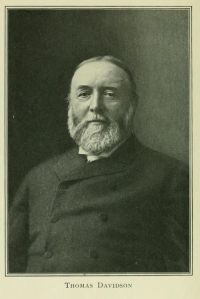
Thomas Davidson,
Aristotle and Ancient Educational Ideals
“ Sparta staked everything upon her political strength, and this involved two things, (1) equality among her free citizens, and (2) absolute devotion on their part to her interest, both of which the higher education would have rendered impossible. Education establishes among men distinctions of worth quite other than military, and gives them individual interests distinct from those of the State. It was the same [48] reason that induced Rome, during the best period of her history, to exclude her citizens from all higher education, which is essentially individual and cosmopolitan. ”
Charles William Russell, The life of Cardinal Mezzofanti (1858)
“ From a very early period, the pious liberality, sometimes of the popes, sometimes of the natives of the various countries themselves, began to found colleges for the education, under the very shadow of the chair of Peter, of at least a select few among the clergy of each people; and, notwithstanding the confiscations of later times, there are few among the more prominent nationalities which do not even still possess in Rome, either a special national establishment, or, at least, a special foundation for national purposes in some of the many general establishments of the city. ”
Robert S. Rait, Life in the Medieval University
“ This privilege ultimately became merely a theoretical right at Bologna, where the teachers tended to become a close corporation of professors, like the Senatus of a Scottish University.The Guild or College of Masters who taught law in (p. 017) the Studium of Bologna naturally resented the rise of the universities of students. The doctors, they said, should elect the rectors, as they do at Paris. The scholars follow no trade, they are merely the pupils of those who do practise a profession, and they have no right to choose rulers for themselves any more than the apprentices of the skinners. ”
Æneas MacDonell Dawson, Pius IX. And His Time
“ The Godless schools, established by the new rulers, have impeded, only to a certain extent, the development given to education by the Government of Pius IX. In the poorer quarters of the city some parties have been either intimidated by the threats of the Department of Charity, or gained by the offer of bounties to themselves and a gratuitous breakfast to their children. But, generally, the people of Rome still resist, and several Christian schools have considerably increased since 1870, the number of their pupils. ”