English language

Definition and stakes

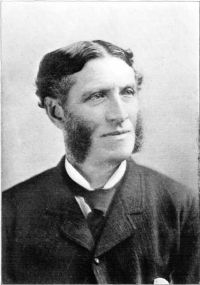
Portrait of Brander Matthews Brander Matthews,  Parts of Speech: Essays on English (1901)

“ English is he whose language responds exactly to his mood and thought, now thundering and surging with the majestic words whose immediate ancestry is Roman, now rippling and singing with the smooth harmonies of later speech, now forging ahead with the irresistible energy of the Saxon, and now laughing and wantoning in the easy lightness of our modern phrase. ”
Source: Gutenberg

Various,  Popular Science Monthly (1908)

“ Modern English is, as we know, a magnificent composite, possessing the richest, most varied, most expressive vocabulary imaginable. As fully heir of the polished classical tongues through the Norman French as of the homely and rugged Teutonic stocks through the Saxon, our English language certainly offers us a wealth of words without compare among the civilized tongues of to-day. Add to this a minimum of grammar, an absolute simplicity, flexibility and mobility of structure, and why should English be other than the best possible international form of speech? ”
Source: Wikisource

Portrait of Brander Matthews Brander Matthews,  Parts of Speech: Essays on English (1901)

“ The study of history shows us that the future of English is dependent not on the watchfulness of its guardians, not upon the increasing richness and flexibility of its vocabulary, not upon the modification of its syntax, not upon the needed reform of its orthography; it is not dependent upon any purity or any corruption of the language itself. The future of the English language is dependent upon the future of the two great peoples that speak it; it is dependent upon the strength, the energy, the vigor, and the virtue of the British and the Americans. ”
Source: Gutenberg

Get perspective with Kwize: daily news enlightened by great literature