“ That, in virtue of repeated observations, it was discovered that two men watched the Excise Office time about, and Ainslie and Brown found out that from eight to ten o’clock at night there was commonly no man in the Excise Office, which was the reason of the thing being done at that time. ”
Excise Office
Definition and stakes
The theme of “Excise Office” has been addressed by authors such as Samuel Pepys, Luke Owen Pike, US Copyright Office, by the United States Copyright Office and the United States Copyright Office. It is often associated with terms like commission, states, tax, public and law.
Quotes about “Excise Office”
“ For to what other cause than avarice can we impute the late robbery committed upon the Excise Office, when the situation of the supposed perpetrator is considered? No excuse from necessity can be pled for a man in the enjoyment of thousands, who will run the risk of life, honour, and reputation in order to attain the unlawful possession of what could in a very trifling degree add to his supposed happiness.—See the advertisement from the Sheriff-Clerk’s Office. ”
Samuel Pepys, The Diary of Samuel Pepys — Complete
“ He lays all the fault now upon the new Act, and owns his owne folly in thinking once so well of it as to give way to others’ endeavours about it, and is grieved at heart to see what passe things are like to come to. Thence to the Excise Office to the Commissioners to get a meeting between them and myself and others about our concernments in the Excise for Tangier, and so to the ‘Change awhile, and thence home with Creed, and find my wife at dinner with Mr. ”
 Robert Burns,
The Complete Works of Robert Burns…
“ In the affair of a livelihood, I think myself tolerably secure: I have good hopes of my farm, but should they fail, I have an excise commission, which on my simple petition, will, at any time, procure me bread. There is a certain stigma affixed to the character of an Excise officer, but I do not pretend to borrow honour from my profession ”
Luke Owen Pike, The Public Records and The Constitution (1907)
“ Last of all the offices of the Comptroller-General of the Receipt and Issue of the Exchequer, of the Auditor of Excise, and of the Commissioners for Auditing Public Accounts were united by statute into the existing office of 'The Comptroller-General of the Receipt and Issue of the Exchequer and Auditor-General of Public Accounts', which is known as the 'Exchequer and Audit Department'. Statutes may expressly declare that an old office is abolished and a new office created, when changes such as these are effected, but they do not thereby undo the history of the past. ”
 Samuel Freeman Miller,
Parish v. United States (100 U.S. 500…
“ It has been found, in regard to many of these bureaus, and even to the heads of departments, that it is impossible for a single individual to perform in person all the duties imposed on him by his office. ”
by John Marshall Harlan, Spalding v. Vilas — Opinion of the Court
“ In exercising the functions of his office, the head of an executive department, keeping within the limits of his authority, should not be under an apprehension that the motives that control his official conduct may at any time become the subject of inquiry in a civil suit for damages. ”
 Hippolyte Taine,
The Modern Regime, Volume 1
“ The sudden dismissal of the entire ruling staff, executive, or consultative, political, administrative, provincial, municipal, ecclesiastical, educational, military, judicial and financial, summon to take office all who covet it and who have a good opinion of themselves. ”
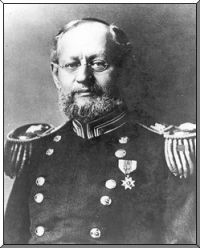 Henry Martyn Robert,
Roberts Rules of Order Revised 4th Ed
(1915)
“ But if a member does not immediately decline, by his silence he accepts the office, and is under obligation to perform the duty until there has been a reasonable opportunity for his resignation to be accepted. The secretary, for instance, cannot relieve himself from the responsibility of his office by resigning. ”
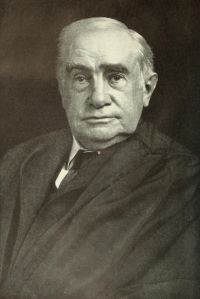 Henry Billings Brown,
Nathan Murphy v. James Utter — Opinion of the Court
“ The question when a suit against an individual in his official capacity abates by his retirement from office has been discussed in a number of cases in this court, and a distinction taken between applications for a mandamus against the head of a department or bureau for a personal delinquency, and those against a continuing municipal board with a continuing duty, and the delinquency is that of the board in its corporate capacity. ”
 Ferdinand Marcos,
Letter of Instruction No. 14-A
(1972)
“ In the case of an officer or employee who is notoriously undesirable, or has been repeatedly charged administratively but has for any reason escaped disciplinary action, the head of department, office or agency shall take notice of such notoriety and, without the necessity of filing charges, shall summarily dismiss or otherwise terminate the services of the respondent official or employee. ”
Shurtleff v. United States — Opinion of the Court
“ There is, of course, no doubt of the power of Congress to create such an office as is provided for in the above section. Under the provision that the officer might be removed from office at any time for inefficiency, neglect of duty, or malfeasance in office, we are of opinion that if the removal is sought to be made for those causes, or either of them, the officer is entitled to notice and a hearing. ”
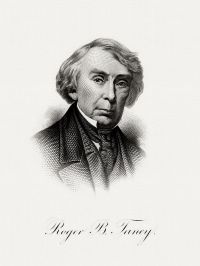 Roger B. Taney,
Converse v. United States — Opinion of the Court
“ Undoubtedly, Congress have the power to prohibit the Secretary from demanding or receiving of a public officer any service in any other office or capacity, and to prohibit the same person from accepting or executing the duties of any agency for the Government, of any description, while he is in office, and to deny compensation altogether, if the officer chooses to perform the services; or they may require an officer holding an office with a certain salary, however small, to perform any duty directed by the head of the department, however onerous or hazardous, without additional compensation. ”
 Anna Katharine Green,
Hand and Ring
“ Orcutt, this I can say: that if it had been given me to choose between the two alternatives of resigning my office and of pursuing an inquiry which obliges me to submit to the unpleasantness of a judicial investigation a person held in so much regard by yourself, [284] I would have given up my office with pleasure, so keenly do I feel the embarrassment of my position and the unhappiness of yours. ”
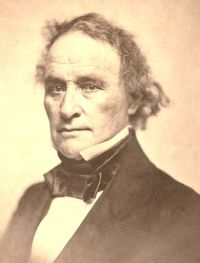 Jared Sparks,
Life and Treason of Benedict Arnold
“ Their promoting junior officers to the rank of major-generals, I view as a very civil way of requesting my resignation, as unqualified for the office I hold. My commission was conferred unsolicited, and received with pleasure only as a means of serving my country. With equal pleasure I resign it, when I can no longer serve my country with honor. The person, who, void of the nice feelings of honor, will tamely condescend to give up his right, and retain a commission at the expense of his reputation, I hold as a disgrace to the army and unworthy of the glorious cause in which we are engaged. ”
William Maclay, Journal of William Maclay
“ The Excise bill came up; but oh, what a mistake! It is only a bill for discontinuing certain duties and laying others in their stead. The odious name is omitted, but the thing is the same. It was read and ordered to the press.I went to the Senate of the State to hear the debates on the resolutions. But they were postponed. Returned to our Chamber, and the report of the committee on the difference with the court of France was taken up. Almost everybody gave it against the French demands. ”
 George Birkbeck Norman Hill,
The Life of Sir Rowland Hill and the History of Penny Postage…
“ Goulburn in that of the 11th of August, that the continued employment of an independent officer, for the purposes for which it is urged by you, would necessarily lead either to the entire supercession of those who are by their offices responsible for the management of the Post Office department, or to a conflict of authority, highly prejudicial to the public service. ”
Emma Helen Blair, The Philippine Islands, 1493-1803 (1903)
“ A case may arise where it is best to wait for the witness, and it may be desirable to hold him, in order to examine him personally; this is left to the commissary's choice, for, having the case before him, he can decide what is best to do. If any one be summoned on the affairs of the Holy Office and shall not render due obedience, a written order must be sent to him, imposing upon him the penalty of excommunication and a fine in money, should he disobey. ”
Francis Watt, The Law's Lumber Room (Second Series…
“ Sometimes special services were required from the holders; these were called Serjeants, and a tenure was said to be by Serjeanty. Special services, though usually military, now and again had to do with the administration of justice. A man enjoyed his plot because he was coroner, keeper of the peace, summoner, or what not; and, over and above the land, he had the fees of the office. A few offices, chiefly legal, came to have no land attached—were only paid in fees. ”
Benjamin Robbins Curtis, United States v. Le Baron (60 U.S. 73…
“ The transmission of the commission to the officer is not essential to his investiture of the office. If, by any inadvertence or accident, it should fail to reach him, his possession of the office is as lawful as if it were in his custody. ”
 Multatuli,
Max Havelaar
(1868)
“ To the Controller of Lebak, “You know that I have received at my own request an honourable discharge from the service of the Government by decree of 4th inst., No. 4. Perhaps I should have acted rightly, if, on the receipt of this decree, I had resigned my office of Assistant Resident immediately; as it seems to be an anomaly to fulfil a function without being a functionary. ”
“ In case said officer shall file a denial of said charge and specifications in writing, the council shall adjourn to some day for the trial of said officer; and if, upon the trial of said officer, said council shall be satisfied that he is guilty of any misconduct willfully, or malfeasance in office, they shall cause such finding to be entered upon their minutes, and shall declare said office vacant, and shall proceed at once to fill such vacancy in the manner provided by statute and ordinance. ”
“ Officials shall not be dismissed, nor provisionally or permanently pensioned, nor transferred to another office with less salary, except under provisions and procedure established by law.Every official penalty must be subject to appeal and revision. Unfavourable entries may not be made in the personal record of any official unless he has had opportunity to reply to them. Officials have the right to examine their record. ”
J. N. Larned, History for ready reference, Volume 6 (1895)
“ On the 4th of August he instructed the Civil Service Commission to prepare such a revision of the rules and classification as had been proposed. On the 11th of November this revision, prepared by Commissioner Burt, was adopted by the full Commission, and on the 9th of December the new rules were formally promulgated by the Governor and placed in immediate operation. ... The Governor, earlier in the year, had reversed his action in the case of inspectors and other employees of the new Excise Department, by transferring them from the non-competitive to the competitive class. ... ”
Emma Helen Blair, The Philippine Islands, 1493-1803 (1903)
“ Nor shall they have the right to receive anything but food from any corporation or individual, or other person, who shall have been interested in a suit within a year previous, or who shall expect to be so interested, and the same as to their wives and children—under the penalty for forswearing, besides loss of office, being rendered incapable of holding any other office, and being required to pay double for what they have taken. They shall take great care not to converse much or be very familiar with advocates or attorneys who are pleading cases. ”
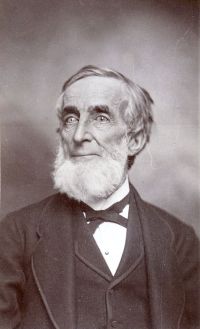 Thomas Storrow Brown,
Address of the Sons of Liberty of Montreal to the Young Men of the North American Colonies
(1837)
“ Hosts of officers, appointed without consent of the People, to whom they are too frequently obnoxious and never responsible, and holding commissions during the pleasure of an irresponsible Executive, are placed in authority over us, with salaries enormously disproportioned both to our means and to their services, whereby office is made a means of family or personal aggrandizement, instead of being suited to the resources and wants of the people. ”
Samuel Freeman Miller,
Badeau v. United States — Opinion of the Court
“ No person who holds an office, the salary or annual compensation attached to which amounts to the sum of two thousand five hundred dollars, shall receive compensation for discharging the duties of any other office, unless expressly authorized by law. ”
Edgar Holmes McNeal, A Source Book for Mediæval History
“ That the better benefices and higher offices are reserved for the cardinals and the chief officials of the papal court. (5) That an unlimited number of expectancies are granted, and many are given for the same office to different persons. And many expectancies are sold to one and the same person. From this practice, lawsuits arise daily, which cause all concerned to incur heavy expenses. For if a man buys an expectancy, he will probably never get the office, but he will surely become involved in a lawsuit about it which will cost him a great deal of money. ”
 Hazard Stevens,
The Life of Isaac Ingalls Stevens…
“ There are now six lads in the office, whose terms vary from two to nineteen months.“During the past year there has been a visible improvement of the office in all its branches, and it is my pleasure and duty to bear unqualified testimony to the zeal and efficiency of the several assistants in charge of the departments, and of the numerous employees under them. Each man has shown an honest purpose to do his duty, and I have been much oftener obliged to moderate exertion than to rebuke indifference and neglect.” ”
Nathan Clifford, United States v. Ellsworth — Opinion of the Court
“ Every officer or agent who neglects or refuses to comply with that provision shall be subject to be removed from office and to forfeit any part or share of the moneys withheld, to which he might otherwise be entitled. ”
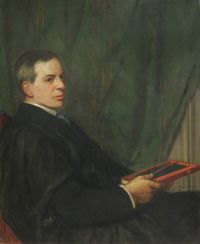 Edward Granville Browne,
The Persian Revolution of 1905-1909
(1910)
“ Art. 68. Ministers may not accept a salaried office other than their own. Art. 69. The National Consultative Assembly or the Senate shall declare the delinquencies of Ministers in the presence of the Court of Cassation, and the said Court, all the members of the tribunals comprised in it being present, will pronounce judgement, save in cases when the accusation and prosecution refer to the Minister in his private capacity, and are outside the scope of the functions of government entrusted to him in his ministerial capacity. ”
Various, The book of Scottish story: historical… (1876)
“ In short, the whole affair was laid before their honours, the Commissioners of Excise, decked out in the blackest colours, and so swollen, distorted, and exaggerated, that no man could have conceived for a moment that so monstrous a tale of dishonesty and turpitude could have been manufactured out of a thing so simple as a pair of top boots. ”
William Maclay, Journal of William Maclay
“ The bill commonly called the excise law, though the term is carefully avoided in the law, puts it in the power of the President to appoint as many inspectors as he chooses, and to pay them what he pleases, so that he does not exceed five per cent on the whole sum collected. This cheek is mere nullity, and depends on a point arising posterior to the appointments. The reason given for vesting the power in the President is the want of knowledge of the subject ”
 Woodrow Wilson,
Congressional Government
“ Dismissal is quite as effective for his purposes, and more merciful to the clerk. The crying inconvenience of our system is, therefore, that the constitutional authority whose prerogative it is to direct policy and oversee administration has fewer facilities for getting its work well done than has the humblest citizen for obtaining satisfactory aid in his own undertakings. The authority most interested in appointments and dismissals in the civil service has little to do with the one and less to do with the other. ”
Henry Billings Brown,
Atlantic Company v. Mingus — Opinion of the Court
“ Blackstone defines an inquest of office as 'an inquiry made by the king's officer, his sheriff, coroner, or escheator, virtute officii, or by writ to them sent for that purpose, or by commissioners specially appointed, concerning any matter that entitles the king to the possession of lands or tenements, goods or chattels. ”
 Anthony Ashley Cooper,
A Letter from a Person of Quality to His Friend in the Country
(1675)
“ Though, besides the former arguments, it was strongly urged, that this Oath ought to be put upon Officers with a heavier penalty then the Test was in the Act of the immediate preceding Session against the Papists, by which any Man might sit down with the loss of his Office, without being in the danger of the penalty of 500l. and also that this Act had a direct retrospect (which ought never to be in Penall Laws) for this Act punishes Men for having an Office without taking this Oath, which office, before this Law pass, they may now lawfully enjoy without it. ”
Related terms
Authors who wrote about “Excise Office”
Samuel PepysLuke Owen PikeUS Copyright Officeby the United States Copyright Officethe United States Copyright OfficeSamuel Freeman Miller Charles Dickens
 Thomas JeffersonJ. N. LarnedMultatuliEdward Douglass WhiteWilliam MaclayEmma Helen BlairFerdinand MarcosHenry Billings BrownRobert BurnsGeorge Birkbeck Norman HillRoger B. TaneyJared SparksAnna Katharine Green
Samuel Freeman MillerCharles DickensThomas JeffersonJ. N. LarnedMultatuliEdward Douglass WhiteWilliam MaclayEmma Helen BlairFerdinand MarcosHenry Billings BrownRobert BurnsGeorge Birkbeck Norman HillRoger B. TaneyJared SparksAnna Katharine Green