“ If you would have fine art and fine appreciation of art, you must have a fine free life for your artists and for yourselves. That is another thing that Society can do for art: it can kill the middle-class ideal. ”
Free Society of Artists
Definition and stakes
The theme of “Free Society of Artists” has been addressed by authors such as Albert Charles Robinson Carter, Ralph Waldo Emerson, James McNeill Whistler, John Robert Scott and T. J. Cobden-Sanderson. It is often associated with terms like art, artist, arts, academy and national.
Quotes about “Free Society of Artists”
Project Gutenberg, The Project Gutenberg Encyclopedia…
“ The crowds that attended an exhibition of pictures held in 1758 at the Foundling Hospital for the benefit of charity, suggested a way of making money hitherto unsuspected. Two societies were quickly formed, one calling itself the ``Society of Artists'' and the other the ``Free Society of Artists.'' The latter ceased to exist in 1774. The former flourished, and in 1765 was granted a royal charter under the title of the ``Incorporated Society of Artists of Great Britain.'' But though prosperous it was not united. ”
Albert Charles Robinson Carter, 1911 Encyclopedia Britannica (1911)
“ First it should be noted that there are very few societies designed for the artistic improvement of artists. The Artists’ Society has already been mentioned; and the Art Workers’ Guild, which meets at Clifford’s Inn Hall, provides meetings, from which the public is excluded, where profitable discussions take place on questions of craft and design. But, as a rule, the art society, of which only artists are members, is organized for exhibition purposes or for the protection of interests. ”
Various, Graham's Magazine, Vol. XL, No…
“ This Institution, [The Philadelphia Art-Union,] by its Free Gallery, and by its being a centre of action for artists and amateurs, is continually operating in a silent but most perceptible manner upon public taste. Every visit to the Free Gallery, every picture sold from its walls, every picture which it is the means of calling into existence, every print which it sends abroad into the community, is so much done toward the promotion of a popular taste for what is refined and elegant, and a consequent distaste for what is coarse, illiberal, and depraved. ”
 Guglielmo Ferrero,
Ancient Rome and Modern America…
Guglielmo Ferrero,
Ancient Rome and Modern America…
“ When the painter, the sculptor, the musician, and the poet try to find in the desires and inclinations of the public the sure indication which in times past used to be the support and guidance of artists in their creations,190 they find that the public is ready to admire anything, but has no marked preference for anything in particular. The artist is free, but his liberty is a liberty which embarrasses and paralyses him.Under these circumstances, the adroit artists quickly learn the art of exploiting the uncertainties and inexperiences of the public, and win riches and honours. ”
Ludwig Nohl, Life of Liszt (1880)
“ There is to-day the inward interest which unites art and society, but that which brought power and glory to those other deep agitations, is destroyed. The social art has gone and has not yet returned. Whom do we principally meet in these days? Sculptors? No, the manufacturers of statues. Painters? No, the manufacturers of pictures. Musicians? No, the manufacturers of music. Everywhere artisans, nowhere artists. ”
 Sol Hurok,
S. Hurok Presents; A Memoir of the Dance World
(1953)
Sol Hurok,
S. Hurok Presents; A Memoir of the Dance World
(1953)
“ The British Government’s attitude has, perhaps, been best stated by Clement Atlee, as Prime Minister, when he said: “I think that we are all of one mind in desiring that art should be free.” He added that he thought the essential purpose of an organized society was to set free the creative energies of the individual, while safeguarding the well-being of all. The Government, he continued, must try to provide conditions in which art might flourish. ”
“ Society can affect Art indirectly because it can affect artists directly. Clearly, if the creation of works of art were made a capital offence, the quantity, if not the quality, of artistic output would be affected. Proposals less barbarous, but far more terrible, are from time to time put forward by cultivated state-projectors who would make of artists, not criminals, but highly-paid officials. Though statesmanship can do no positive good to art, it can avoid doing a great deal of harm: its power for ill is considerable. The one good thing Society can do for the artist is to leave him alone. ”
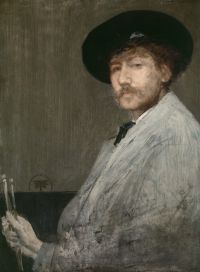 James McNeill Whistler,
The Gentle Art of Making Enemies
James McNeill Whistler,
The Gentle Art of Making Enemies
“ Tampering with the work of an artist, however obscure, is held to be, in what might be called the international laws of the whole Art world, so villainous an offence, that I must at present decline to entertain the responsibility of the very distinguished and Royal Society of British Artists, for what must be due to the rash, and ill-considered, zeal of some enthusiastic and untutored underling. ”
“ I can imagine the squeezing and intriguing between the friends of applicants and their parliamentary deputies, between the deputies and the Minister of Fine Arts; and I can imagine the art produced to fulfil a popular mandate in the days when private jobbery will be the only check on public taste. Can we not all imagine the sort of man that would be chosen? Have we no experience of what the people love? Comrades, dear democratic ladies and gentlemen, pursue, by all means, your schemes for righting the world, dream your dreams, conceive Utopias, but leave the artists out. ”
Constitution of Turkish Republic of Northern Cyprus
“ Protection of Arts, Artists and Cultural Rights (1) The State shall create the conditions necessary to enable the development of art freely; it shall take measures for the protection, support and encouragement of the artists and for rewarding them. ”
“ But in Latin countries you have a democracy of vitality, the best things of the earth are in everybody’s mouth and nerves. The artist has to go and find them in the crowd. You can’t have ‘freedom’ both ways. I prefer the artist to be free, and the crowd not to be ‘artists.’ What does all English and German gush or sentiment, about the wonderful, the artistic French nation, etc., amount to? ”
Various, The International Magazine, Volume 2…
“ III. Have they furnished any peculiar advantages to artists, as a body, by supplying the means of their improvement, in a free access to books, casts, pictures, or good engravings?IV. Do Art-Unions promote the interests [Pg 192] and reward the labors of those who are most eminently deserving?V. Do they elevate the pursuit of art, in the minds of the people, and teach them its value, by distributing to them, in return for their subscriptions, only the best specimens which they can purchase from the studios of our artists? ”
 Carl Schurz,
U. S. Senate Speeches and Remarks of Carl Schurz
Carl Schurz,
U. S. Senate Speeches and Remarks of Carl Schurz
“ CAMERON. The object of my motion, as I stated a minute ago, is to give our own native artists all the benefit from the culture, which they can receive abroad much better than here, and I desire to give facilities for extending the works of American artists by Americans who are abroad, and therefore I offer the amendment. The artists have the right to bring them back here by the present laws, I believe. But if you give the right to every one who may purchase the works of American artists to bring them in free I think you will confer a great benefit upon our own artists. ”
James S. Heller, The Librarian's Copyright Companion (2012)
“ So in contrast to France, in the United States, an author can sell all rights to a novel, including the right to approve alterations. Visual fine art is the one type of material in the United States that receives certain "moral rights" protection beyond what is accorded to most types of work. The Visual Artists Rights Act of 1990 gives the creator of visual fine art the rights of attribution and integrity. ”
 Vicente Blasco Ibáñez,
Woman Triumphant (La Maja Desnuda…
Vicente Blasco Ibáñez,
Woman Triumphant (La Maja Desnuda…
“ Happy days of the present, blessed revolution of modern life, that dignifies the artist, and places him under the protection of the public, an impersonal sovereign that leaves the creator of beauty free and ends by even following him in new-created paths! ”
 Bertrand Russell,
Roads to freedom
(1918)
Bertrand Russell,
Roads to freedom
(1918)
“ He ought, in that case, to be at liberty to sell his pictures if he could find purchasers. Such a system would have many advantages. It would leave absolutely every man free to become an artist, provided he were willing to suffer a certain economic loss. This would not deter those in whom the impulse was strong and genuine, but would tend to exclude the dilettante. Many young artists at present endure voluntarily much greater poverty than need be entailed by only doing half the usual day's work in a well-organized Socialist community ”
 John Ruskin,
Giotto and his works in Padua
John Ruskin,
Giotto and his works in Padua
“ Such charts it is well to command in as great number as possible, and with all attainable completeness; but the Society cannot be considered as having entered on its true functions until it has obtained the hearty co-operation of European artists, and by the increase of its members, the further power of representing the subtle studies of masterly painters by the aid of exquisite engraving. ”
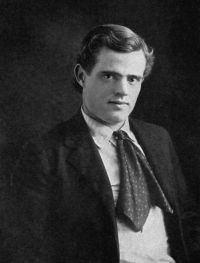 Jack London,
The Cry for Justice: An Anthology of the Literature of Social Protest
Jack London,
The Cry for Justice: An Anthology of the Literature of Social Protest
“ And the artists producing art will not be, as now, merely a few people selected from a small section of the nation, members of the upper classes or their hangers-on, but will consist of all those gifted members of the whole people who prove capable of, and are inclined towards, artistic activity. ”
Constitution of the Democratic People's Republic of Korea (2019)
“ The State shall develop Juche-oriented, revolutionary art and literature, national in form and socialist in content. The State shall encourage creative workers and artists to produce works of high ideological and artistic value and enlist the broad sections of the masses in literary and artistic activities. ”
Richard Herring, Paper & paper making, ancient and modern (1855)
“ The art wants only public encouragement. Let the encouragement be given, and the talent will be found. Let Government offer a premium of even a thousand pounds for the best specimen. Let the Society of Arts make it one of [116] the objects of their patronage ”
William Hazlitt, The Collected Works of William Hazlitt…
“ A society for the encouragement and promotion of Art has no right to exist at all, from the moment that it professes to exist only in wrong of Art, by the suppression of the knowledge of Art, in contempt of genius in Art, in defiance of all manly and liberal sentiment in Art. But this is what the Royal Academy professes to do in the Catalogue Raisonné. ”
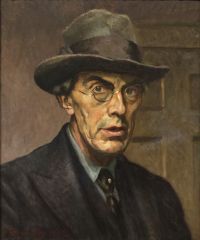
“ There may be a competition for such soft jobs among those who are naturally work-shy, since it will be evident that the artist is not called to account in the same way as other workers.If we suppose, as seems not unlikely, in view of the immense numbers who become artists in our present social state, that there would be this competition for the artistic work of the community, what methods would be devised to select those required to fill the coveted posts? Frankly, the history of art in the nineteenth century makes us shudder at the results that would follow. ”
 Elizabeth Robins Pennell,
The Life of James McNeill Whistler
Elizabeth Robins Pennell,
The Life of James McNeill Whistler
“ Ten years later, as President of the International Society of Sculptors, Painters, and Gravers, he not only recommended, but carried out his schemes and theories: the decoration of the galleries, the refusal of bad work no matter who sent it, the proper hanging of the pictures accepted, the making of the exhibitions into artistic events, the interesting of the public in them, the insistence that each artist should only support his own Society's exhibitions and should belong to no other Society. ”
graf Leo Tolstoy, What Is Art?
“ They cannot help knowing that fine art can arise only on the slavery of the masses of the people, and can continue only as long as that slavery lasts, and they cannot help knowing that only under conditions of intense labour for the workers, can specialists—writers, musicians, dancers, and actors—arrive at that fine degree of perfection to which they do attain, or produce their refined works of art; and only under the same conditions can there be a fine public to esteem such productions. Free the slaves of capital, and it will be impossible to produce such refined art. ”
“ Art to a nation is, I suppose, almost a necessity in some shape or other, but it must be controlled, either by the artists themselves or by the force of public opinion. Now in Karena, which we proposed to make the heart of our art world, public opinion was practically non est. The reasons for this being the want of wealth, and the want of artists. I should have felt much more secure with regard to our scheme, if I had been certain that the people really needed the fine arts to assist them in living. ”
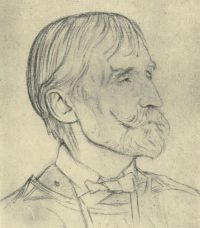 T. J. Cobden-Sanderson,
The Arts and Crafts Movement
T. J. Cobden-Sanderson,
The Arts and Crafts Movement
“ Art is one, though manifold, and when the Royal Academy of Arts, in spite of many protests, continued to restrict its Academic Exhibitions to Painting, Sculpture, and Abstract Architecture, a body of protesters came together, not any longer to protest only, but this time to constitute a society of exhibitioners who should widen the academic conception of art, and open its exhibitions to all forms of art, provided only that the form was of art, born of the imagination, and destined to touch the imagination. ”
John Ruskin,
On the Old Road, Vol. 2 (of 2)
“ Is not that want of refinement which may be observed in many of the pictures from time to time exhibited in the Royal Academy to be attributed in a great measure to the want of education amongst artists?—It is to be attributed to [Pg 60] that, and to the necessity which artists are under of addressing a low class of spectators: an artist to live must catch the public eye. ”
Elisabeth Luther Cary, William Morris: Poet, Craftsman…
“ The Art Workers’ Guild, dating from 1884, was the source from which the new society sprang, the immediate purpose of the latter being to get the work of men who combined art with handicraft before the public by means of exhibitions, the committees of the Royal Academy and kindred associations refusing to accept examples of applied art for the exhibitions which they devoted to what they called “fine art proper.” ”
Albert Charles Robinson Carter, 1911 Encyclopedia Britannica (1911)
“ For instance, the membership of the Royal Society of British Artists advanced in the period mentioned from 80 to 150. Similar extensions can be noted in other societies, or in such a case as that of the Royal Institute of Painters in Water Colours, where the membership is limited to 100, it is to be noticed that more space is given to the works of outsiders. But the expansion of older exhibiting societies has not proved sufficient. Portrait painters, pastellists, designers, miniaturists and women artists have felt the necessity of forming separate coteries. ”
Donald W. Bernier, Area Handbook for Romania
“ Cultural exchanges with Western countries were often used by the government to allow artists more freedom of expression than could be politically justified at home. Artists were allowed to exhibit or perform abroad works that had been highly criticized at home. ”
Albert Charles Robinson Carter, 1911 Encyclopedia Britannica (1911)
“ ART SOCIETIES. In banding themselves into societies and associations artists have always been especially remarkable. The fundamental motive of such leaguing together is apparent, for, by the establishment of societies, it becomes possible for the working members of these to hold exhibitions and thereby to obtain some compensation or reward for their labours. With the growth of artistic practice and public interest, however, art societies have been instituted where this primary object is either absent or is allied to others of more general scope. ”
Clara Erskine Clement Waters, A History of Art for Beginners and Students…
“ These guilds became powerful organizations; they had definite rights and duties, and even judicial authority as to such matters as belonged to their special trades.All this led to much greater individuality among artists than had ever existed before: it came to be understood that a painter could, and had a right to, paint a picture as he wished, and was not governed by any priestly law. Religious subjects were still painted more frequently than others, and the decoration of religious edifices was the chief employment of the artists ”
Various, Blackwood's Edinburgh Magazine…
“ They (like the national guard in Paris) have been superseded by their own inferior workmen. And what shall remedy all this superfœtation? First, let pains be taken properly to educate in art the public eye, and the public mind. We rejoice to know that, while we are writing, a society is forming, similar to the Cambden Society, for the publication of all important works on art, whether old or original, and for having the finest productions of art engraved, in whatever country they are to be found. ”