Ghibelline

Definition and stakes

Edward Bunbury, Thomas Ashby, Robert Conway, John A. Symonds, John Rose, Luigi Villari & Henry Steed,  1911 Encyclopædia Britannica (1911)

“ No city calls itself either Guelph or Ghibelline till it has expelled one-half of its inhabitants; for each party is resolved to constitute the state according to its own conception, and the affirmation of the one programme is the negation of the other. The Ghibelline honestly believes that the Guelphs will reduce society to chaos. ”
Source: Wikisource

Portrait of Sabine Baring-Gould Sabine Baring-Gould,  A Book of the Riviera (1909)

“ Yawning, throwing of dice, gestures in speaking, and swearing, served as pretexts for distinguishing the one half of Italy from the other. So late as the middle of the fifteenth century, the Ghibellines of Milan pulled down the figure of Christ from the high altar of Crema, and burnt it, because the face was turned towards the Guelf shoulder. [2] The Grimaldi were strong Guelfs; the county of Nice was so as well, but the town was Ghibelline. The Lascaris of Tende and Ventimiglia, the Dorias of Dolceacqua and Oneglia were Ghibelline. ”
Source: Wikisource

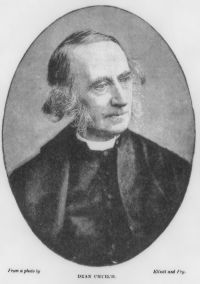
Portrait of R. W. Church R. W. Church,  Dante. An essay. To which is added a translation of De Monarchia

“ The Guelfs, when their day came, built the walls of Florence with the stones of Ghibelline palaces. [7] One great family stands out pre-eminent in this fierce conflict as the victim and monument of party war. The head of the Ghibellines was the proud and powerful house of the Uberti, who shared with another great Ghibelline family, the Pazzi, the valley of the upper Arno. They lighted up the war in the Emperor's cause. ”
Source: Gutenberg

Get perspective with Kwize: daily news enlightened by great literature