“ The texts of Hippocrates and Galen have now ceased to occupy a place in any medical curriculum. Yet all who know these writings, know too, not only that their spirit is still with us, but that the works themselves form the background of modern practice, and that their very phraseology is still in use at the bedside. Modern medicine may be truly described as in essence a creation of the Greeks. To realize the nature of our medical system, some knowledge of its Greek sources is essential. ”
Greek medicine
Definition and stakes
The theme of “Greek medicine” has been addressed by authors such as Albert H. Buck, Joseph Payne and Clifford Allbutt, James J. Walsh, Edward Berdoe and William Osler. It is often associated with terms like Hippocrates, Galen, Greece, Alexandria and physician.
Quotes about “Greek medicine”
James J. Walsh, Medieval Medicine
“ The monasteries are thus seen to have been in touch with Greek medicine from the earliest medieval time. The other important historical documents relating to Medieval Medicine which we [Pg 27] possess concern the work of the men born and brought up in Asia Minor, for whom the Greeks were so close as to be living influences. Aëtius, Alexander of Tralles, and Paul of Ægina have each written a series of important chapters on medical subjects, full of interest because the writers knew their Greek classic medicine, and were themselves making important observations. ”
Roswell Park, An Epitome of the History of Medicine
“ The scepter of medicine passed from the hands of one nation to those of another, and the language of Hippocrates and Galen was later replaced, as will duly be seen, by that of Avicenna and Albucassis. But this Greek Period, which is one of transition, offers little for our consideration more than the lives and writings of four of its most eminent physicians, who by their study in the school of Alexandria, and by their writings and teachings, left reputations which were sustained until the invasion of the Arabs. ”
James J. Walsh, Old-Time Makers of Medicine
“ As a consequence we know and appreciate very well as a rule how much Greek medicine accomplished, but in our admiration for the diligent observation and breadth of view of the Greeks, we are sometimes prone to think that most of the intervening generations down to comparatively recent times made very little progress and, indeed, scarcely retained what the Greeks had done. ”
“ With the second century of the Christian era we terminate the creative period of Greek medicine. We are provided with the works of four important writers of this century, of whom three, Rufus of Ephesus, Soranus of Ephesus, and Aretaeus of Cappadocia, though valuable for forming a picture of the state of medicine in their day, were without substantial influence on the course of medicine in later ages. ”
James J. Walsh, Old-Time Makers of Medicine
“ Under the term Old-Time Medicine most people probably think at once of Greek medicine, since that developed in what we have called ancient history, and is farthest away from us in date. As a matter of fact, however, much more is known about Greek medical writers than those of any other period except the last century or two. ”
James J. Walsh, Old-Time Makers of Medicine
“ Our histories of medicine discuss Greek medicine at considerable length and practically all of the great makers of medicine in subsequent generations have been influenced by the Greeks. Greek physicians whose works have come down to us seem nearer to us than the medical writers of any but the last few centuries. ”
James J. Walsh, Old-Time Makers of Medicine
“ The Romans themselves, in spite of intimate contact with Greek physicians, never made any important contributions to medical science, nor to science of any kind. Their successors, the Christians of Rome and Italy, then could scarcely be expected to do better, hampered especially, as they were, by the trying social conditions created by the invasion of the barbarians from the North. Whenever the Christians were in contact with Greek thought and Greek medicine, above all, as at Alexandria, or in certain of the cities of the near East, we have distinguished contributions from them. ”
Sir James Elliott, Outlines of Greek and Roman Medicine
“ Pure air, cheerful surroundings, proper diet and temperate habits were advocated, and, among other methods of treatment, exercise, massage, sea-bathing, the use of mineral waters, purgatives and emetics, and hemlock as a sedative, were in use. If a cure was not effected, the faith of the patient was impugned, and not the power of the god or the skill of the Asclepiades, so that neither religion nor the practice of physic was exposed to discredit. Great was the wisdom of the Greeks! These temples were the famous medical schools of ancient Greece. ”
W. G. Waters, Jerome Cardan: A Biographical Study
“ Medicine had been specially stimulated by the vivifying spirit of Greek science; in the Roman school in the days of Celsus, and in the Arabian teaching likewise. Fuller acknowledgment of the authority of Greek Medicine came with the Renaissance, [263] but even this long step in advance did not immediately liberate the art from bondage. A new generation of professors arose who added fresh material to the storehouses, already overflowing, of pedantic erudition, and showed the utmost contempt for any fruit of other men's labour which might not square exactly with the utterances of the founders. ”
Albert H. Buck, The growth of medicine from the earliest times to about 1800 (1917)
“ Toward the end of the sixth century A. D. the prospects for the perpetuation and further evolution of Greek medicine looked decidedly dark. In Rome and in the larger Italian towns of the Roman Empire, physicians were doubtless still to be found, but they must have led very precarious lives and they certainly could not have had any leisure or opportunity for scientific work. In these earlier years of the Middle Ages the monks conducted the larger part of whatever medical practice was required in the districts in which the monasteries were located. ”
J. N. Larned, History for ready reference, Volume 3… (1895)
“ Yet they constantly advanced novelties in the sciences subsidiary to medicine, materia medica and pharmacy, from the latter of which chemistry, pharmacies and the profession of the apothecary were developed. ... The mode of transfer of Greek medicine to the Arabians was probably as follows: The inhabitants of the neighboring parts of Asia, including both the Persians and Arabians, as the result of multifarious business connexions with Alexandria, came, even at an early date, in contact with Grecian science, and by degrees a permanent alliance was formed with it. ”
Sir James Elliott, Outlines of Greek and Roman Medicine
“ Before considering the state of the healing art throughout the period of the Roman Empire, it is necessary to devote the next chapters to a consideration of the rise and progress of medical [Pg 12] science in Greece, for it cannot be too strongly emphasized that Roman philosophy and Roman medicine were borrowed from the Greeks, and it is certain also that the Greeks were indebted to the Egyptians for part of their medical knowledge. The Romans were distinguished for their genius for law-giving and government, the Greeks for philosophy, art, and mental culture generally. ”
John Stewart Milne, Surgical Instruments in Greek and Roman Times
“ After Hippocrates there is a break in the continuity of the literature, and for some hundreds of years Greek medicine is represented almost entirely by the Alexandrian Schools. The first printed edition of the Hippocratic works was a Latin translation printed at Rome in 1525, followed by the Aldine edition of the Greek text printed at Venice in the following year. ”
 Edward Berdoe,
The Origin and Growth of the Healing Art
“ Apollo, the God of Medicine.—Cheiron.—Æsculapius.—Artemis.—Dionysus.—Ammon.—Hermes.—Prometheus.—Melampus.—Medicine of Homer.—- Temples of Æsculapius.—The Early Ionic Philosophers.—Empedocles.—School of Crotona.—The Pythagoreans.—Grecian Theory of Diseases.—School of Cos.—The Asclepiads.—The Aliptæ. Gods of Medicine.The origin of Greek medicine is intermixed with the Hellenic mythology. We must begin, not with Æsculapius (Asclepios) , but with the sun itself. Apollo (Pæan) , as the god who visits men with plagues and epidemics, was also the god who wards off evil and affords help to men. ”
Various, Popular Science Monthly (1911)
“ Greco-Roman medicine came to an end in the west with the fall of Rome in 476 A.D., while the capture of Alexandria and burning of its great library by the Arabians about 640 ended the intellectual influence of that city. In the Eastern or Byzantine Empire, Greek medicine continued for a longer time, overlapping the Arabian period. ”
James J. Walsh, Old-Time Makers of Medicine
“ Though so much nearer in time medieval medicine seems much farther away from us than is Greek medicine. Most of us are quite sure that the impression of distance is due to its almost total lack of significance. ”
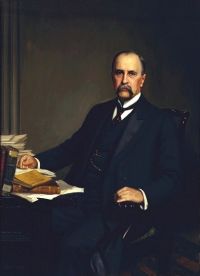 William Osler,
The Evolution of Modern Medicine
“ The medical profession gradually caught the new spirit. It has been well said that Greece arose from the dead with the New Testament in the one hand and Aristotle in the other. There was awakened a perfect passion for the old Greek writers, and with it a study of the original sources, which had now become available in many manuscripts. Gradually Hippocrates and Galen came to their own again. Almost every professor of medicine became a student of the MSS. of Aristotle and of the Greek physicians, and before 1530 the presses had poured out a stream of editions. ”
Joseph Payne and Clifford Allbutt, 1911 Encyclopædia Britannica (1911)
“ It was at first very naturally imagined that the simple revival of classical and especially of Greek literature would at once produce the same brilliant results in medicine as in literature and philosophy. The movement of reform started, of necessity, with scholars rather than practising physicians—more precisely with a group of learned men, whom we may be permitted, for the sake of a name, to call the medical humanists, equally enthusiastic in the cause of letters and of medicine. ”
“ When the center of interest in Greek medicine was transferred from Greece itself to Egypt, and the Alexandrian school represented what was best in medical thinking and investigation, we find evidence once more of wise physicians realizing the influence of the mind on the body and of what seemed to physicians of lesser experience the cure of physical ills by mental means. ”
Albert H. Buck, The growth of medicine from the earliest times to about 1800 (1917)
“ Still another change in the status of the Greek physicians had been slowly developing throughout this pre-Hippocratic period, a change which tended more and more to make them men of self-reliance and of considerable importance in their respective communities, and which indicated very clearly that they were steadily growing in skill and breadth of knowledge. ”
William Osler,
The Evolution of Modern Medicine
“ Livingstone discusses the Greek Genius as displayed to us in certain "notes"—the Note of Beauty—the Desire for Freedom—the Note of Directness—the Note of Humanism—the Note of Sanity and of Many-sidedness. Upon some of these characteristics we shall have occasion to dwell in the brief sketch of the rise of scientific medicine among this wonderful people. We have seen that the primitive man and in the great civilizations of Egypt and Babylonia, the physician evolved from the priest—in Greece he had a dual origin, philosophy and religion. ”
William Osler,
The Evolution of Modern Medicine
“ Galen died about 200 A.D.; the high-water mark of the Renaissance, so far as medicine is concerned, was reached in the year 1542. In order to traverse this long interval intelligently, I will sketch certain great movements, tracing the currents of Greek thought, setting forth in their works the lives of certain great leaders, until we greet the dawn of our own day. After flowing for more than a thousand years through the broad plain of Greek civilization, the stream of scientific medicine which we have been following is apparently lost in the morass of the Middle Ages ”
Philip Sanford Marden, Greece and the Ægean Islands
“ The cave is now a Catholic shrine, with a picture of its particular saint and an oil lamp burning before it. It is dank and dismal, and for one to remain there long would doubtless necessitate the services of Asklepios himself, or of some skillful modern disciple of his healing art—of which, by the way, Athens can boast not a few. The Greek seems to take naturally to the practice of medicine, and some of the physicians, even in remote country districts, are said to possess unusual talent. ”
Sir James Elliott, Outlines of Greek and Roman Medicine
“ They had acquaintance with the domestic medicine known to all savages, a little rude surgery, and prescriptions from the Sibylline books, and had much recourse to magic. It was to Greece that the Romans first owed their knowledge of healing, and of art and science generally, but at no time did the Romans equal the Greeks in mental culture. [Pg 3] Pliny states that "the Roman people for more than six hundred years were not, indeed, without medicine, but they were without physicians." They used traditional family recipes, and had numerous gods and goddesses of disease and healing. ”
Edward Berdoe,
The Origin and Growth of the Healing Art
“ It was only natural that the philosophical Greeks should discuss medicine at as great a length as they discussed philosophy; accordingly, we find that no sooner had our art taken its place amongst the subjects worthy of being seriously considered by the Greek intellect, than it was as much talked about as practised, and wrangled over as though it were a system of religion. ”
James J. Walsh, The Popes and Science
“ With the Renaissance, which is usually said to begin after the fall of Constantinople in 1453, and the consequent dispersion of Greek scholars throughout Italy, a new spirit entered into anatomy as into every other department of intellectual life at this time. The reason for it is not easy to explain. Perhaps the spread of Greek texts with regard to medicine inspired students and teachers to try out their problems for themselves, and so a new impetus was given to anatomical investigation. ”
John D. Quackenbos, Illustrated history of ancient literature… (1889)
“ In a work on medicine, dedicated to his son, he exclaims against the Greek physicians, and recommends the simple remedies which he had always found efficacious. His prejudice against medical men was founded on the belief that their introduction from Greece was a deep-laid plot to poison his fellow-citizens; moreover, he knew that Rome had thriven marvellously for five centuries, in blissful ignorance of the medical faculty. ”
“ The enormous mass of the surviving work of this man, the dictator of medicine until the revival of learning and beyond, tends to throw out of perspective the whole of Greek medical records. The works of Galen alone form about half of the mass of surviving Greek medical writings, and occupy, in the standard edition, twenty-two thick, closely-printed volumes. These cover every department of medicine, anatomy, physiology, pathology, medical theory, therapeutics, as well as clinical medicine and surgery. In style they are verbose and heavy and very frequently polemical. ”
Sir James Elliott, Outlines of Greek and Roman Medicine
“ In the practice of medicine he promoted health mainly by diet and gymnastics, advised music for depression of spirits, and had in use various vegetable drugs. He introduced oxymel of squills from Egypt into Greece, and was a strong believer in the medicinal properties of onions. He viewed surgery with disfavour, and used only salves and poultices. The Asclepiades treated patients in the temples, but the Pythagoreans visited from house to house, and from city to city, and were known as the ambulant or periodic physicians. ”
J. C. Lawson, Modern Greek Folklore and Ancient Greek Religion…
“ Such customs are likely long to continue among the simpler folk of modern Greece, who frankly and innocently wish the bride at her wedding reception ‘seven sons and one daughter.’But it is not only for ailments induced by malicious magic that magical means of cure or aversion are used. The whole of popular medicine is based upon the knowledge of charms and incantations. Many simples and drugs are of course known and employed ”
William Osler,
The Evolution of Modern Medicine
“ Out of mysticism, superstition and religious ritual the Greek went directly to nature and was the first to grasp the conception of medicine as an art based on accurate observation, and an integral part of the science of man. ”
James J. Walsh, Medieval Medicine
“ Both periods contain contributions to medicine that are well worthy of consideration, and nearly always the writings that have been preserved for us demonstrate the fact that men were thinking for themselves as well as studying the Greek writers, and were making observations and garnering significant personal experience. The later Middle Ages particularly present material in this regard of far greater interest than was presumed to exist until comparatively recent historical studies were completed. ”
Related terms
Authors who wrote about “Greek medicine”
Albert H. BuckJoseph Payne and Clifford AllbuttJames J. WalshEdward BerdoeWilliam OslerSir James ElliottA. C. WoottonPrafulla Chandra Ray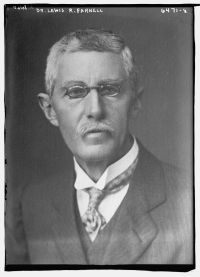 Lewis Richard FarnellRoswell ParkMichael Cudmore Furnell
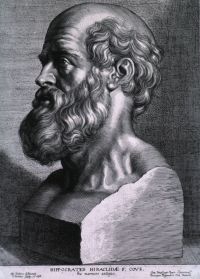 HippocratesPhilip Sanford MardenJ. C. LawsonHugo Magnus
 Owen BarfieldHugo BlümnerJohn D. QuackenbosVarious
 William Stearns Davis
Edward BerdoeWilliam OslerSir James ElliottA. C. WoottonPrafulla Chandra RayLewis Richard FarnellRoswell ParkMichael Cudmore FurnellHippocratesPhilip Sanford MardenJ. C. LawsonHugo MagnusOwen BarfieldHugo BlümnerJohn D. QuackenbosVariousWilliam Stearns Davis