Highland cattle

Definition and stakes

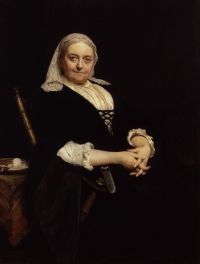
Portrait of Dinah Maria Mulock Craik Dinah Maria Mulock Craik,  An Unsentimental Journey through Cornwall

“ And, being rather a connoisseur in cows, I have often amused myself to notice how the kine of each country have their own predominant colour, which seems to harmonise with its special landscape. The curious yellow tint of Highland cattle, the red, white, or brown of those of the midland counties, and the delicate grey of Cornish cows, alike suit the scene around them, and belong to it as completely as the dainty little Swiss herds do to their Alpine pastures, or the large, mild, cream-coloured oxen to the Campagna at Rome. ”
Source: Gutenberg

The Living Animals of the World…

“ Highland Cattle have long horns, rough, shaggy coats, and bodies of moderate size and great symmetry; they are grazed on the mountains of the West Highlands mainly, and fattened in the south. The beef is of the finest quality. Sussex Cattle are an "all red" variety, large, and formerly much used for draught and farm work. The Devons are another red variety very like the Sussex, yielding excellent and rich milk, and, when fattened, being little inferior to any breed as beef. ”
Source: Gutenberg

Portrait of William Elliot Griffis William Elliot Griffis,  Bonnie Scotland and what we owe her (1916)

“ Many scientific men hold that the Chillinghams, or reputed wild cattle, are albinos. Apart from opinion, it is a fact that when the black calves are born, they are carefully sorted out and sold for their veal. The true Highland cattle, which we meet in herds on the moors and see painted lovingly by artists, are hardy, imposing, and well fitted to their climatic environment. With short, muscular limbs, wide and deep chests, long horns and short muzzle, and their coats of shaggy hair, they are noticeable in the landscape. They furnish much of the famed “roast beef of Old England.” ”
Source: Gutenberg

Get perspective with Kwize: daily news enlightened by great literature