Ionian Islands

Definition and stakes

William Miller,  Essays on the Latin Orient (1922)

“ The seven Ionian Islands naturally fall into three divisions. Kythera (or Cerigo) in the far South; the centred group, consisting of Zante, Cephalonia, Ithake, and Levkas (or Santa Maura) ; and Corfù and Paxo in the North. Of these divisions, the first fell to the share of a scion of the great Venetian family of Venier—a family which traced its name and descent from Venus, and naturally claimed the island, where she had risen from the sea. Zante, Cephalonia and Ithake had a very curious history—a history long obscure, but now well ascertained. ”
Source: Gutenberg

J. A. M'Clymont,  Greece

“ The sacrifice was not without its compensations, as it relieved Britain from an annual outlay of £100,000, which had been the cost of administration.
The principal Ionian Islands are five in number, namely, Corfu (Corcyra) , Santa Mauro (Leucas) , Ithaca, Cephalonia (Cephallenia) , and Zanté (Zacynthus) . They represent a territory of more than 1000 square miles, with a population of about a quarter of a million, who are mainly dependent on shipping and on the trade in oil, wine, and currants.
”
Source: Gutenberg

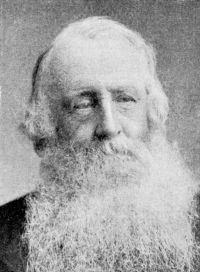
Portrait of Edward A. Freeman Edward A. Freeman,  The Historical Geography of Europe…

“ But the neighbouring islands equally form a part of continuous Greece; and the other coasts of the Ægæan, Asiatic as well as Thracian, were so thickly strewed with Greek colonies as to form, if not part of continuous Greece, yet part of the immediate Greek world. The western coast, as it is less peninsular, is also less insular, and the islands on the western side of Greece did not reach the same importance as those on the eastern side.{22} Still they too, the Ionian islands of modern geography, form in every sense a part of Greece. ”
Source: Gutenberg

Get perspective with Kwize: daily news enlightened by great literature