Khamsin

Definition and stakes

Various,  Graham's Magazine, Vol. XLI, No…

“ The Khamsin is a hot south wind, which soon after the vernal equinox begins to blow in Egypt, continuing at intervals during a period of about fifty days, to which the name refers. The two next are entirely identical, the Samiel being the name given by the Turks to the wind which the Arabs called the Simoom. It is common in Syria, Arabia, and Nubia, deleterious in its mildest forms, occasionally destructive, many a pilgrim to the shrine of the Prophet at Mecca, and merchant to the marts of Bagdad, having perished by its noxious suffocating influence. ”

Source: Gutenberg

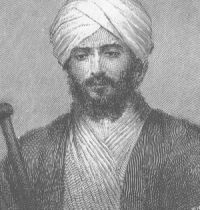
Portrait of Sir Richard Francis Burton Sir Richard Francis Burton,  The Land of Midian (Revisited)…

“ The sole of the Sirr now appeared spread with snow, streaked and patched with thin white paint; the stones were mostly water-rolled, the discharge of valleys draining from afar. The ground was unpleasantly pitted and holed; the camels were weak with semi-starvation and the depressing south-wester; Lieutenant Amir put his dromedary to speed, resulting in a nose-flattening fall; and the Sayyid nearly followed suit.
This is our second day of Khamsin; yet on the northern slope of the great Fiumara we meet the cool land-wind.
”
Source: Gutenberg

Portrait of Ekai Kawaguchi Ekai Kawaguchi,  Three Years in Tibet

“ The Khams, on the other hand, are infinitely superior in this respect both to the Mongols and the Tibetans, and this in spite of the fact that their country is generally supposed to be no better than a den of thieves and [347] robbers. A Kham is excitable, but he does not lose his temper like a Mongol: indeed, he can be admirably patient and persevering when he wills. In point of physique, too, he is far ahead as a rule of both the others. The Khams are chivalrous men, blunt and outspoken, and averse to flattery. ”
Source: Gutenberg

Get perspective with Kwize: daily news enlightened by great literature