Dagestan

Definition and stakes

Sir Alfred C. Lyall,  Studies in Literature and History

“ But it was these very measures and successes that led, on the one hand, to the Persian War and the revolt of the newly-acquired provinces; on the other, to that great outburst of religious and racial fanaticism which, under the banner of Muridism, welded into one powerful whole so many weak and antagonistic elements in Daghestan and Tchetchnia, thereby initiating the bloody struggle waged unceasingly for the next forty years. Daghestan speedily threw off the Russian yoke, and defied the might of the mother empire until 1859. ”
Source: Gutenberg

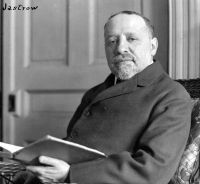
Portrait of Morris Jastrow Morris Jastrow,  The Religion of Babylonia and Assyria

“ The proposition has much in its favor which regards Dagan as a god whose worship was introduced into Assyria at a very early period through the influence of Aramaean hordes, who continue throughout Assyrian history to skirt the eastern shores of the Tigris. Once introduced, however, into Assyria, Dagan assumes a different form from [Pg 209] the one that he receives among the Philistines. To the latter he is the god of agriculture, while in Assyria he rises to the rank of second in the pantheon, and becomes the associate of Anu. ”
Source: Gutenberg

A. L. O. E.,  House beautiful (1868)

“ The human heart still sets up its idol; the young, full of hope and joy like the Philistines after their victory, pay homage to the world, and expect from it those pleasures and delights which it is ever promising to bestow. Dagon has a lofty shrine, and many bow down before it. Then comes some providential dispensation of sorrow, that opens the eyes to the fact that the world and the things of the world have no power to secure our peace. Have we not known such a moment, when Dagon is seen prostrate on earth, and we feel that he is indeed but an idol? ”
Source: Gutenberg

Get perspective with Kwize: daily news enlightened by great literature