King of Hungary

Definition and stakes

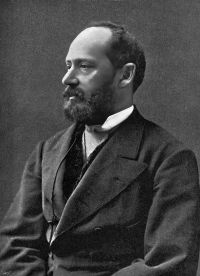
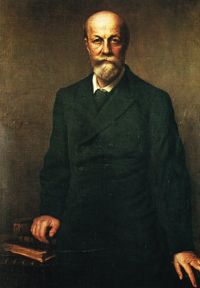
Portrait of Lajos Kossuth Lajos Kossuth Select Speeches of Kossuth

Hungary is not now under lawful government, but is being trampled down by a foreign intruder who is not King of Hungary, being neither acknowledged by the nation, nor sanctioned by law. Hungary is, in a word, in a state of WAR against the Hapsburg dynasty, a war of legitimate defence, by which alone it can ever regain independence and freedom. By such war alone has any nation ever won its freedom from oppressors; as you see in Switzerland, Belgium, Spain, Portugal, France, Sweden, Norway, Greece, the United States, and England itself.
Source: Gutenberg

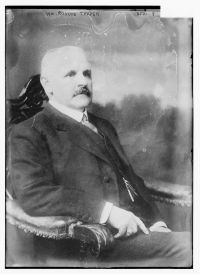
Portrait of William Roscoe Thayer William Roscoe Thayer Throne-Makers

With the year 1825, when that Diet met, began the modern struggle of Hungary to recover that home rule which one after another of her Hapsburg kings had solemnly sworn to respect, and had as perfidiously disregarded. Thus the seed of the Magyar revolution was sown, like that of so many others, in a demand for the restoration of acknowledged rights, and not in a demand for innovation. Home rule,—Hungary to govern herself, instead of being bullied by foreigners who happened to be also subjects of her Emperor-King,—that seemed an object as simple and definite as it was just.
Source: Gutenberg

Various Blackwood's Edinburgh Magazine…

The court of Hungary had long been the resort of men of learning and science; the chivalry of Europe had flocked to her camps, where military ardour was never disappointed of a combat, or religious zeal of an opportunity to slaughter infidels. In 1526, Ludovic, King of Hungary and Bohemia, with the flower of the Hungarian chivalry, fell fighting with the Turks at the disastrous battle of Mohacs—the Flodden field of Hungary. The monarchy was then elective, but when the late king left heirs of his body the election was but a matter of form.
Source: Gutenberg

Get perspective with Kwize: daily news enlightened by great literature