L'Allegro

Definition and stakes

George Frideric Handel and Charles Jennens,  L'Allegro, il Penseroso ed il Moderato

“ Hence, loathed Melancholy, In dark Cimmerian desert ever dwell. But haste thee, Mirth, and bring with thee The mountain nymph, sweet Liberty. L'Allegro (soprano) :
And if I give thee honour due, Mirth, admit me of thy crew! 11. Air L'Allegro (soprano) :
Mirth, admit me of thy crew, To live with her, and live with thee, In unreproved pleasures free; To hear the lark begin his flight, And singing startle the dull night; Then to come in spite of sorrow, And at my window bid good morrow. Mirth, admit me of thy crew! 12.
”
Source: Wikisource

Philip H. Goepp,  Symphonies and Their Meaning; Third Series…

“ Of subtle art is the woof of derived phrases. A companion melody, that seems fraught of the text of the second subject, sings with rising passion, while the lower brass blow lustily in eccentric rhythm of the Allegro phrase and at the height share in the dual triumph.
We feel a kinship of mood rather than of theme, a coherence that we fear to relate to definite figures, though the descending symbol is clear against the ascending. An idyllic dialogue, with the continuing guise of the Allegro phrase turns to a gayer revel in the original pace, with a brilliant blare of trumpets.
”
Source: Gutenberg

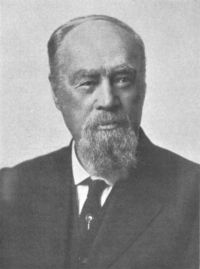
Portrait of Romain Rolland Romain Rolland,  Handel

“ This masterly way of writing choruses, of treating the fugue, had been done by others. What really counts with him is the colour—that modern element which we no longer hear in him.... He knew nothing of exotism. But look at Alexander’s Feast, Israel in Egypt, and especially L’Allegro ed Penseroso, and try to forget all that has been done since. You find at every turn a striving for the picturesque, for an effect of imitation. It is real and very intense for the medium in which it is produced, and it seems to have been unknown hitherto. ”
Source: Gutenberg

Get perspective with Kwize: daily news enlightened by great literature