Lamiaceae

Definition and stakes

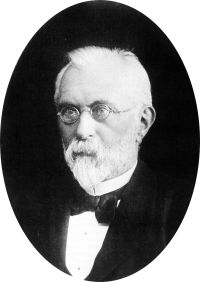
Portrait of James Glaisher James Glaisher,  Art-Studies from Nature, as Applied to Design

“ The size and expanse of the fronds of the various species of Laminariæ exposed, in the bleak and unprotected situations in which they grow, to the full fury of the waves, are provided for in their leathery toughness, the rope-like stem, and the numerous attaching discs of their branching roots. The root of the sea-weed differs very materially from the root of a plant: through it no nutritious sustenance is conveyed to the algal; it draws nothing from the soil ”
Source: Gutenberg

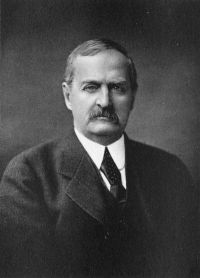
Portrait of Sydney Howard Vines Sydney Howard Vines,  Makers of British botany — Robert Morison 1620…

“ He begins by distinguishing Herbs, Shrubs, and Trees. Proceeding to the detailed classification of Herbs, he divides them into Imperfect "which either do want or seem to want some of the more essential parts of Plants, viz. either Root, Stalk, or Seed," the Cryptogamia of Linnaeus; and Perfect "having all the essential parts belonging to a Plant." The Perfect Herbs are arranged in three main groups according to (1) their leaves, (2) their flowers, (3) their seed-vessel, each group being subdivided in various ways. ”
Source: Wikisource

active 1799-1828 Henry Cranke Andrews,  The botanist's repository for new and rare plants… (1797)

“ The increase is certain and easy, if cuttings are made, from the young shoots, early in March, and plunged in a hotbed, or in the bark of the hothouse, six or eight in a pot; from which they may be removed, about June, into large pots for flowering, which will be from August till November. Loam, with a small portion of rotten dung, is the soil it most approves.
The specific title we have adopted, is from the very great resemblance the plant bears to Lycium afrum, or the Box-Thorn; although we have some doubts, whether this species may not be the F. triphylla of Father Plumier.
”
Source: Gutenberg

Get perspective with Kwize: daily news enlightened by great literature