Ranunculaceae

Definition and stakes

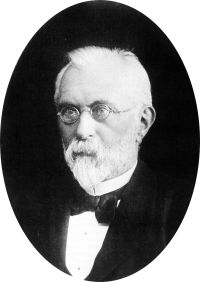
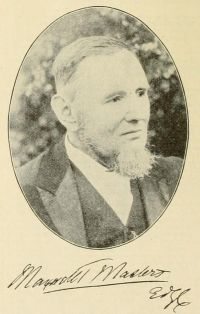
Portrait of Maxwell T. Masters Maxwell T. Masters,  Vegetable Teratology

“ Some of the Ranunculaceæ constantly exhibit a tendency towards the diœcious condition, and the rarity with which perfect seeds of Ranunculus Ficaria are formed is to be attributed, in great measure, to the deficiency of pollen in the anthers of these flowers. Ranunculus auricomus also is frequently sterile. Specimens of Ranunculus bulbosus may be met with in which every flower is furnished with carpels, most of which have evidently been fertilised, although there are no perfect stamens in the flowers. ”

Source: Gutenberg

Portrait of Robert Wight Robert Wight,  Illustrations of Indian Botany… (1840)

“ Flowers polypetalous, polyandrous, ovaries wholly superior: carpels more or less distinct, or solitary: embryo minute: seeds with an aril, leaves exstipulate, except Wormia. Geographical Distribution. This is peculiarly a tropical order, almost as exclusively so, as Ranunculaceae is an extra-tropical one, a few only extending beyond the 30th degree of latitude. The species are natives alike of both hemispheres, most numerous in the southern. ”
Source: Wikisource

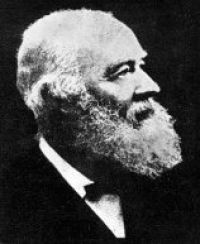
Portrait of Alfred Russel Wallace Alfred Russel Wallace,  Darwinism (1889)

“ Thus in the Ranunculaceae we find the conspicuous part of the flower to be the petals in Ranunculus, the sepals in Helleborus, Anemone, etc., and the stamens in most species of Thalictrum. In all these we have a simple regular flower, but in Aquilegia it is made complex by the spurred petals, and in Delphinium and Aconitum it becomes quite irregular. In the more simple class self-fertilisation occurs freely, but it is prevented in the more complex flowers by the stamens maturing before the pistil. ”
Source: Gutenberg

Get perspective with Kwize: daily news enlightened by great literature