The Rig Veda (1896)
“ Sages well-skilled in work, intelligent, drain out the stalk that roars, the Sage, the Everlasting One. The milk, the hymns unite them with him in the place of sacrifice, his seat who is produced anew. ”
The Rig Veda (1896)
“ Sages well-skilled in work, intelligent, drain out the stalk that roars, the Sage, the Everlasting One. The milk, the hymns unite them with him in the place of sacrifice, his seat who is produced anew. ”
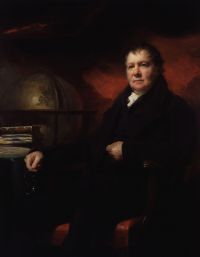 John Playfair,
Notice de la Vie et des Ecrits de George Louis Le Sage…
(1807)
John Playfair,
Notice de la Vie et des Ecrits de George Louis Le Sage…
(1807)
“ The result could not fail to solve the difficulty, and to convince the young man, that though the work of creation might terminate, the work of Providence is never interrupted. The pensive and contemplative turn of Le Sage was increased by the circumstance of his health being delicate, and his temperament too weak, to allow him to join in the fatiguing exercises which amused and occupied his companions. ”
 James Allen,
From Passion to Peace
(1910)
James Allen,
From Passion to Peace
(1910)
“ The sage has conquered passion, and has come to lasting peace. As the mighty mountain remains unmoved by the turbulent ocean that beats round its base, so the mind of the sage, towering in lofty virtue, remains unshaken by the tempests of passion which beat unceasingly upon the shores of life. Good and wise, he is evermore happy and serene; transcendently virtuous, he lives in beatific bliss. ”
Thomas Brown, Lectures on the Philosophy of the Human Mind…
“ The sage, who in the silence of midnight, continues still those labours which the morning began, watching, with sleepless eye, the fate of some experiment, that almost promises to place within his hand the invisible thread, which leads into the labyrinths of nature, or exploring those secrets of the mind itself, by the aid of which he is afterwards to lay down rules of more accurate philosophizing, and to become the legislator of all who think, is not cheered, in his toils, merely by occasional anticipations of the truths that await his search. ”
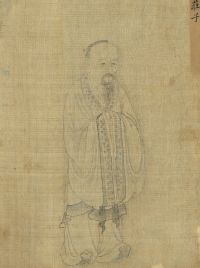 Zhuang Zi,
Chuang Tzŭ
(1889)
Zhuang Zi,
Chuang Tzŭ
(1889)
“ The true Sage is free from all embarrassments. All things are to him as One. Yet he knows not that this is so. It is simply nature, In the midst of action he remains the same. He makes God his guide, and men make him theirs. He grieves that wisdom carries one but a short distance, and at times comes altogether to a deadlock. ”
The Rig Veda (1896)
“ Acting the Sage, he flows enrobed in waters and song as 'twere a stall that kine may prosper. 2. The worlds expand to him who from aforetime found light to spread the law of life eternal. The swelling songs, like kine within the stable, in deep devotion call aloud on Indu. 3. When the sage bears his holy wisdom round him, like a car visiting all worlds, the Hero, Becoming fame, mid Gods, unto the mortal, wealth to the skilled, worth praise mid the Ever-present, 4. For glory born be hath come forth to glory: he giveth life and glory to the singers. They, clothed in glory, have become immortal. ”
St. George William Joseph Stock, A Guide to Stoicism
“ The sage alone could act rightly, but other people might perform "the proprieties." Any one might honor his parents, but the sage alone did it as the outcome of wisdom, because he alone possessed the art of life, the peculiar work of which was to do everything that was done as the result of the best disposition. ”
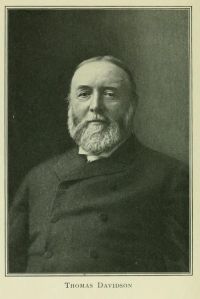 Thomas Davidson,
Aristotle and Ancient Educational Ideals
Thomas Davidson,
Aristotle and Ancient Educational Ideals
“ How does a man [135] become a sage? (2) How can the sage organize human life, and secure a succession of sages to continue his work after him? To the first of these questions, dialectics gives the answer; to the second, practics; while theoretics exhibits to us at once the origin and the end, that is, the meaning, of all existence, the human included. ”
Francis Barrett, Lives of alchemystical philosophers (1888)
“ When I speak of a sage, I mean one who sees all things die and revive without concern: he has more riches in his power than the greatest king, but lives temperately, above the power of events.’“Here I stopped him:—‘With all these fine maxims, the sage dies as well as other people.’ ‘Alas!’ said he, ‘I perceive you are unacquainted with sublime science. Such a one as I describe dies indeed, for death is inevitable, but he does not die before the utmost limits of his mortal existence. ”
Anna Robertson Brown Lindsay, The Warriors
“ Education does not solve the problems of life—it deepens the mystery. What, then, may the sage know? Are there no sages? And have we all been misinformed?A sage is one who knows what, in his position of life, is most necessary for him to know. The larger sage, the great Sage, is the one who knows what is necessary for the race to know.It is a wrong idea of wisdom, that we must necessarily know what some one else knows. Wisdom is single-track for each man. There are in the world those who know how to build aqueducts, and to bake charlotte russe, and to sew trousers. ”
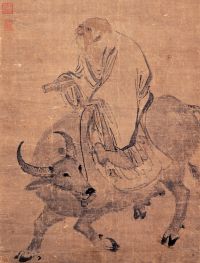 Laozi,
The Tao Teh King, or the Tao and its Characteristics
Laozi,
The Tao Teh King, or the Tao and its Characteristics
“ The sage has in the world an appearance of indecision, and keeps his mind in a state of indifference to all. The people all keep their eyes and ears directed to him, and he deals with them all as his children. ”
Paul Ambroise Bigandet, The Life or Legend of Gaudama, the Buddha of the Burmese…
“ The sage, to be worthy of his sublime calling, must remain satisfied with striving to find out that immediate cause which brings into action the form and name, and causes the appearance of all those modifications which we call beings or forms of existence. He ought to strive to account for the organisation of matter and all its modifications, by discovering the hidden spring that effectually sets all in motion, in action, in combination of existences. ”
 Joseph Jacobs,
As others saw Him
(1900)
Joseph Jacobs,
As others saw Him
(1900)
“ Each of our Sages prides himself on this—that he has said some maxim of wisdom that none had thought of before him, and so each of them is remembered in the minds of men by one or more of his favorite maxims. But it is rare if in a whole lifetime a sage sayeth more than one word fit to be treasured up among men. Yet was this man Jesus dropping pearls of wisdom from his mouth in prodigal profusion. As each memorable word fell from his lips, a murmur of delighted surprise passed round the synagogue, and each man looked to his neighbor with brightened eyes. ”
“ And there among the rugged rocks abides an ancient Sage,— An earnest Man, who reads all day a most perplexing page. Climb up, and seize him by the toes,—all studious as he sits,— And pull him down, and chop him into endless little bits! ”
 Adi Shankara,
The Crest Jewel of Wisdom — The Perfect Sage
(1946)
Adi Shankara,
The Crest Jewel of Wisdom — The Perfect Sage
(1946)
“ Whether walking or standing, sitting or lying down, or wherever he may be, let the sage dwell according to his will, the wise man finding joy ever within himself.No distinctions of place or time, position or space are to be regarded as bringing release from bondage, for the mighty-souled, who has perfectly attained to reality. Of what avail are the rites of religion for one who has attained to wisdom? ”
 Samuel Taylor Coleridge,
Anima Poetæ
Samuel Taylor Coleridge,
Anima Poetæ
“ A "myriad-minded" sage, who has seen men and cities, who has read widely and shaped his thoughts in a peculiar mould, is pouring out his stores of knowledge, the garnered fruit of a life of study and meditation, for the benefit of an apt learner, a discreet and appreciative disciple. ”
Sharaf al-Din Ahmad ibn Yahya Maniri, Letters from a Sûfî Teacher
“ Divine Knowledge is the knowledge of God as He is in His Essence, Attributes, and Works. The Sage should know God in the same way as God knows Himself, and as He has described Himself in the Qurân. There are two theories as to the perfection of this Knowledge. Some Intellectualists hold that the Sage knows God in the same way as God knows Himself. If he does not know Him perfectly, he knows a part of Him. But God is partless. So Sages are equal in Divine Knowledge. ”
Paul Ambroise Bigandet, The Life or Legend of Gaudama, the Buddha of the Burmese…
“ To the sage that has already begun the laborious task of investigating truth, such practices are of no use, and are nowhere insisted on as necessary, or even useful. In the book of discipline, no mention is made of them. ”
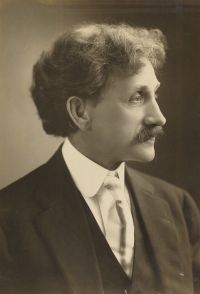 J. Howard Moore,
The Universal Kinship
J. Howard Moore,
The Universal Kinship
“ Every human being (the sage less than the savage, but the sage to some extent) is inclined to lump together as foreign to him, and as more or less useless and shadowy in themselves, the things, beings, and events that are distant, and to consider them, of less reality than those with which he is directly concerned, and of which his knowledge is immediate. The evolution of consciousness in its social and ethical aspects consists in the evolution of the ability to make real and vivid the phenomena that are more and more distant in both space and time. ”
Paul Ambroise Bigandet, The Life or Legend of Gaudama, the Buddha of the Burmese…
“ When the sage, during his meditations, has brought his mind to bear upon some object, he wishes to contemplate attentively and thoroughly to comprehend, he at first gets hold of that object by his thought, he then examines it by means of reflection: the knowledge he thus acquires never fails to create a pleasurable sensation; this pleasure or satisfaction conveys to the soul enjoyment and happiness; he loves the truth he has discovered, and he rests fixedly in it. ”
Baron Edward Bulwer Lytton Lytton, A Strange Story — Complete
“ In his Natural History, treating of the force of the imagination, and the help it receives ‘by one man working by another,’ he cites an instance he had witnessed of a kind of juggler, who could tell a person what card he thought of. He mentioned this ‘to a pretended learned man, curious in such things,’ and this sage said to him, ‘It is not the knowledge of the man’s thought, for that is proper to God, but the enforcing of a thought upon him, and binding his imagination by a stronger, so that he could think of no other card.’ You see this sage anticipated our modern electro-biologists! ”
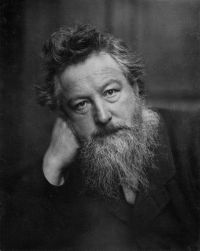 William Morris,
The Well at the World's End: A Tale
William Morris,
The Well at the World's End: A Tale
“ Of other signs I can tell thee naught; and few of men are alive that can. But there is a Sage dwelleth in the wood under the mountains to whom folk seek for his diverse lore; and he, if he will, say men, can set forth all the way, and its perils, and how to escape them. ”
Laozi,
The Tao Teh King, or the Tao and its Characteristics
“ All difficult things in the world are sure to arise from a previous state in which they were easy, and all great things from one in which they were small. Therefore the sage, while he never does what is great, is able on that account to accomplish the greatest things. 3. He who lightly promises is sure to keep but little faith; he who is continually thinking things easy is sure to find them difficult. Therefore the sage sees difficulty even in what seems easy, and so never has any difficulties. ”
Michael Sage, Mrs. Piper & the Society for Psychical Research
“ I rank the spiritualistic philosophy with other philosophies. Perhaps some of its dicta proceed from spirits, if spirits exist, but the system as a whole most surely does not. But then, it will be said, the people who have elaborated this philosophy must have been impostors. No, not inevitably; I will even venture to say that imposture is unlikely. The key to the mystery may be found in other characteristics of humanity. ”
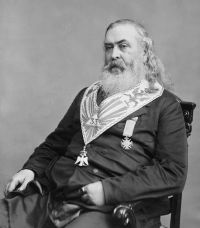 Albert Pike,
Morals and Dogma of the Ancient and Accepted Scottish Rite of Freemasonry
Albert Pike,
Morals and Dogma of the Ancient and Accepted Scottish Rite of Freemasonry
“ The earth was supposed to be the only inhabited portion of the Universe. The world and the Universe were synonymous terms. Of the immense size and distance of the heavenly bodies, men had no conception. The Sages had, in Chaldæea, Egypt, India, China, and in Persia, and therefore the sages always had, an esoteric creed, taught only in the mysteries and unknown to the vulgar. No Sage, in either country, or in Greece or Rome, believed the popular creed. To them the Gods and the Idols of the Gods were symbols, and symbols of great and mysterious truths. ”
Zhuang Zi,
Chuang Tzŭ
(1889)
“ The Sage too has a source from which the nourishment of his soul is supplied. "The relation between water and earth is determinate. The relation between a man and his shadow is determinate. The relation between thing and thing is determinate. ”
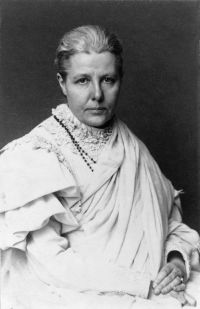 Annie Wood Besant,
An Autobiography
(1893)
Annie Wood Besant,
An Autobiography
(1893)
“ Following this line of thought we realise that matter may exist in forms unknown to us, in modifications to which our senses are unable to respond. Now steps in the Eastern Sage and says: 'That which you say may be, is; we have developed and cultivated senses as much superior to yours as your eye is superior to that of the jelly-fish; we have evolved mental and spiritual faculties which enable us to investigate on the higher planes of being with as much certainty as you are investigating on the physical plane ”
Baron Edward Bulwer Lytton Lytton, A Strange Story — Volume 08
“ But what Sage, without cause supernatural, both without and within him, can guess at the wonders he views in the growth of a blade of grass, or the tints on an insect's wing? Whatever art Man can achieve in his progress through time, Man's reason, in time, can suffice to explain. ”
 Zane Grey,
Riders of the Purple Sage
Zane Grey,
Riders of the Purple Sage
“ The bray of a lazy burro broke the afternoon quiet, and it was comfortingly suggestive of the drowsy farmyard, and the open corrals, and the green alfalfa fields. Her clear sight intensified the purple sage-slope as it rolled before her. Low swells of prairie-like ground sloped up to the west. Dark, lonely cedar-trees, few and far between, stood out strikingly, and at long distances ruins of red rocks. Farther on, up the gradual slope, rose a broken wall, a huge monument, looming dark purple and stretching its solitary, mystic way, a wavering line that faded in the north. ”
Helen A. Clarke, Browning and His Century
“ There is nothing here more reassuring than a statement made by the sage, based upon no argument, nor revelation, nor intuition—nothing but the utilitarian doctrine that it will be wiser to cling to Faith beyond Faith! ”
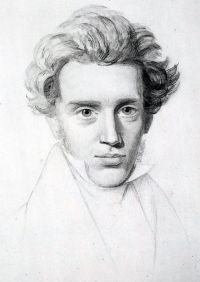 Søren Kierkegaard,
Selections from the Writings of Kierkegaard
Søren Kierkegaard,
Selections from the Writings of Kierkegaard
“ The ancient sage would stop old and young and quizz them skilfully on what they regarded as common and universally established propositions, until his interlocutor became confused by some consequence or contradiction arising unexpectedly, and until he who had been sure of his knowledge was made to confess his ignorance, or even to become distrustful of the possibility of knowledge. ”
William James, The Varieties of Religious Experience (1902)
“ Their test of its purity, like our test of religion's value, is empirical: its fruits must be good for life. When a man comes out of Samâdhi, they assure us that he remains "enlightened, a sage, a prophet, a saint, his whole character changed, his life changed, illumined." ”
| editor, Sacred Books of the East (1884)
“ He who has the true knowledge about all things, will commit no sinful act, nor cause others to do so. (6) Knowing them, a wise man should not act sinfully towards the aggregate of six (kinds of) lives, nor cause others to act so, nor allow others to act so. He who knows these causes of sin relating to the aggregate of the six (kinds of) lives, is called a reward-knowing sage. ”
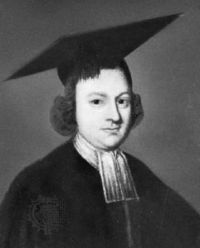 Christopher Smart,
The Herald and Husband-Man. Fable XII
Christopher Smart,
The Herald and Husband-Man. Fable XII
“ The Latin expression, “Cur moriatur homo cui salvia crescit in horto?” (Why should a man die whilst sage grows in his garden?) , is a cogent summary of sage’s reputation among ancient and medieval herbalists. Culpeper associated sage with Jupiter, the almighty god of Roman mythology, and credited the herb with a wide variety of healing powers. ”
Zane Grey,
Riders of the Purple Sage
“ They would go back to Lassiter’s trail and follow it, and follow in vain. So Venters rode on, with the wind growing sweeter to taste and smell, and the purple sage richer and the sky bluer in his sight; and the song in his ears ringing. By and by Bess halted to wait for him, and he knew she had come to the trail. When he reached her it was to smile at sight of her standing with arms round Black Star’s neck. “Oh, Bern! I love him!” she cried. “He’s beautiful; he knows; and how he can run! I’ve had fast horses. But Black Star!... Wrangle never beat him!” ”
Michael Sage, Mrs. Piper & the Society for Psychical Research
“ Should we each admit conditionally the spiritualist hypothesis? Not at all; it is not thus that knowledge is attained. Whoever believes that he has excellent reasons for preferring any other hypothesis should remain unshakable in his convictions till the time when new facts may oblige him to abandon them. Science does not ask that we should prefer this or the other explanation; it only asks that we should study the facts unprejudiced, that we should be sincere, and not shut our eyes childishly to the evidence. ”
Michael Sage, Mrs. Piper & the Society for Psychical Research
“ We might assert, without being fanciful, that sickness is only their opportunity and not their cause. Lastly, a third group of facts, which strongly militates in favour of the spiritualist hypothesis, consists of the mistakes and confusions. This would probably not be the opinion of a superficial observer; many take these errors and confusions as a reason for entirely rejecting the spiritualist hypothesis; generally because they have a strange notion of a "spirit," without any analogy in nature. ”
Zane GreyLaoziZhuang ZiChristopher SmartAdi ShankaraPaul Ambroise BigandetBaron Edward Bulwer Lytton LyttonSt. George William Joseph StockThomas BrownAnna Robertson Brown LindsayJoseph JacobsFrancis BarrettThomas DavidsonJames AllenJohn PlayfairSharaf al-Din Ahmad ibn Yahya Maniri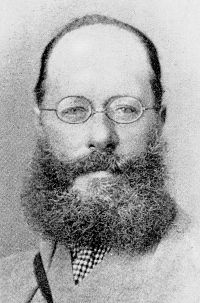 Edward LearJ. Howard MooreWilliam MorrisAlbert Pike