Linnaean taxonomy

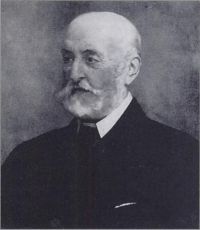
Portrait of Julius von Sachs Julius von Sachs,  History of botany (1890)

“ That new species can arise is, he continues, disproved by continuous generation and propagation, and by daily observation, and by the cotyledons. It is hard to understand how the Linnaean school till far into our own century could have remained firm in a doctrine resting on such arguments as these. Linnaeus' definition of varieties shows that he understood by the word species fundamentally distinct forms; there are, he says, as many varieties as there are different plants growing from the seed of the same species ”
Source: Wikisource

Frederic E. Clements,  Research methods in ecology (1905)

“ While interpretation will always play a part in taxonomy, the general use of experiment will leave much less opportunity for the personal equation than is at present the case. Taxonomy, like descriptive botany, is based upon the species, but, while there may exist a passable kind of descriptive botany, there can be no real taxonomy as long as the sole criterion of a species is the difference which any observer thinks he sees between one plant and another. The so-called species of to-day range in value from mere variations to true species which are groups of great constancy and definiteness. ”
Source: Gutenberg

Portrait of Julius von Sachs Julius von Sachs,  History of botany (1890)

“ We shall see further on to what surprising conclusions Linnaeus was himself led by his dogma, when he had to take into account the relations of affinity in genera and larger groups. The species and the genus, he continues, are always the work of nature, the variety is often that of cultivation; the class and the order depend both on nature and on art, which must mean that the larger groups of the vegetable kingdom have not the same objective reality as the species and the genus, but rest partly on opinion. ”
Source: Wikisource

Get perspective with Kwize: daily news enlightened by great literature